 PlantFun
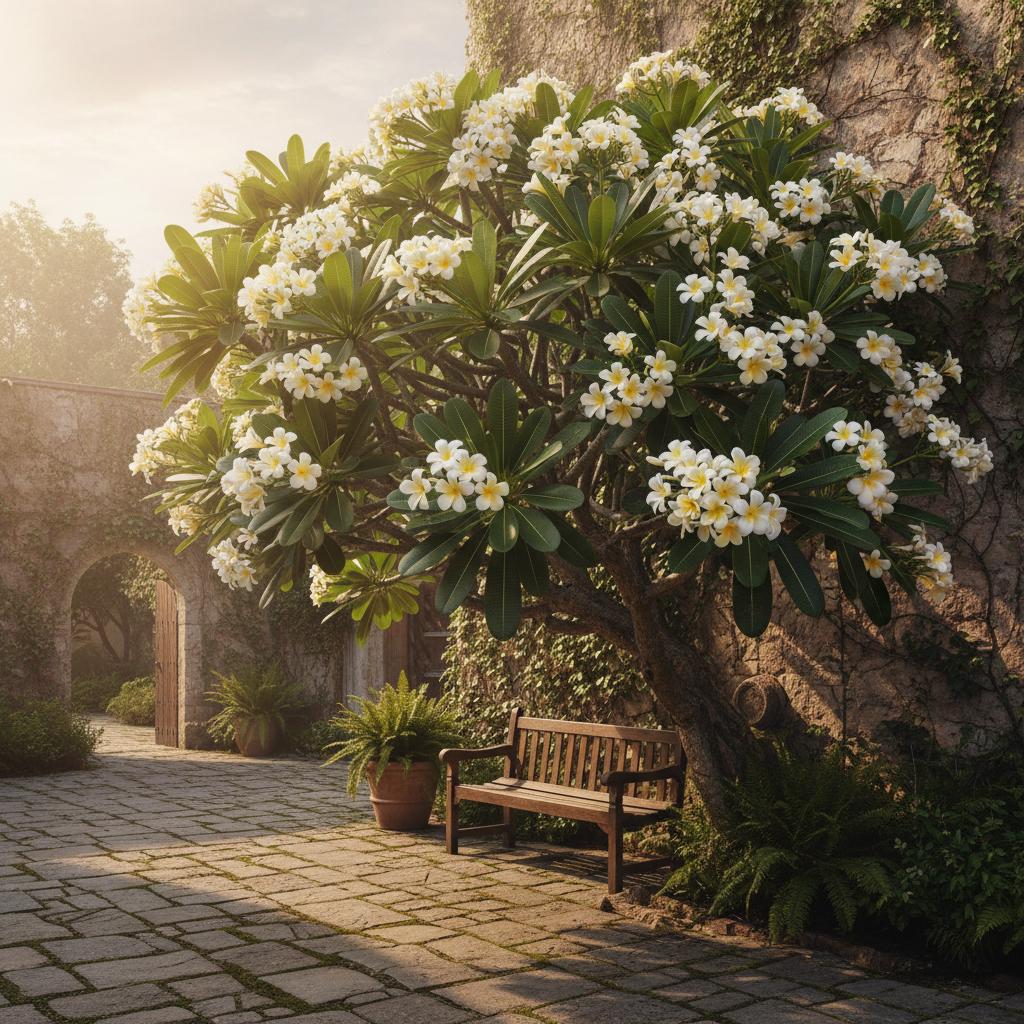
Plant Needs
Sunlight
Requires full, direct sunlight for optimal blooming and compact growth.
Watering
Moderate water needs; allow the top half of the soil to dry out completely between waterings.
Temperature
Thrives in warm, tropical climates; highly sensitive to frost and freezing temperatures.
Characteristics
- Leaves: Alternate, clustered at branch tips, elliptic to obovate, 20-30 cm long, with prominent midribs;
- Flowers: Terminal cymes, 5-petaled, tubular at base, spreading, highly fragrant, colors range from pink, red, yellow to white;
- Stems: Thick, succulent-like branches containing milky latex;
- Bark: Smooth, greyish-green to silvery.
Care Guide
Watering
Water thoroughly when the top few inches of soil are dry.
Fertilization
Apply a high-phosphorus fertilizer to promote bloom development.. Feed regularly during the active growing season and stop entirely during winter dormancy.
Banana Peel Tea:Steep chopped banana peels in water for 24-48 hours, strain, and use the liquid to water the plant. This provides a gentle potassium and phosphorus boost for blooms. Discard the peels in compost to avoid attracting pests.Pruning
- Prune in late winter or early spring before new growth begins;
- Remove dead, diseased, or crossing branches to improve air circulation;
- Make clean cuts at a 45-degree angle just above a node;
- Wear gloves to protect skin from the irritating milky sap.
Toxicity
Warning: this plant may be toxic.
Pets & Humans
Pets: Mildly toxic per ASPCA; ingestion of leaves or sap can cause vomiting and diarrhea.
Humans: Milky sap can cause skin irritation; ingestion may cause mild gastrointestinal upset.
Garden Uses & Culture
Culture: In Hawaiian and broader Polynesian culture, the flowers are traditionally used to craft leis, symbolizing love, greeting, and celebration.
Usage: Widely used in tropical landscaping, container gardening, and the perfume industry for its essential oils.