 PlantFun
Plant Needs
Characteristics
- Leaves: Lanceolate, emerging dark maroon or burgundy in spring and transitioning to a dark green-red in late summer, with finely serrated margins;
- Flowers: Showy, pale pink to white, blooming profusely in spring before or alongside leaf emergence;
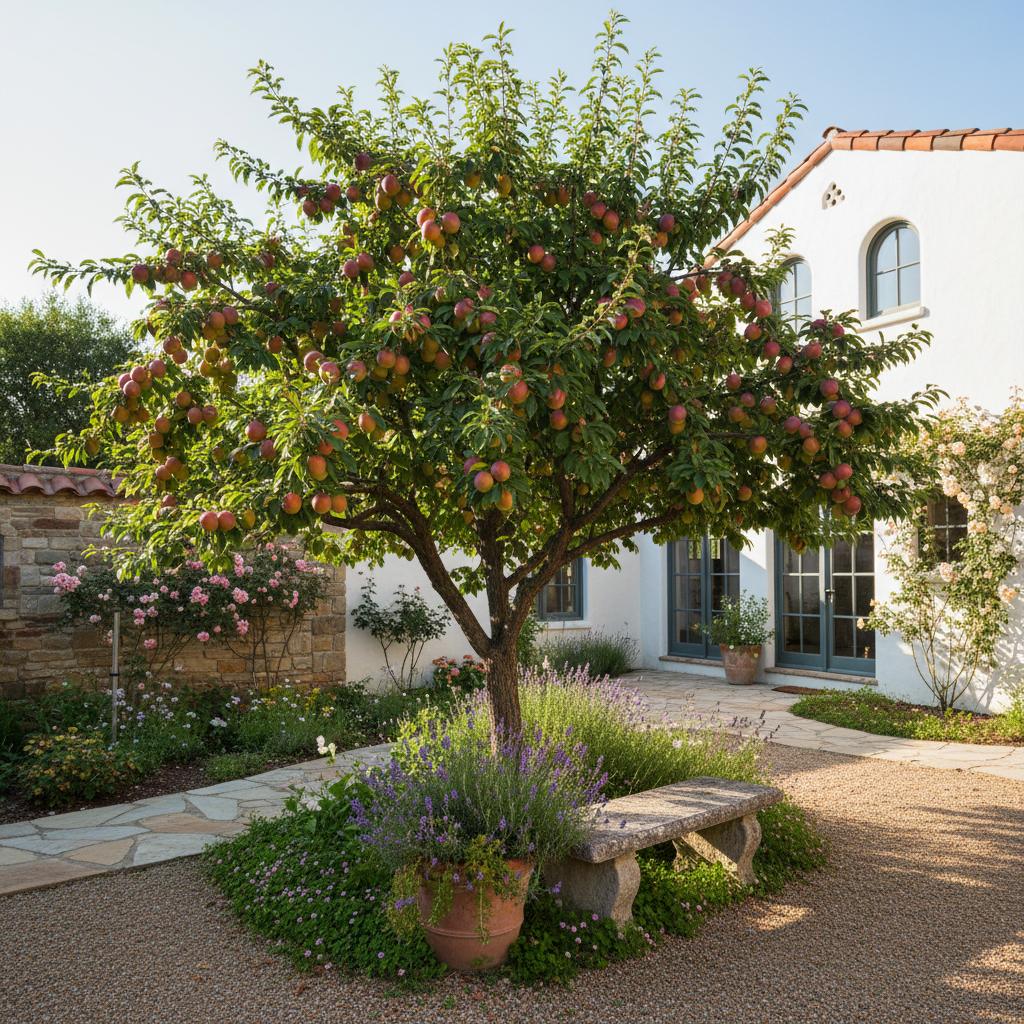
- Fruit: Medium to large, dark maroon skin, white flesh, freestone, combining flavors of nectarine, plum, and peach;
- Bark: Dark brown to grayish, typical of Prunus species, with prominent horizontal lenticels.
Care Guide
Water deeply once a week, increasing frequency during extreme heat or fruit swell.
Apply a balanced organic fertilizer just before bud break in early spring.. Avoid heavy nitrogen fertilization late in the season, which can spur vulnerable new growth before frost.
Banana Peel and Eggshell Mix:Bury chopped banana peels and crushed, rinsed eggshells in the topsoil around the drip line to provide potassium for fruit sweetness and calcium for cell wall strength. Avoid placing directly against the trunk.- Prune in late winter while the tree is dormant;
- Maintain an open-center (vase) shape to allow sunlight and air circulation into the canopy;
- Remove any dead, diseased, or crossing branches;
- Thin out heavy fruit sets in early summer to prevent branch breakage and encourage larger fruits.
Toxicity
Warning: this plant may be toxic.
Pets: Toxic per ASPCA. Stems, leaves, and seeds contain cyanogenic glycosides which can cause severe reactions.
Humans: The fleshy fruit is completely safe and edible; however, ingestion of seeds (pits), leaves, or stems can cause cyanide poisoning.
Garden Uses & Culture
Culture: A marvel of modern Western fruit breeding, the Nectaplum showcases the innovative hybridization techniques developed by Zaiger Genetics in California, blending the best traits of nectarines, plums, and peaches.
Usage: Grown primarily in home orchards for its delicious, complex-flavored edible fruit and highly ornamental dark foliage.