 PlantFun
Plant Needs
Characteristics
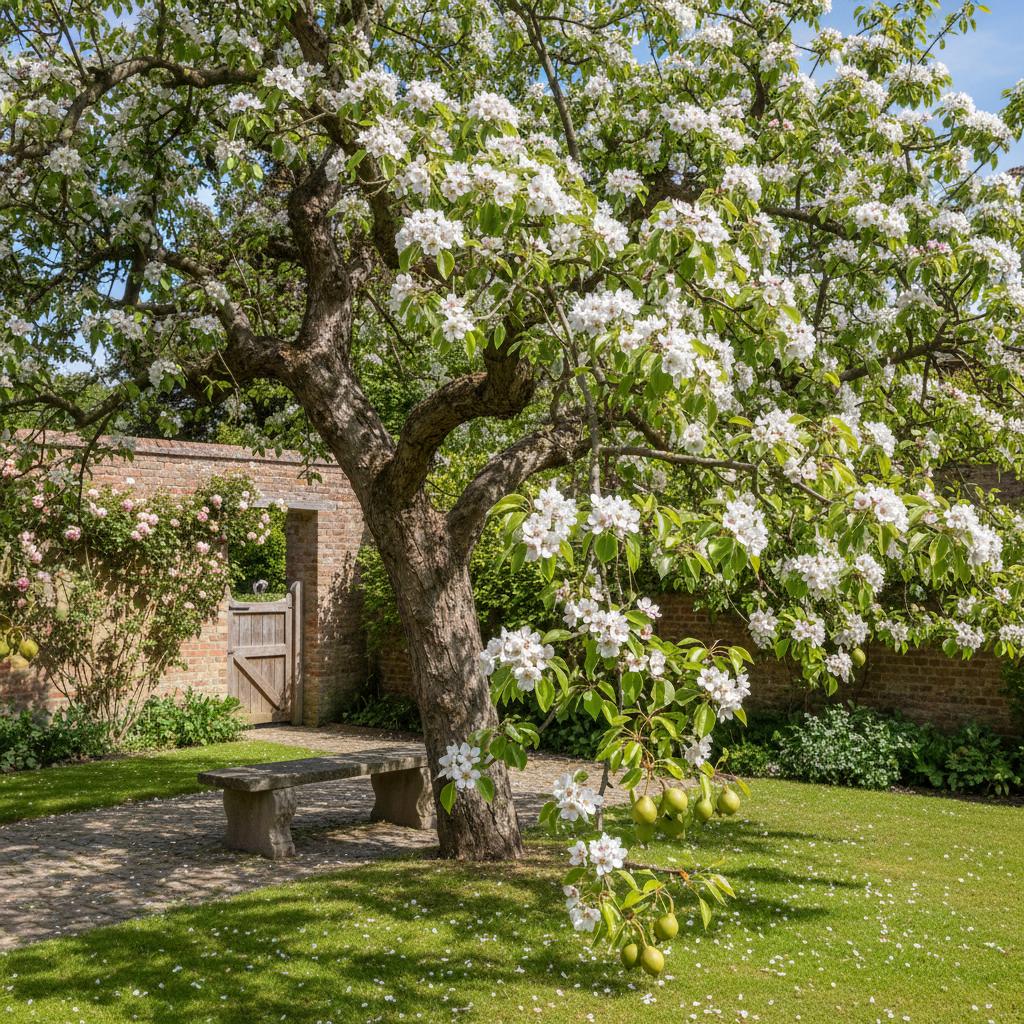
- Leaves: Alternate, simple, 2 - 12 cm long, glossy green, with entire or finely serrated margins, turning yellow or red in autumn;
- Flowers: Corymb-like racemes, flowers 2 - 4 cm in diameter, with five white petals (rarely tinted pink) and numerous red-anthered stamens;
- Fruit: Fleshy pome, typically pyriform (teardrop-shaped) or spherical, green to yellow or brown when ripe, with a cartilaginous core;
- Bark: Grayish-brown, smooth on young trees, becoming deeply fissured and scaly with age.
Care Guide
Water deeply once a week during dry spells, ensuring the soil does not become waterlogged.
Apply a balanced fertilizer just before bud break to support new growth and flowering.. Fertilize only during the early growing season; over-fertilization can lead to excessive vegetative growth at the expense of fruit.
Banana Peel and Eggshell Tea:Steep chopped banana peels and crushed, rinsed eggshells in water for 24-48 hours. Dilute 1:1 with water and pour around the drip line of the tree to support fruit development and cell wall strength. Discard solids in compost; do not leave raw peels on the soil surface to avoid attracting pests.- Prune in late winter or early spring while the tree is fully dormant;
- Remove dead, diseased, or crossing branches to maintain a strong central leader or modified leader structure;
- Thin out the canopy to increase sunlight penetration and air circulation, which reduces the risk of fungal diseases;
- Remove water sprouts and root suckers promptly.
Toxicity
Warning: this plant may be toxic.
Pets: Non-toxic per ASPCA.
Humans: Non-toxic; the fleshy fruit is widely consumed, though seeds contain trace amounts of cyanogenic glycosides which are harmless unless chewed in massive quantities.
Garden Uses & Culture
Culture: In Greek mythology, pears were sacred to Hera and Aphrodite, symbolizing fertility, love, and abundance. The ancient Greek poet Homer famously referred to pears as a "gift of the gods" in his epic, The Odyssey.
Usage: Cultivated extensively for its edible fruit, which is eaten fresh, baked, or fermented into perry (pear cider). The fine-grained pearwood is highly prized for making woodwind instruments, furniture, and architectural carvings.