 PlantFun
Plant Needs
Characteristics
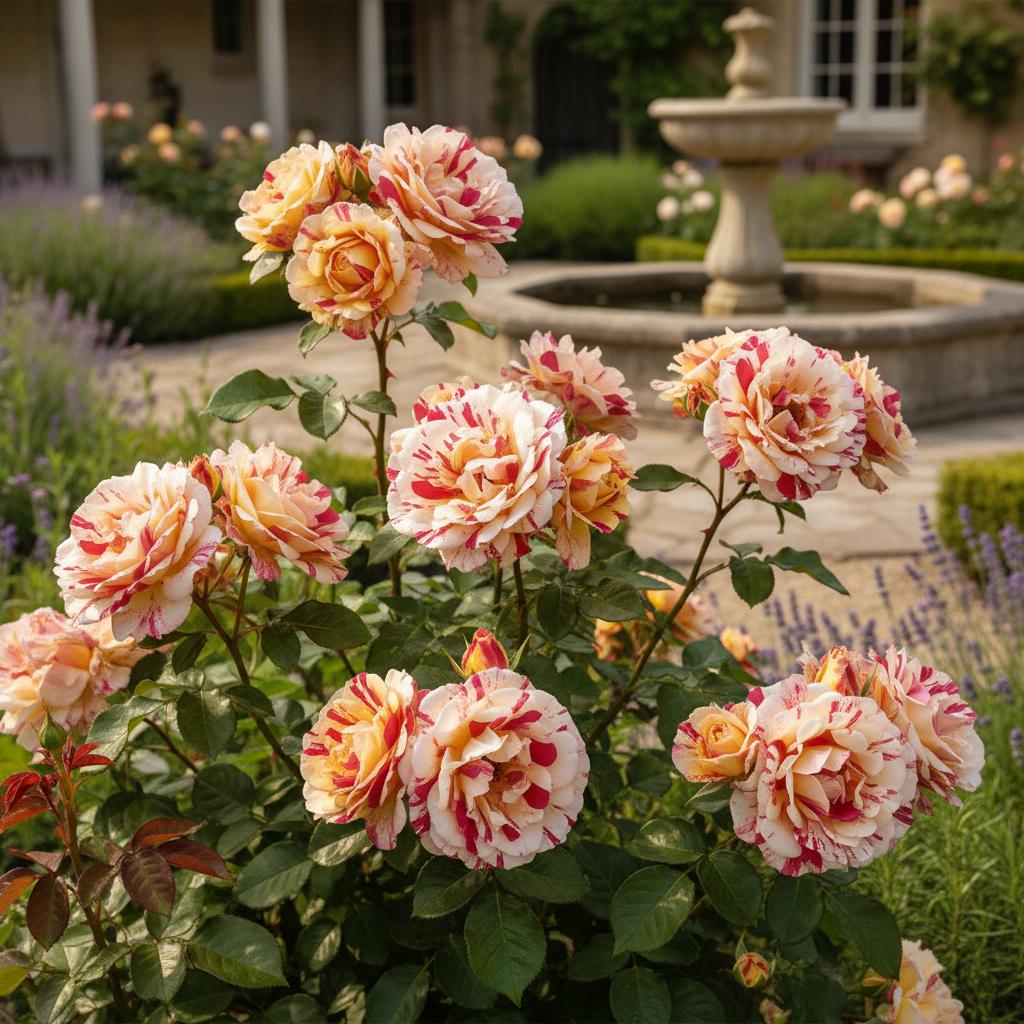
- Leaves: Dark green, glossy, pinnately compound with 5 to 7 leaflets, margins finely serrated, providing a lush backdrop for the blooms;
- Flowers: Large, double blooms (cupped to flat), uniquely striped and splashed with magenta-pink, pale yellow, and cream; mild, delicate fragrance;
- Stems: Upright, bushy, and sturdy, armed with typical rose prickles (thorns).
Care Guide
Water deeply 2-3 times a week depending on heat and rainfall, focusing on the root zone.
Apply a balanced rose fertilizer as new growth appears.. Use a phosphorus-rich fertilizer to encourage robust flowering.
Banana Peel Tea:Steep chopped banana peels in water for 24-48 hours. Dilute 1:1 with water and apply to the base of the rose to promote blooming. Discard peels in compost to avoid attracting pests.- Late Winter/Early Spring: Prune back by about one-third to one-half to encourage vigorous new growth;
- Deadheading: Remove spent blooms regularly during the growing season to promote continuous flowering;
- Air Circulation: Remove dead, diseased, or crossing branches to open up the center of the bush.
Toxicity
Warning: this plant may be toxic.
Pets: Non-toxic per ASPCA; safe for cats, though thorns may cause mechanical injury if chewed.
Humans: Non-toxic; rose petals are generally edible, though caution is advised regarding pesticide residue.
Garden Uses & Culture
Culture: Part of the Delbard "Painters Collection" (Les Roses de Peintres), this rose is named after the renowned Russian-French modernist artist Marc Chagall, reflecting his vibrant, dreamlike use of color.
Usage: Excellent for garden borders, mixed beds, container planting, and as striking cut flowers for floral arrangements.