 PlantFun
Plant Needs
Sunlight
Requires full sun for optimal blooming and disease resistance.
Watering
Keep soil evenly moist but not waterlogged; water deeply at the base.
Temperature
Hardy in most temperate climates; requires winter protection in extreme cold.
Characteristics
- Leaves: Pinnately compound, leaflets ovate with serrated margins, glossy dark green;
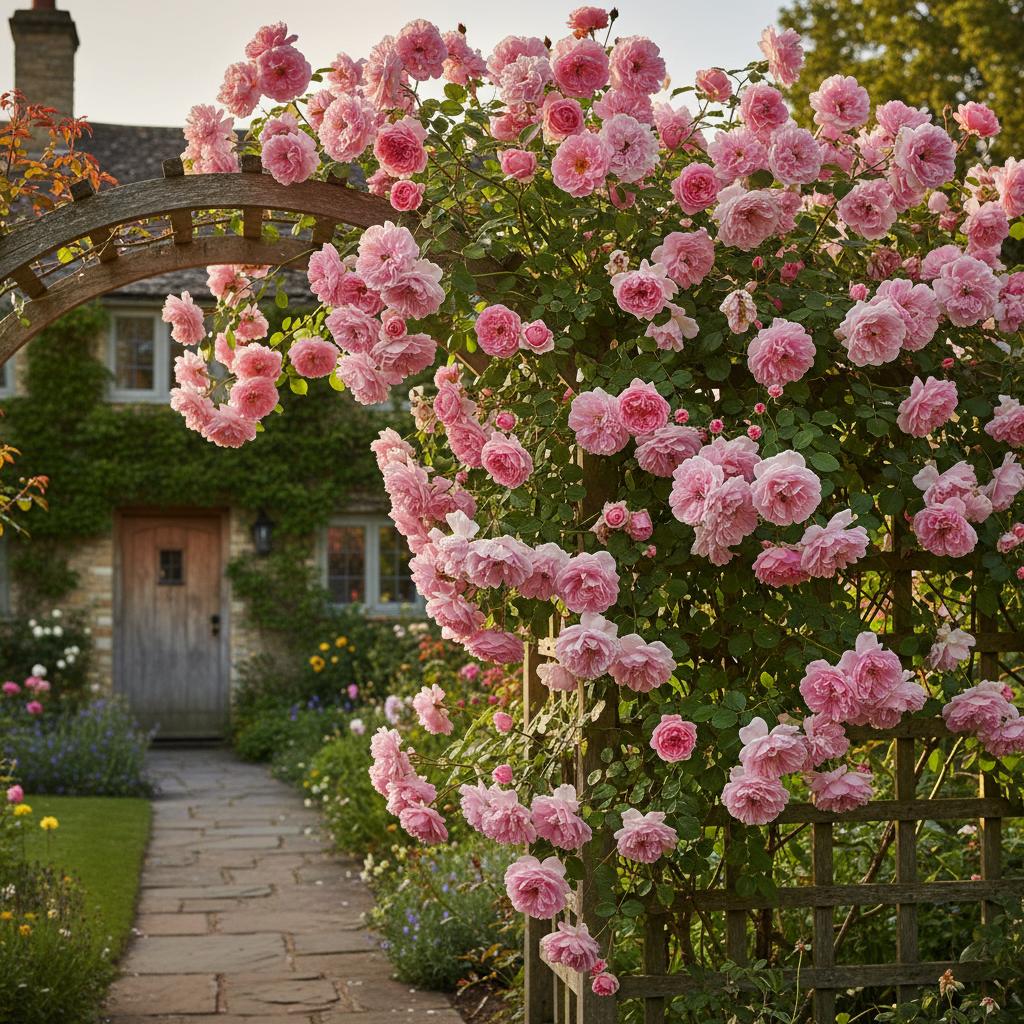
- Flowers: Large, showy pink blooms, often double or semi-double, fragrant, borne singly or in clusters;
- Stems: Long, arching canes armed with sharp, curved prickles (thorns).
Care Guide
Watering
Water deeply 2-3 times a week, especially during dry spells.
Fertilization
Apply a balanced organic fertilizer as new growth appears.. Avoid fertilizing late in the season to prevent tender new growth before frost.
Banana Peel Tea:Steep chopped banana peels in water for 48 hours. Dilute 1:1 with water and apply to the base to promote blooming. Avoid leaving raw peels on the surface to prevent pests.Pruning
- Prune in late winter or early spring while dormant;
- Remove dead, diseased, or crossing canes to improve air circulation;
- Tie main canes horizontally to supports to encourage lateral blooming shoots;
- Deadhead spent flowers regularly to promote reblooming.
Toxicity
Warning: this plant may be toxic.
Pets & Humans
Pets: Non-toxic to cats per ASPCA, but thorns pose a risk of physical injury.
Humans: Non-toxic; petals and hips are edible, though thorns can cause mechanical injury.
Garden Uses & Culture
Culture: In Western culture, pink roses symbolize grace, admiration, and joy, often featured in romantic cottage gardens and Victorian floral language.
Usage: Used for covering trellises, arbors, walls, and fences in ornamental landscaping; petals used in potpourri.