 PlantFun
Plant Needs
Characteristics
- Leaves: Pinnately compound with 5 to 11 small, rounded, neatly serrated leaflets that closely resemble those of the burnet plant (Sanguisorba).
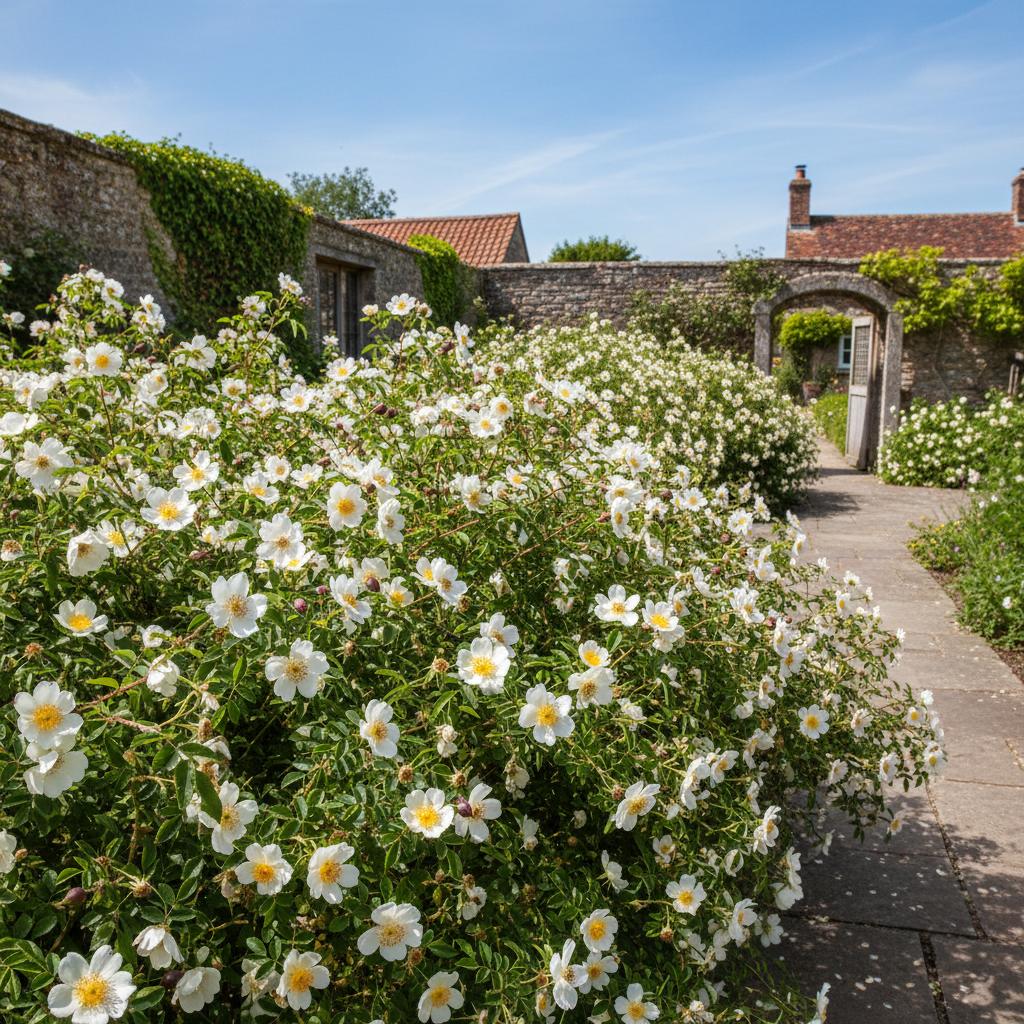
- Flowers: Solitary, highly fragrant, typically creamy white to pale pink, featuring 5 petals and a prominent central cluster of yellow stamens.
- Stems: Densely armed with a mixture of straight, needle-like prickles and stiff bristles, giving it a highly textured, defensive appearance.
- Fruit: Distinctive globose hips that ripen to a dark purplish-black, unlike the typical red hips of most other rose species.
Care Guide
Water deeply once a week during active growth and blooming, allowing the soil to dry out between waterings.
Apply a balanced organic mulch or compost at the base as new growth appears.. Avoid heavy nitrogen applications, which encourage weak, sappy growth at the expense of blooms.
Banana Peel Tea:Steep chopped banana peels in water for 24-48 hours. Use the strained liquid to water the base of the rose to encourage robust blooming. Discard the solid peels in an outdoor compost bin to avoid attracting fruit flies.- Prune immediately after flowering in mid-summer if shaping is required.
- Remove dead, diseased, or crossing canes to maintain good airflow.
- Since it spreads vigorously by underground suckers, dig out unwanted shoots at the base to control its spread.
- Avoid heavy spring pruning, as it blooms on old wood (previous year's growth).
Toxicity
Warning: this plant may be toxic.
Pets: Non-toxic per ASPCA guidelines.
Humans: Non-toxic; the fruit (hips) are edible and rich in vitamin C, though the seeds contain hairs that can be irritating if ingested.
Garden Uses & Culture
Culture: In the early 19th century, this species became a horticultural sensation in Scotland, where nurserymen bred hundreds of double-flowered, colorful varieties, cementing its legacy as the 'Scotch Rose'.
Usage: Excellent for impenetrable barrier hedges, coastal sand dune stabilization, and wildlife gardens where its dense thickets provide shelter for birds.