 PlantFun
Plant Needs
Characteristics
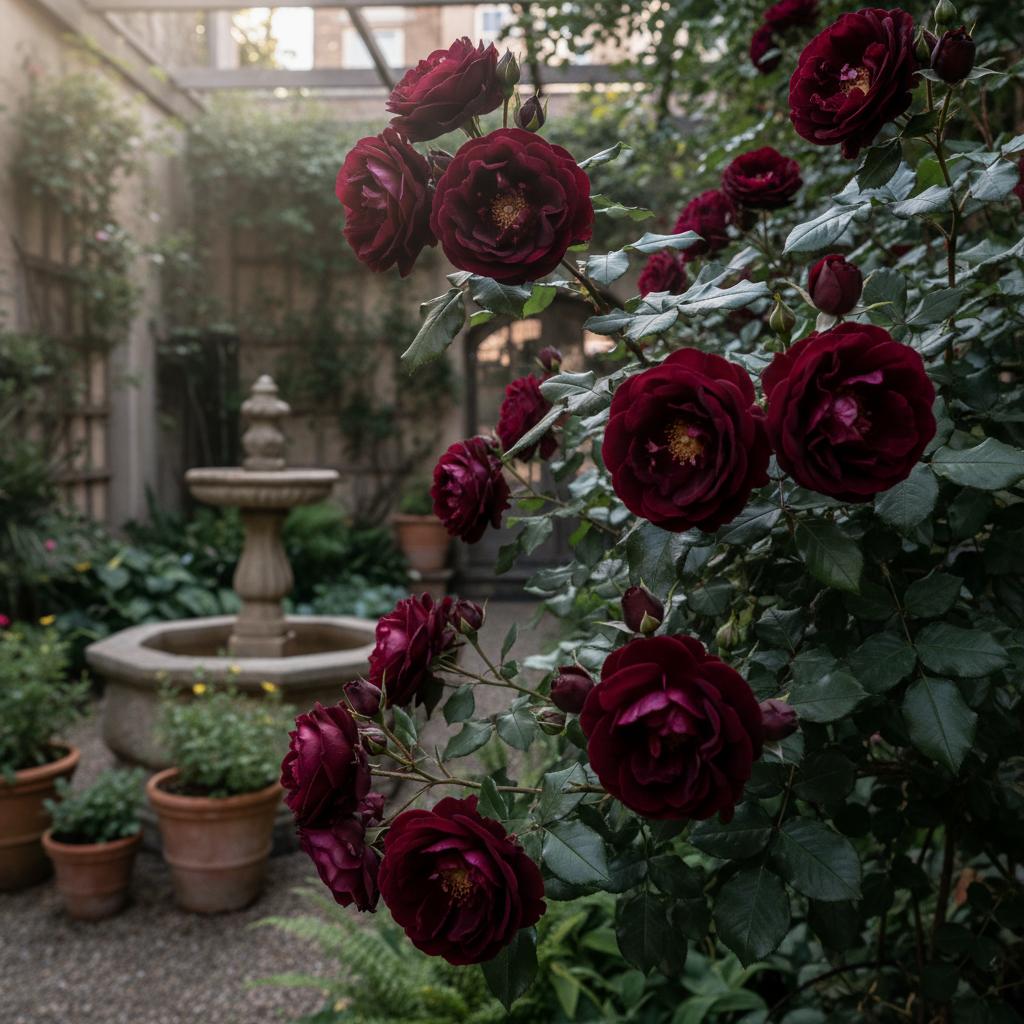
- Leaves: Dark green, glossy, pinnately compound with 5 to 7 ovate leaflets, margins finely serrated;
- Flowers: Double blooms, deep velvety red to almost black, mild fragrance, blooming in clusters or singly on sturdy stems;
- Stem: Upright, woody canes armed with sharp, curved prickles (thorns).
Care Guide
Water deeply at the base 2 times a week, more frequently during extreme heat.
Apply a balanced organic fertilizer as new growth appears.. Feed monthly during the growing season; stop fertilizing 6 weeks before the first expected frost.
Banana Peel Tea:Steep chopped banana peels in water for 24-48 hours, then use the liquid to water the base of the rose. This provides a gentle potassium boost for larger, more vibrant blooms. Discard the solid peels in a compost bin to avoid attracting pests.- Prune in late winter or early spring just as buds begin to swell;
- Remove all dead, diseased, or crossing canes to improve air circulation;
- Cut back remaining healthy canes by about one-third, making cuts at a 45-degree angle just above an outward-facing bud;
- Deadhead spent blooms regularly during summer to encourage reblooming.
Toxicity
Warning: this plant may be toxic.
Pets: Non-toxic per ASPCA; safe for cats, but ingestion of rough plant material may cause mild stomach upset.
Humans: Non-toxic; petals and hips are technically edible, though thorns pose a mechanical hazard.
Garden Uses & Culture
Culture: In Western culture, red roses are the ultimate symbol of romantic love and passion. The exceptionally dark, almost black-red hue of 'Dancing in the Dark' adds an element of gothic mystery, elegance, and deep, enduring devotion.
Usage: Excellent for cutting gardens, dramatic landscape borders, and container planting.