 PlantFun
Plant Needs
Characteristics
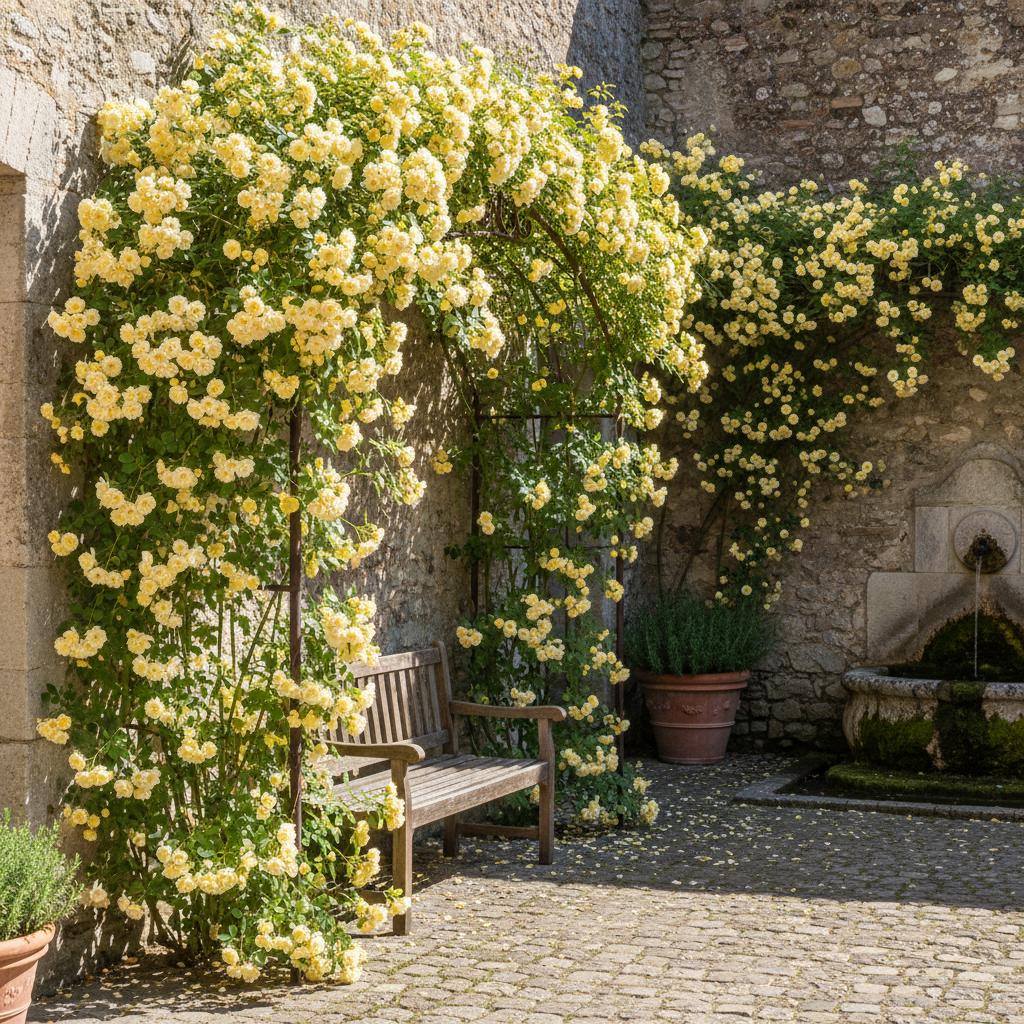
- Leaves: Evergreen to semi-evergreen, pinnately compound with 3-5 (rarely 7) leaflets, elliptic to ovate, margins serrate, glabrous;
- Flowers: Small (1.5-2.5 cm across), white or pale yellow, single or double, arranged in umbel-like corymbs, slightly fragrant;
- Stems: Vigorous climbing or scrambling stems, notably thornless or with very few prickles.
Care Guide
Water regularly during active growth and blooming, allowing the top inch of soil to dry out between waterings.
Apply a balanced organic fertilizer just before new growth begins in early spring.. Requires minimal feeding once established.
Banana Peel Tea:Steep chopped banana peels in water for 2-3 days. Strain and use the liquid to water the base of the plant to support root health and future blooms. Discard solids in compost to avoid attracting pests.- Prune immediately after flowering finishes in late spring, as it blooms on old wood;
- Remove dead, diseased, or crossing branches to improve air circulation;
- Thin out older canes to the base every few years to rejuvenate the plant;
- Avoid heavy winter or early spring pruning, which will remove the spring flower buds.
Toxicity
Warning: this plant may be toxic.
Pets: Non-toxic per ASPCA guidelines for Rosa species.
Humans: Non-toxic; petals and hips are generally considered safe and edible in small quantities.
Garden Uses & Culture
Culture: In Western gardens, it is celebrated as a classic, vigorous climber often used to drape over pergolas and walls, famously including the world's largest rose bush in Tombstone, Arizona, planted in 1885.
Usage: - Ornamental landscaping for arbors, trellises, and fences; - Erosion control on banks; - Creating barrier hedges (despite lacking thorns, its dense growth is effective).