 PlantFun
Plant Needs
Sunlight
Prefers bright, indirect light or dappled shade; avoid harsh direct midday sun which can scorch the fleshy leaves.
Watering
Requires high humidity and frequent watering during active growth, but roots must dry out quickly between waterings.
Temperature
Cool to intermediate growing conditions; tolerates brief drops in temperature if kept dry.
Characteristics
- Leaves: Fleshy, sickle-shaped (falcate), pale green to yellowish-green, 5 - 15 cm long, arranged in a fan-like manner;
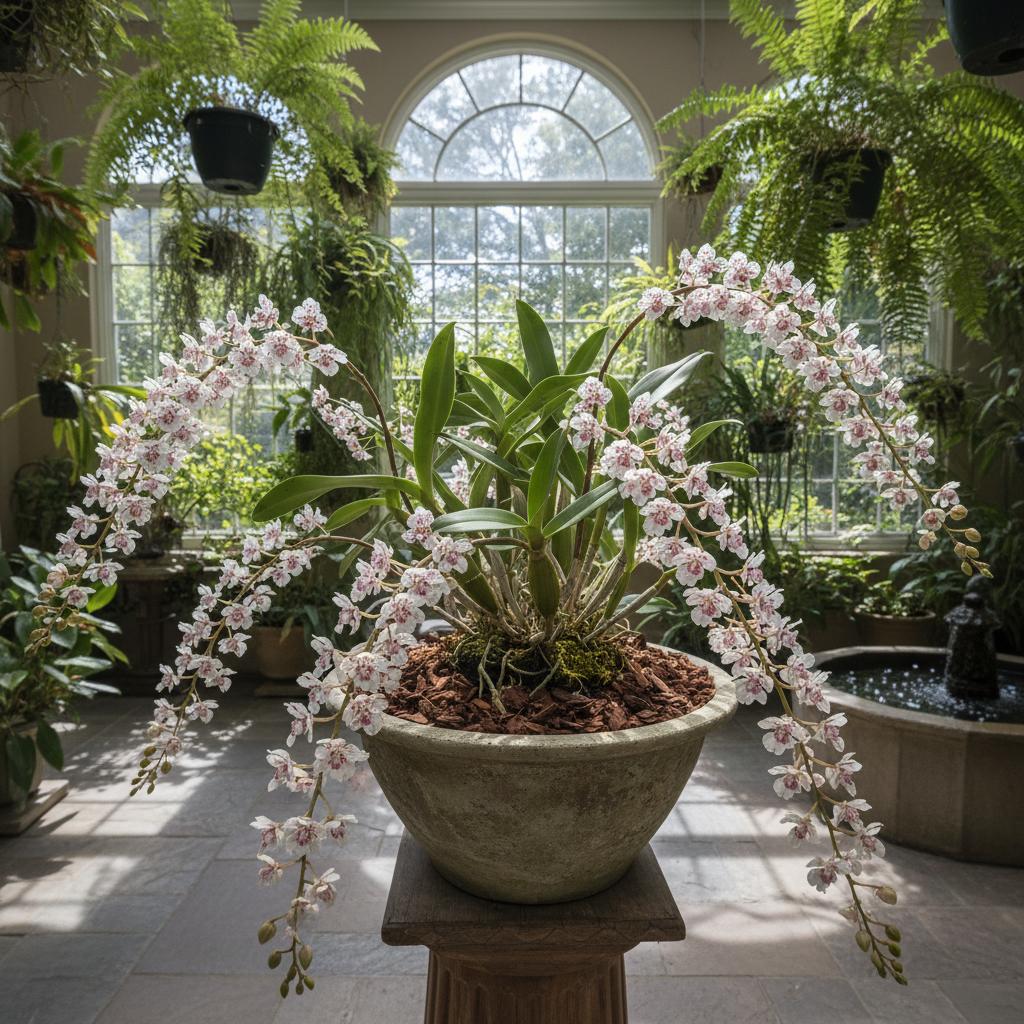
- Flowers: Pendulous racemes bearing 3 - 12 crystalline white flowers, highly fragrant, with a short fleshy lip marked with yellow and purple-red stripes;
- Roots: Thick, silvery-white aerial roots adapted for clinging to rough bark and rapidly absorbing atmospheric moisture and canopy runoff.
Care Guide
Watering
Water frequently, allowing the mount or coarse mix to dry slightly between applications.
Fertilization
Apply a balanced orchid fertilizer at quarter-strength weekly.. Orchids are light feeders; flush the root system with plain water once a month to prevent salt buildup.
Banana Peel Tea:Soak chopped banana peels in water for 24 hours, strain completely, and dilute 1:1 with fresh water. Use this as a mild potassium boost to encourage spring blooms. Ensure no solid residue is left on the roots or mount to prevent mold and fungal issues.Pruning
- Remove spent flower spikes at the base using sterilized snips;
- Never cut healthy, green aerial roots, even if they grow outside the pot or mount;
- Allow old, yellowing leaves to drop off naturally rather than tearing them.
Toxicity
Warning: this plant may be toxic.
Pets & Humans
Pets: Non-toxic to cats per ASPCA guidelines for most orchids.
Humans: Non-toxic to humans; safe to handle.
Garden Uses & Culture
Culture: Highly prized in Western orchid-growing communities and frequently showcased in spring orchid exhibitions for its pristine beauty and intense fragrance.
Usage: Cultivated primarily as an ornamental epiphytic display, often mounted on cork bark, driftwood, or tree fern plaques to mimic its natural habitat.