 PlantFun
Plant Needs
Sunlight
Requires full, direct sunlight for optimal pitcher coloration and structural health.
Watering
Must be kept constantly wet, ideally sitting in a tray of distilled water, rainwater, or reverse osmosis water.
Temperature
Highly adaptable; requires a cold winter dormancy period to survive long-term.
Characteristics
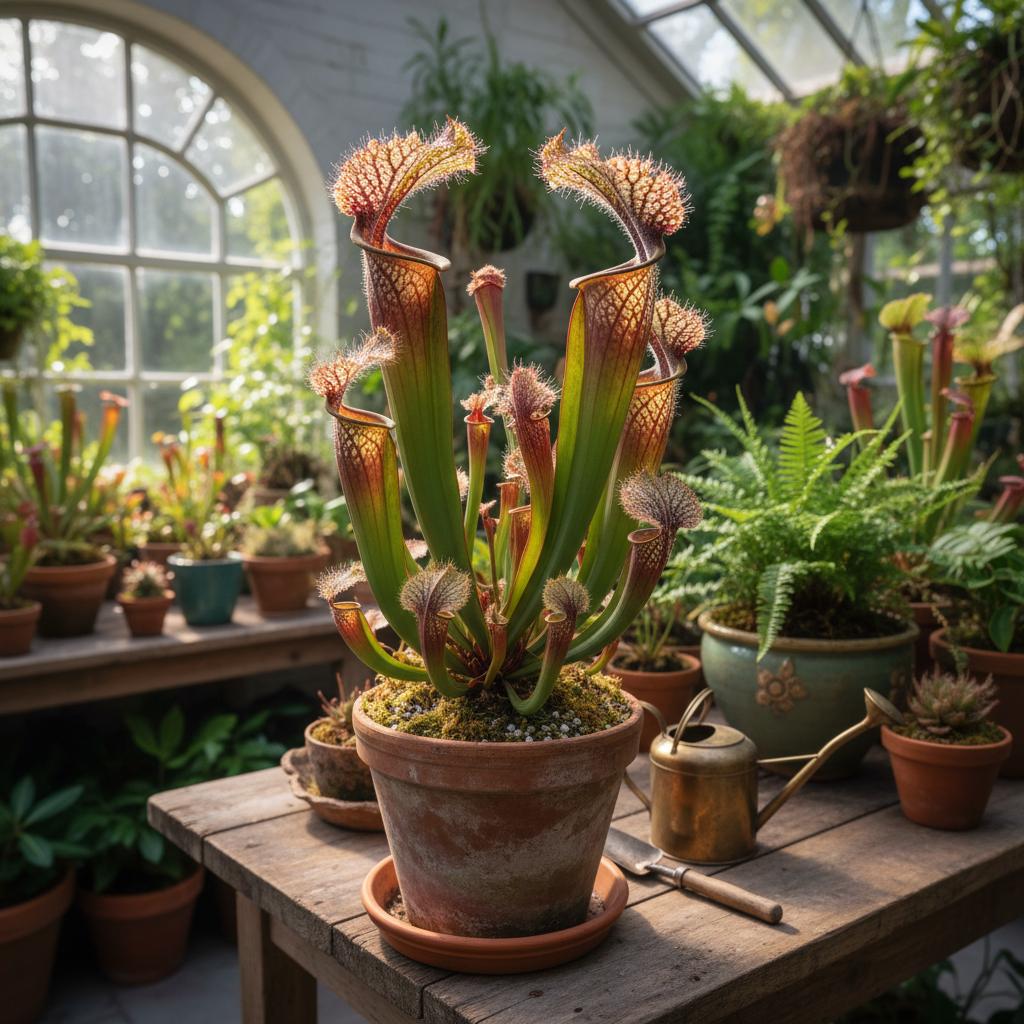
- Leaves: Modified into tubular, water-retaining pitchers with a flared hood, heavily veined with red or purple, lined with downward-pointing hairs;
- Flowers: Solitary, nodding, dark red to maroon, featuring a unique umbrella-like style, blooming on leafless stalks;
- Roots: Shallow, creeping rhizomes adapted to waterlogged, anaerobic bog soils.
Care Guide
Watering
Keep the pot sitting in 1 to 2 inches of pure water at all times.
Fertilization
Do not apply traditional fertilizers to the soil.. Carnivorous plants extract necessary nutrients from digested insects, not the soil.
Natural Insect Feeding:Do not use standard household composts (like banana peels or coffee grounds) as the minerals will burn the roots. If grown indoors, simply drop a small, dead household fly or a rehydrated freeze-dried bloodworm (fish food) into one mature pitcher. Avoid raw meat or human food.Pruning
- Trim off dead, entirely brown pitchers at the base in late winter before new spring growth emerges;
- Leave partially green pitchers intact, as they still photosynthesize;
- Snip off spent flower stalks to maintain a tidy appearance.
Toxicity
Warning: this plant may be toxic.
Pets & Humans
Pets: Non-toxic to cats per ASPCA guidelines.
Humans: Not toxic to humans, though ingestion of pitcher contents is highly unadvisable due to decaying insects.
Garden Uses & Culture
Culture: Discovered by early European botanists in the New World, it became a Victorian greenhouse fascination, symbolizing the exotic and slightly macabre wonders of nature.
Usage: Cultivated as an ornamental bog garden plant and used as an educational botanical specimen to demonstrate carnivorous plant adaptations.