 PlantFun
Plant Needs
Sunlight
Prefers bright indirect light or partial shade; avoid direct sunlight which can scorch the delicate foliage.
Watering
Requires consistently moist soil and high ambient humidity; do not let the soil dry out.
Temperature
Prefers warm, tropical temperatures and is highly sensitive to frost and cold drafts.
Characteristics
- Leaves: Tiny, scale-like, overlapping, arranged in four ranks along the stems, bright green, sometimes with silvery tips;
- Stems: Branching, somewhat upright then trailing or creeping, producing rhizophophores (root-bearing leafless branches) at the base;
- Reproduction: Non-flowering, produces spores in strobili (cones) at the tips of the branches.
Care Guide
Watering
Water frequently to keep the soil evenly moist, ensuring good drainage.
Fertilization
Apply a highly diluted balanced liquid fertilizer.. Selaginella are sensitive to heavy fertilization; always use at half or quarter strength.
Aquarium Water:Use water from routine freshwater aquarium changes; it provides gentle, low-dose nutrients perfect for sensitive lycophytes. Avoid if aquarium water contains added salts or medications.Pruning
- Snip off any brown or dried stems at the base to maintain appearance;
- Trim to maintain a compact shape if the plant becomes too leggy;
- Remove fallen debris from the center of the plant to prevent fungal rot.
Toxicity
Warning: this plant may be toxic.
Pets & Humans
Pets: Non-toxic to cats per ASPCA guidelines for most Selaginella species.
Humans: Generally considered non-toxic to humans.
Garden Uses & Culture
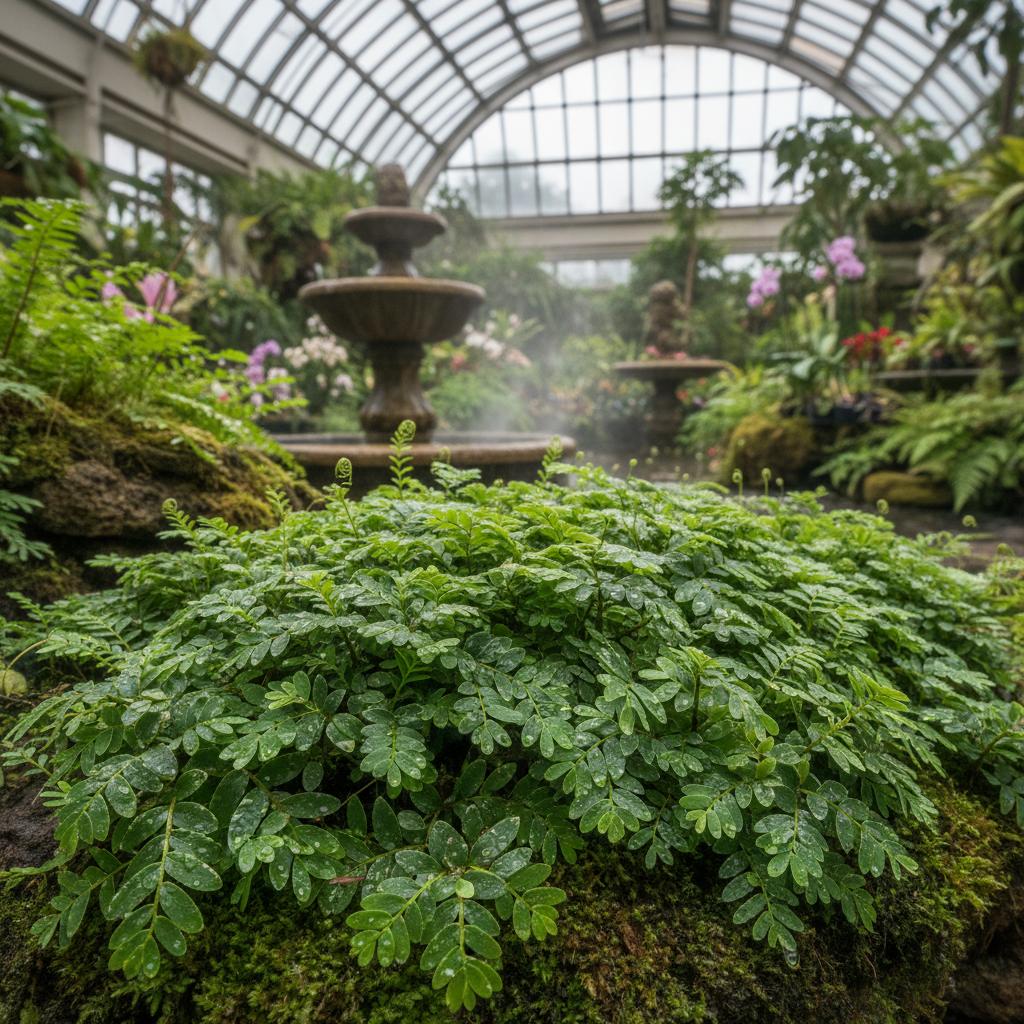
Culture: Highly prized during the Victorian fern craze (Pteridomania) in 19th-century Britain, often featured in ornate glass Wardian cases to maintain the high humidity it requires.
Usage: - Excellent for terrariums and bottle gardens; - Indoor potted foliage plant for humid areas like bathrooms; - Ground cover in tropical conservatories and greenhouses.