 PlantFun
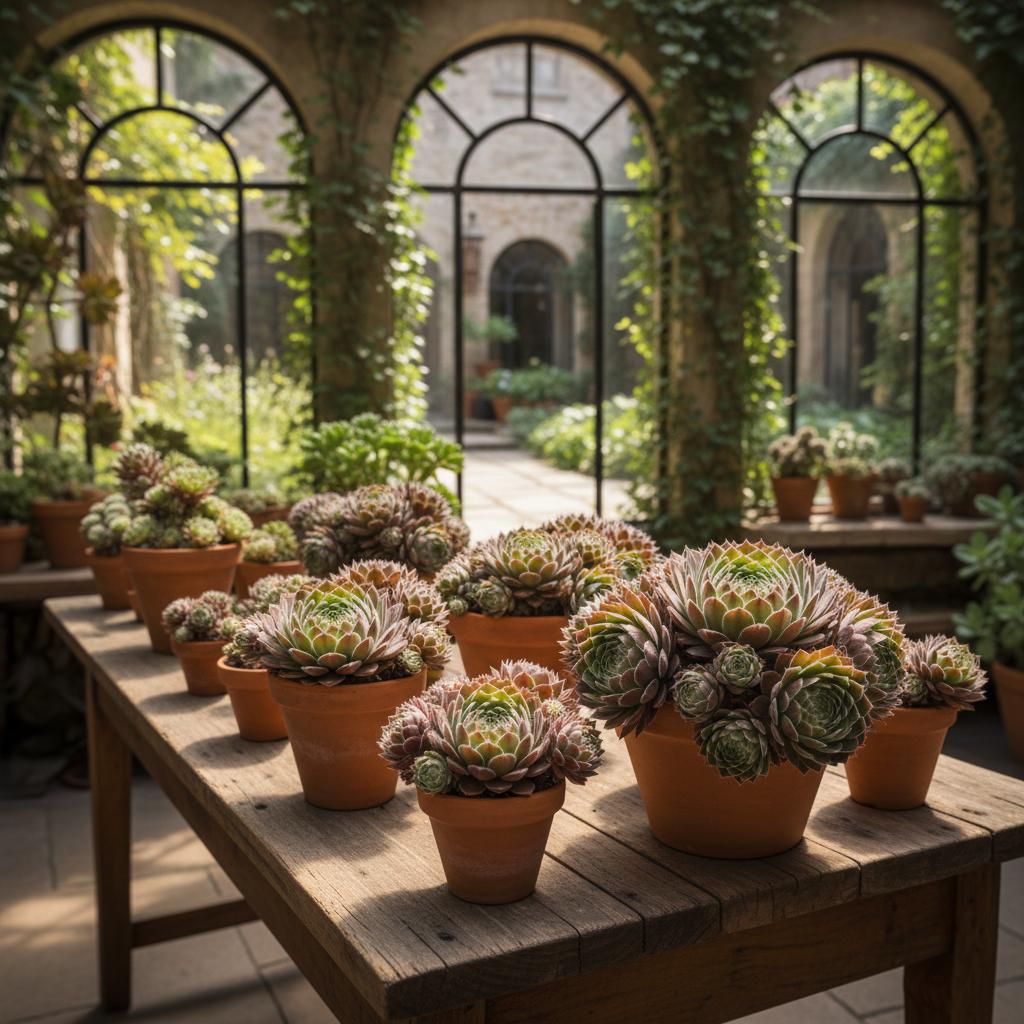
Plant Needs
Sunlight
Requires full sun to maintain tight rosette shape and vibrant coloration.
Watering
Highly drought-tolerant; water only when the soil is completely dry.
Temperature
Extremely cold hardy, thriving in alpine conditions, but dislikes excessive winter moisture.
Characteristics
- Leaves: Pale yellowish-green, fleshy, incurved, forming tight globular rosettes up to 4 cm across, with finely ciliate margins.
- Flowers: Pale yellow to greenish-yellow, bell-shaped, with 6 petals, borne on leafy stalks rising from the center of mature rosettes.
- Stem: Very short stolons that produce offsets (often called "rollers") which easily detach to root in nearby crevices.
- Roots: Shallow, fibrous root system adapted to gripping rocky substrates and absorbing surface moisture.
Care Guide
Watering
Water deeply but infrequently, allowing the soil to dry out entirely between waterings.
Fertilization
Apply a very dilute, low-nitrogen fertilizer once at the beginning of the growing season.. Avoid over-fertilizing, which causes weak, unnatural growth.
Eggshell Tea:Crush clean, dry eggshells and steep in water for a few days. Use the strained water to boost cell wall strength. Avoid over-fertilizing, as succulents prefer lean conditions.Pruning
- Dead Leaf Removal: Gently remove dried, dead basal leaves with tweezers to prevent rot and eliminate hiding spots for pests.
- Stalk Removal: Cut back dead flower stalks at the base after blooming (the flowering rosette is monocarpic and will die, but offsets will live on).
- Thinning: Thin out offsets if the cluster becomes too crowded, replanting them elsewhere.
Toxicity
Warning: this plant may be toxic.
Pets & Humans
Pets: Non-toxic to cats per ASPCA guidelines.
Humans: Non-toxic to humans; safe to handle.
Garden Uses & Culture
Culture: In European folklore, houseleeks (Sempervivum species) were traditionally planted on the roofs of houses to protect against lightning strikes and fire, a practice associated with Jupiter and Thor.
Usage: - **Ornamental**: Excellent for rock gardens, alpine troughs, green roofs, and xeriscaping. - **Erosion Control**: Helps stabilize soil in small rocky crevices.