 PlantFun
Plant Needs
Characteristics
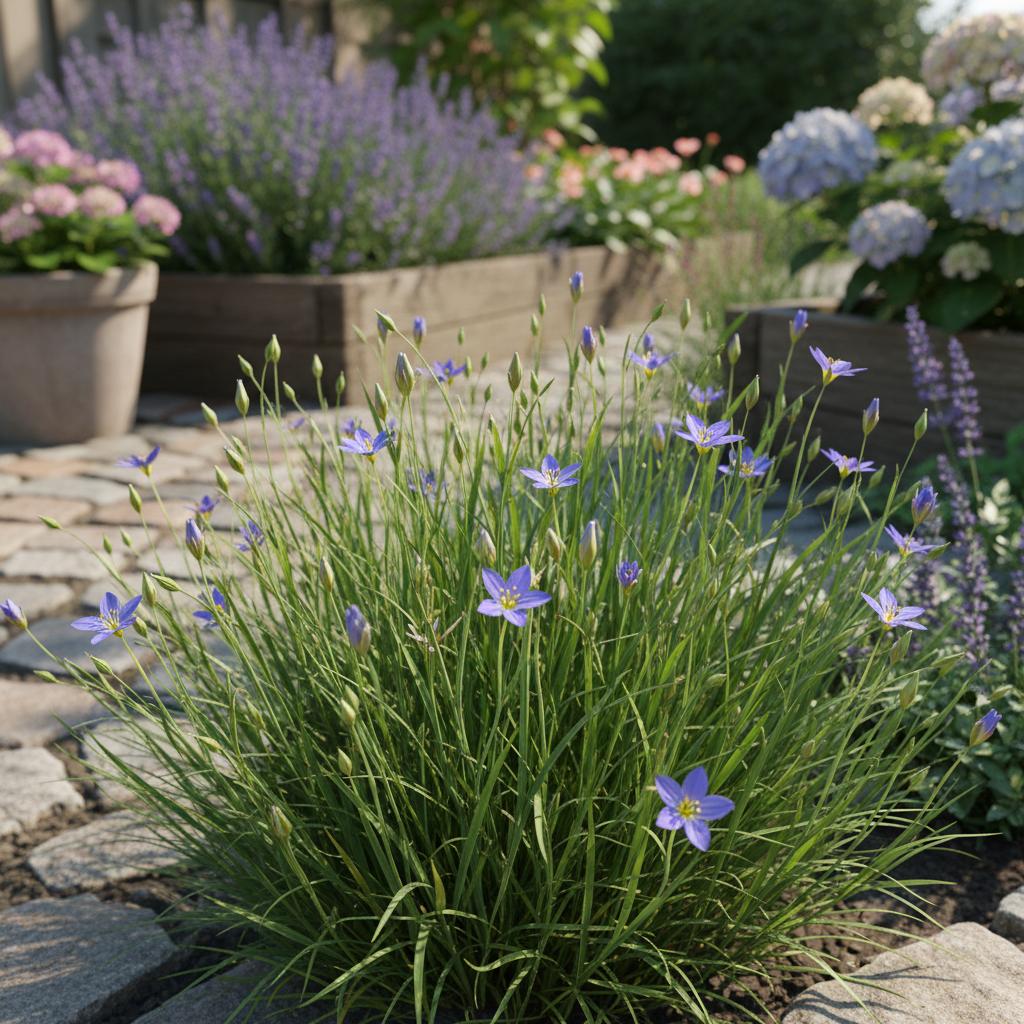
- Leaves: Grass-like, linear, flattened, light green, up to 5 mm wide, forming dense tufts;
- Flowers: Small, star-shaped, pale to bright blue or violet-blue with a distinct yellow center, consisting of 6 tepals tipped with a small point (mucronate);
- Stems: Flattened and distinctly winged, branching, resembling the foliage;
- Roots: Fibrous root system, occasionally weakly rhizomatous.
Care Guide
Water regularly to keep the soil evenly moist, especially during the blooming period.
Apply a light top-dressing of compost or a mild organic fertilizer as new growth emerges.. Avoid heavy nitrogen fertilizers, which promote floppy foliage at the expense of blooms.
Banana Peel Tea:Steep chopped banana peels in water for 24-48 hours. Strain and use the liquid to water the base of the plant to support healthy root development and vibrant blue blooms. Discard peels in the compost to avoid attracting pests.- Deadheading: Not strictly necessary, but shearing the plant back by half after the main bloom period can tidy its appearance and prevent aggressive self-seeding;
- Division: Divide clumps every 2 to 3 years in early spring or early autumn to maintain vigor and propagate new plants;
- Winter Cleanup: Remove dead or yellowing foliage in late autumn or early spring before new growth begins.
Toxicity
Warning: this plant may be toxic.
Pets: Non-toxic to cats per general botanical safety guidelines; no severe toxic principles identified.
Humans: Generally considered non-toxic to humans, though ingestion of large quantities of any non-food plant is not recommended.
Garden Uses & Culture
Culture: In Western garden lore, its diminutive, star-like flowers are often associated with fairy gardens and the fleeting, delicate beauty of early summer meadows.
Usage: Widely used in rock gardens, border fronts, cottage gardens, wild/meadow gardens, and as an edging plant along pathways.