 PlantFun
Plant Needs
Characteristics
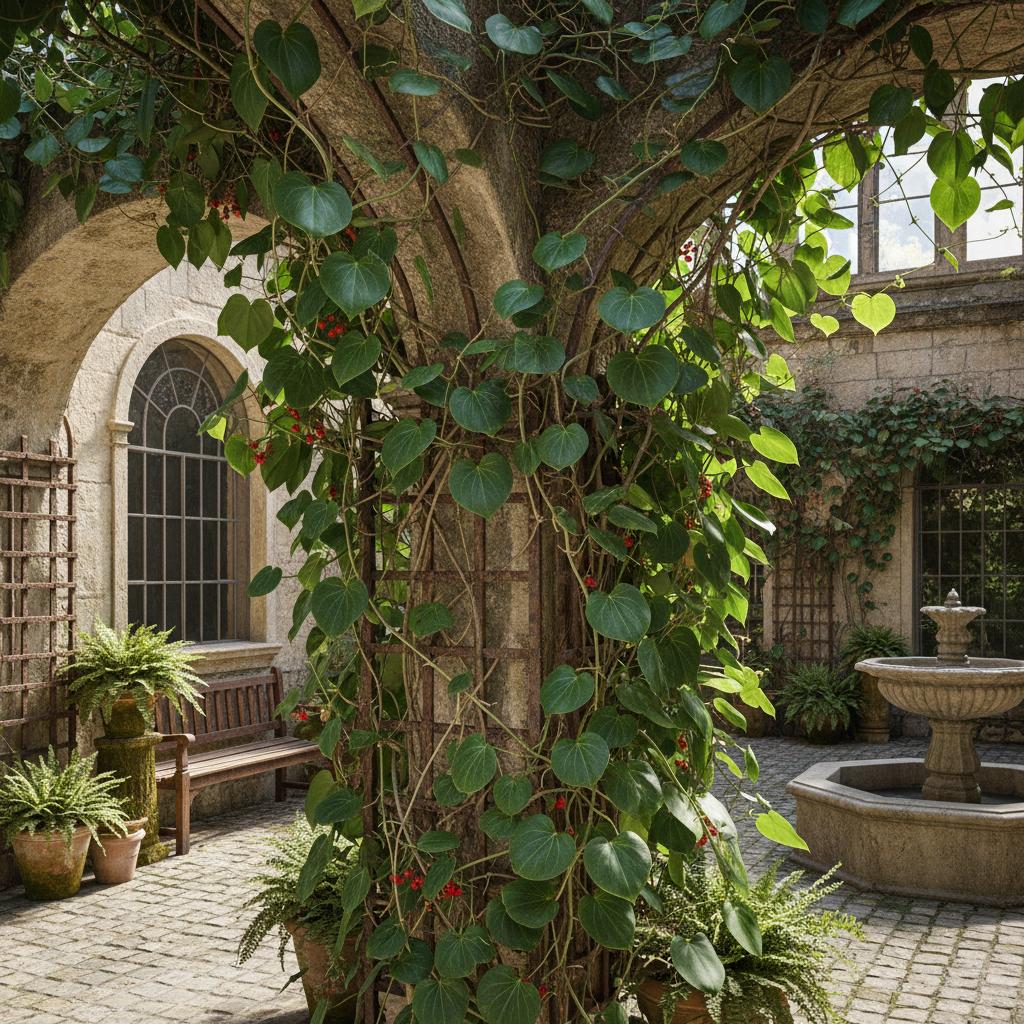
- Leaves: Alternate, leathery, broadly ovate to suborbicular, 3 to 9 cm long, with 5 to 7 prominent longitudinal veins; petioles often bear paired tendrils.
- Flowers: Dioecious, small, yellowish-green, arranged in axillary umbels.
- Stems: Woody, climbing or scrambling, often armed with scattered, stout prickles.
- Fruit: Globose berries, approximately 1 cm in diameter, turning bright red when fully ripe in autumn.
- Rhizome: Thick, tuberous, woody, and irregularly knotted.
Care Guide
Water regularly to keep the soil evenly moist during the active growing season.
Apply a balanced organic mulch or compost at the base to support spring growth.. Feed lightly during the early growing season to support foliage and root development.
Banana Peel Tea:Steep chopped banana peels in water for 24-48 hours. Strain and use the liquid to water the base of the plant to support root health and berry production. Discard the solids in a compost bin to avoid attracting pests.- Prune in late winter or early spring before new growth begins.
- Remove dead, damaged, or overly tangled vines to improve air circulation.
- Cut back aggressive shoots to control the plant's size and shape.
- Wear thick gloves when pruning to protect hands from the sharp prickles on the stems.
Toxicity
Warning: this plant may be toxic.
Pets: Non-toxic per ASPCA guidelines for the Smilax genus.
Humans: Generally considered non-toxic; rhizomes and young shoots have been historically consumed or used in herbal preparations.
Garden Uses & Culture
Culture: In the 16th century, the rhizome of this plant was heavily imported into Europe under the name "Radix Chinae." It became highly sought after by European physicians, including the famous anatomist Andreas Vesalius, who wrote a treatise on its use.
Usage: Cultivated as an ornamental climbing vine for its attractive foliage and bright red autumn berries. Historically, the rhizome was a major commodity in global herbal trade.