 PlantFun
Plant Needs
Characteristics
- Leaves: Alternate, lanceolate to linear, 5-15 cm long, margins sharply serrated, typically pubescent on the underside;
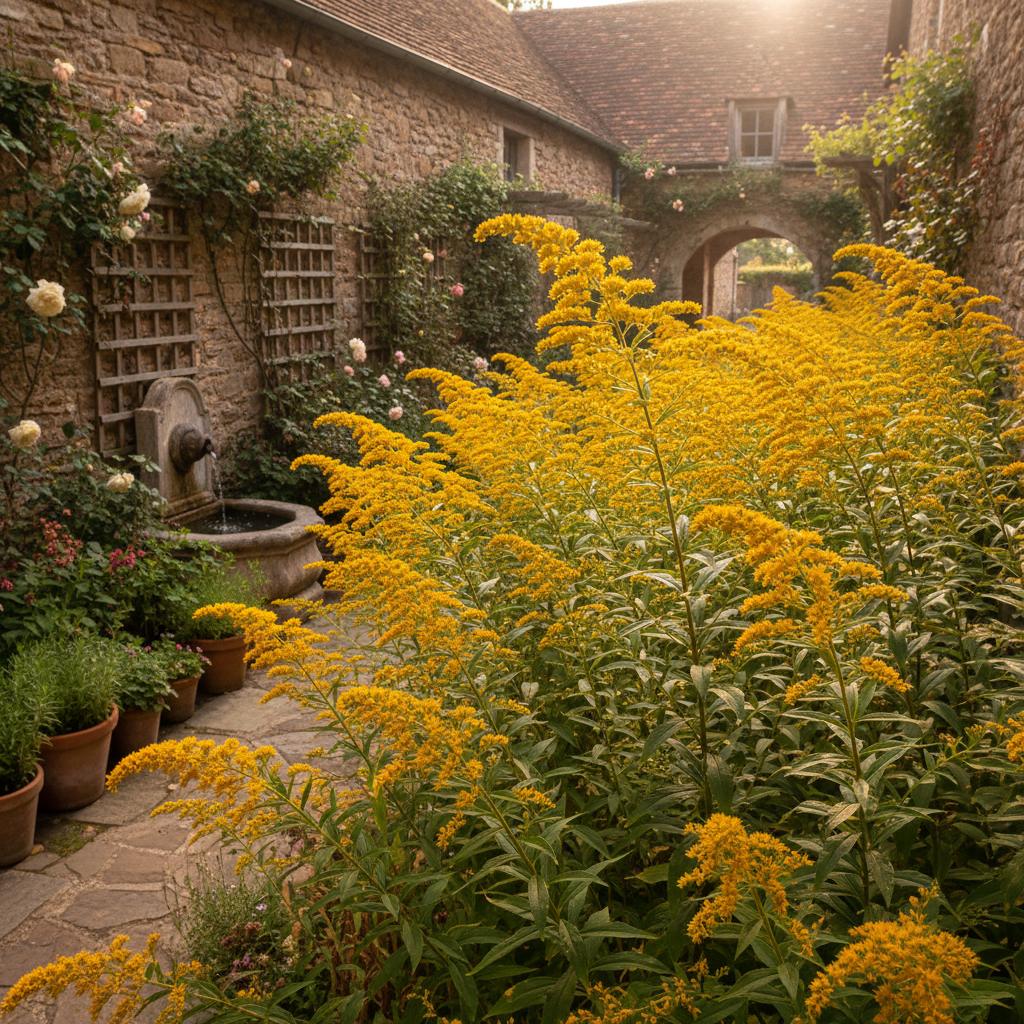
- Flowers: Tiny, bright yellow composite flower heads arranged in dense, pyramidal, branching panicles at the apex of the stems;
- Stems: Erect, central stem usually unbranched below the inflorescence, covered in fine hairs;
- Roots: Spreads vigorously via creeping rhizomes, forming dense clonal colonies.
Care Guide
Water weekly during early growth; reduce once established, relying mostly on rainfall
Top-dress lightly with compost if soil is extremely poor. Avoid rich fertilizers, as excess nitrogen causes weak stems that flop over under the weight of the flowers.
Banana Peel Tea:Soak chopped banana peels in a jar of water for 48 hours. Strain and pour at the base of the plant in early spring to support root and flower development. Avoid high-nitrogen additions.- Pinching: Pinch back stems by half in early summer (June) to encourage bushier growth and delay flowering slightly;
- Deadheading: Remove spent flower heads before they go to seed to prevent aggressive self-sowing;
- Winter Care: Leave stems standing in winter to provide shelter for beneficial insects, then cut back to the ground in early spring.
Toxicity
Warning: this plant may be toxic.
Pets: Non-toxic per ASPCA guidelines.
Humans: Generally recognized as safe; occasionally used in herbal teas, though handling foliage may cause mild contact dermatitis in highly sensitive individuals.
Garden Uses & Culture
Culture: In Western folklore, goldenrod was seen as a symbol of good fortune and hidden treasure. During the American Revolution, colonists used its leaves to brew "Liberty Tea" after the Boston Tea Party.
Usage: A keystone species for late-season pollinators, especially migrating Monarch butterflies and native bees. Historically used to produce a natural yellow dye.