 PlantFun
Plant Needs
Sunlight
Bright indirect light or partial sun; avoid intense midday sun which can scorch the stems.
Watering
Drought tolerant. Allow the soil to dry out completely between waterings.
Temperature
Prefers warm temperatures and is not frost-tolerant; keep above 10°C (50°F) in winter.
Characteristics
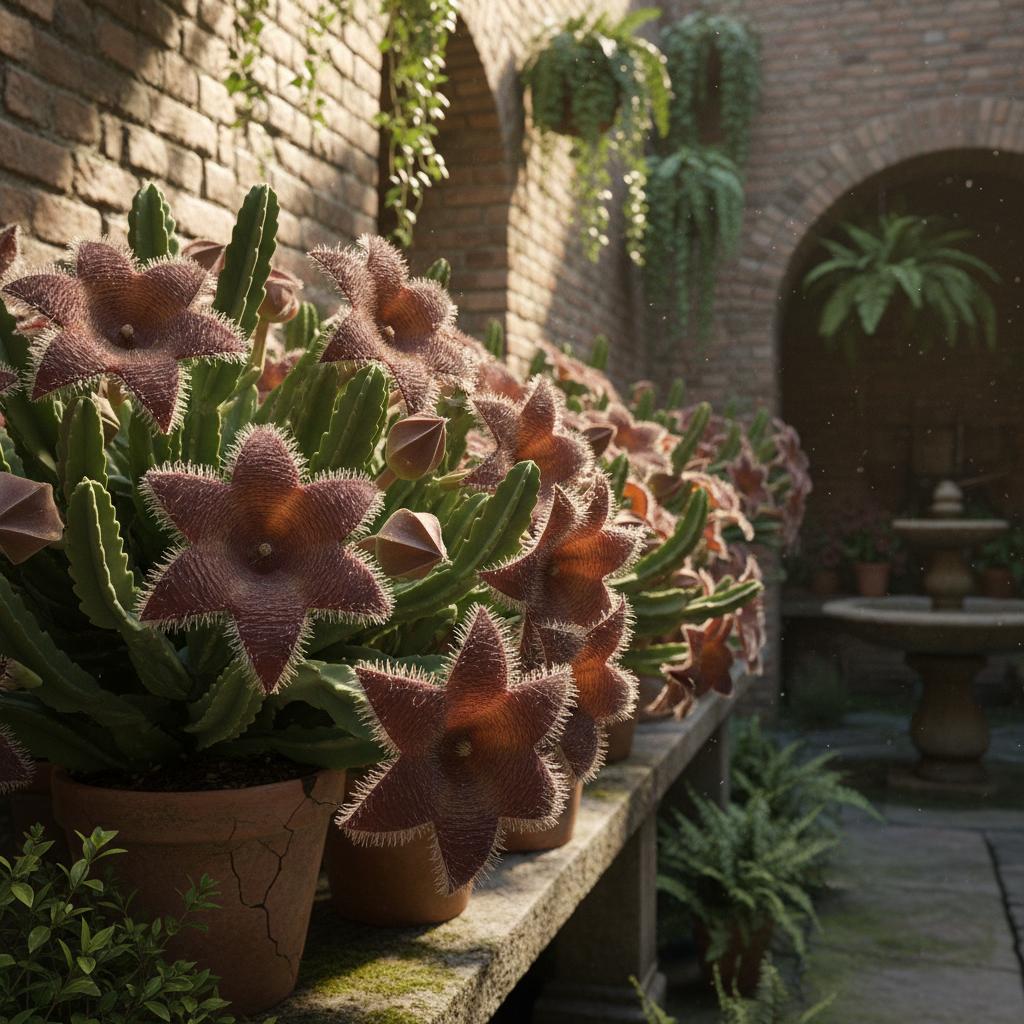
- Stems: Succulent, erect, 4-angled, pale green to reddish, with velvety surfaces and soft teeth along the margins;
- Flowers: Large, up to 15 cm across, 5-lobed star shape, dark purplish-red with pale transverse lines, densely covered in purplish or white hairs, emitting a strong carrion odor;
- Roots: Shallow, fibrous root system adapted to rocky, arid soils.
Care Guide
Watering
Water thoroughly when the soil is completely dry.
Fertilization
Apply a diluted, low-nitrogen succulent fertilizer once.. Feed sparingly during the active growing season.
Banana Peel Tea:Soak chopped banana peels in water for 24 hours, strain, and dilute 1:1 with water. Use during the summer to encourage large blooms. Ensure no solid pieces are left on the soil to avoid attracting pests.Pruning
- Remove spent flowers at the base of the pedicel to maintain tidiness;
- Cut away any dead, mushy, or dried stems using sterilized shears;
- Propagate healthy stem cuttings by letting them callus for a few days before planting.
Toxicity
Warning: this plant may be toxic.
Pets & Humans
Pets: Non-toxic to cats per ASPCA guidelines for Stapelia species.
Humans: No known toxicity; safe to handle, though the flowers emit a foul odor.
Garden Uses & Culture
Culture: In Western botanical collections, it is highly prized as a novelty plant, often showcased in "bizarre botany" exhibits to demonstrate deceptive pollination strategies.
Usage: - Ornamental container plant for sunny windowsills or greenhouses; - Educational specimen for demonstrating myophily (fly pollination).