 PlantFun
Plant Needs
Characteristics
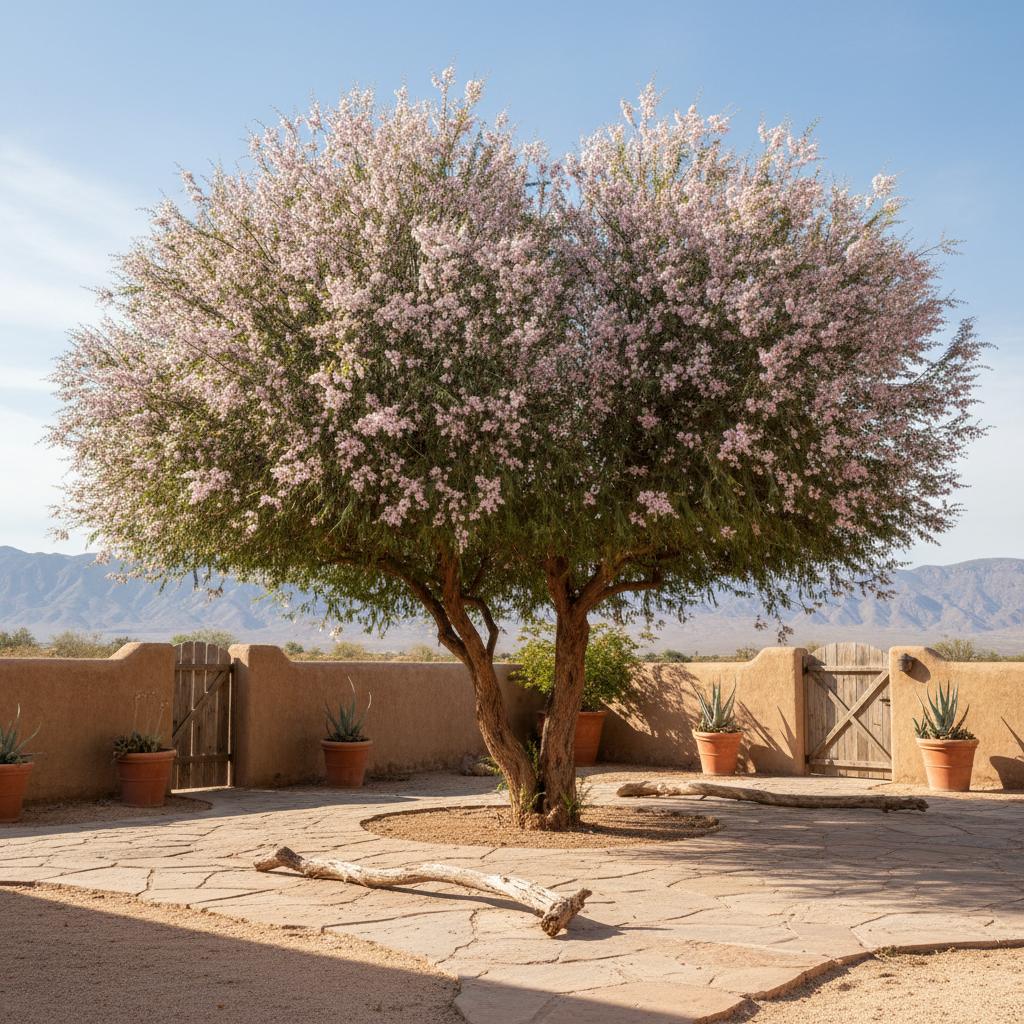
- Leaves: Scale-like, alternate, overlapping, pale green to bluish-green, featuring specialized glands that secrete salt;
- Flowers: Small, 5-petaled, pale pink to white, densely packed on slender, feathery racemes;
- Bark: Reddish-brown and smooth on young branches, becoming purplish-brown and deeply ridged with age;
- Roots: Extensive deep taproot system capable of reaching deep water tables.
Care Guide
Water deeply but infrequently to encourage deep root establishment
Apply a light layer of organic compost if soil is extremely depleted. Generally does not require supplemental feeding due to its high adaptability to poor soils.
Banana Peel Tea:Soak chopped banana peels in water for 48 hours. Dilute 1:1 with water and apply to the root zone. Avoid using chemical fertilizers or high-nitrogen mixes, as this plant is already adapted to nutrient-poor environments.- Timing: Prune in late winter or early spring before new growth begins;
- Maintenance: Remove dead, damaged, or crossing branches to maintain an open structure;
- Rejuvenation: Can be coppiced (cut back to the ground) if the shrub becomes too leggy or overgrown;
- Caution: Dispose of clippings properly, as branches can easily root in moist soil.
Toxicity
Warning: this plant may be toxic.
Pets: Non-toxic to cats per general botanical consensus.
Humans: No known toxicity to humans.
Garden Uses & Culture
Culture: In the American West, the Saltcedar is viewed as a controversial symbol of water conservation battles. Originally introduced in the 1800s for erosion control and as an ornamental, it is now widely regarded as an invasive water-guzzler that alters riparian ecosystems.
Usage: - **Erosion Control**: Historically planted to stabilize riverbanks and prevent soil erosion; - **Windbreaks**: Used in arid regions to create dense wind barriers; - **Ornamental**: Cultivated in harsh, saline landscapes where other plants fail to thrive.