 PlantFun
Plant Needs
Characteristics
- Leaves: Opposite, small (1-2 cm), ovate to oblong, glossy dark green, with scalloped or toothed margins; highly aromatic when crushed.
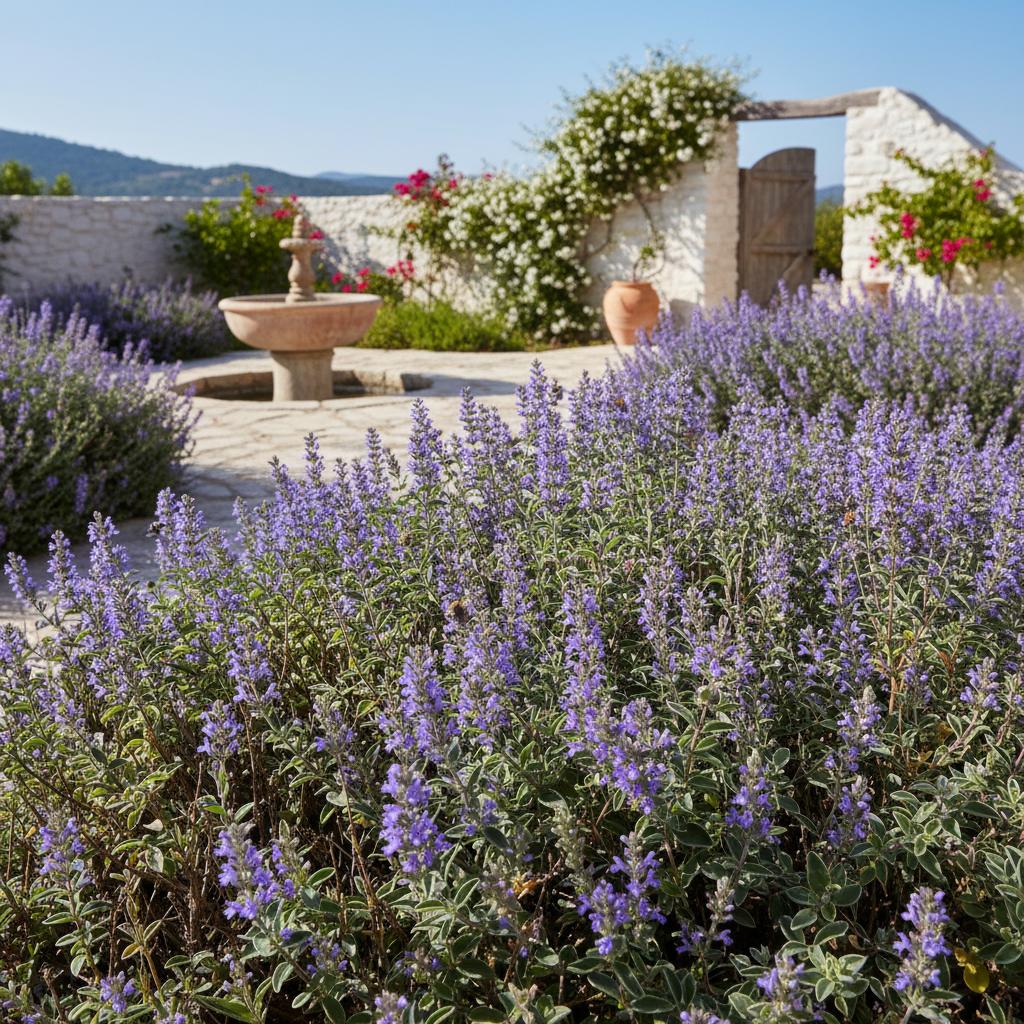
- Flowers: Whorls of small, tubular, two-lipped flowers lacking an upper lip, typically pink to pale purple, borne in terminal spikes.
- Stems: Square-shaped, woody at the base, ascending or decumbent, forming a dense mat or low mound.
Care Guide
Water deeply but infrequently, allowing soil to dry out between waterings.
Apply a light, balanced organic mulch or compost.. Germander prefers lean soils; over-fertilizing will cause floppy, weak growth.
Eggshell Powder:Crush clean, dry eggshells into a fine powder and sprinkle around the base to support cell wall growth; avoid over-application as Germander prefers lean soils.- Shear back by about one-third immediately after flowering to maintain a tight, compact shape.
- Prune in early spring to remove any dead or winter-damaged woody stems.
- Can be clipped tightly into low formal hedges, similar to boxwood.
Toxicity
Warning: this plant may be toxic.
Pets: Ingestion of foliage may cause mild gastrointestinal upset; large amounts could potentially stress the liver.
Humans: Contains neoclerodane diterpenoids which can cause hepatotoxicity (liver damage) if ingested in large quantities, particularly when brewed as a tea.
Garden Uses & Culture
Culture: During the Renaissance and Tudor periods in Europe, Wall Germander was a staple of formal knot gardens, valued for its ability to be sheared into intricate, low-growing geometric patterns.
Usage: - **Ornamental**: Excellent for low hedges, edging, rock gardens, and xeriscaping. - **Ecological**: Highly attractive to bees and other beneficial pollinators.