 PlantFun
Plant Needs
Characteristics
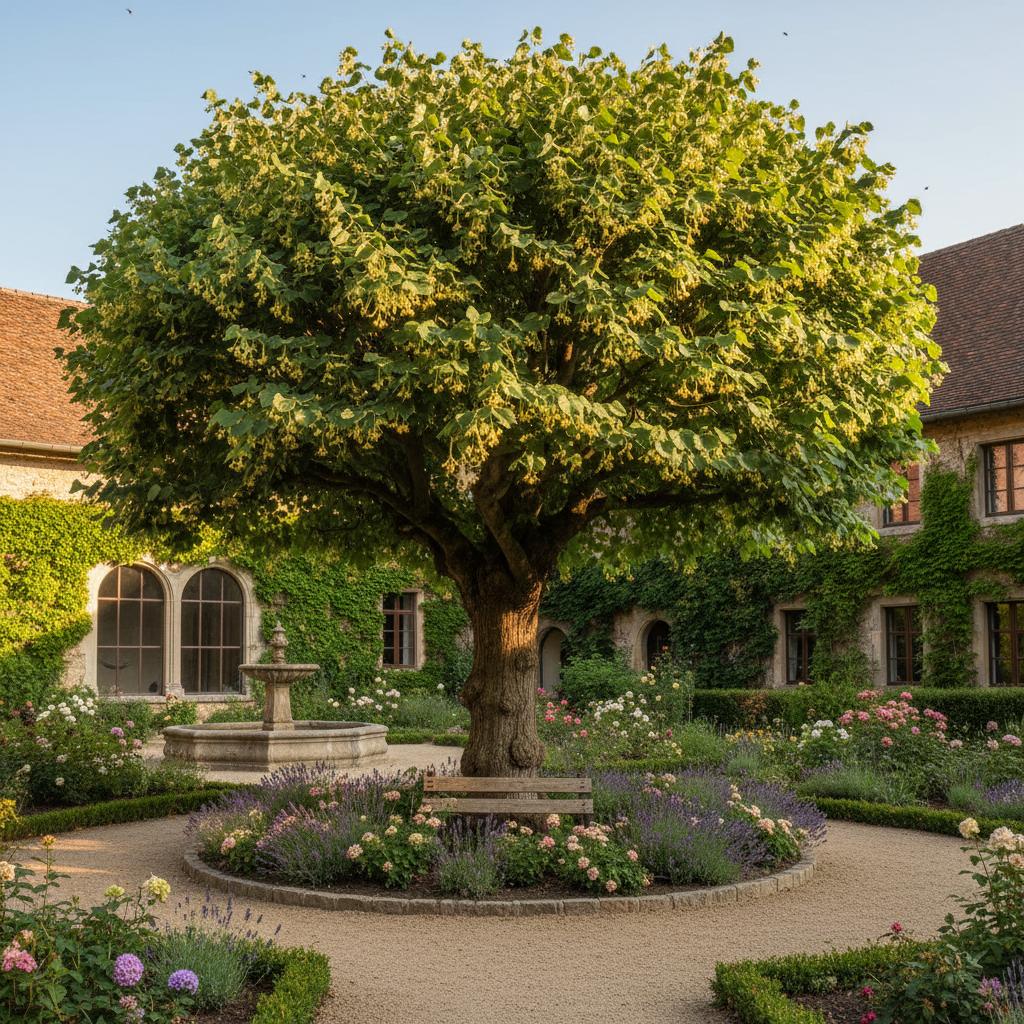
- Leaves: Deciduous, alternate, broadly ovate to orbicular, 5-10 cm long, cordate at the base, margins sharply serrate, glaucous beneath with tufts of hairs in the vein axils;
- Flowers: Pale yellow to yellowish-white, highly fragrant, borne in drooping cymes of 5-40 flowers, attached to a characteristic pale green, strap-shaped leafy bract;
- Bark: Grayish-brown, smooth on young trees, becoming shallowly fissured and ridged with age;
- Fruit: Small, globose, nut-like, indehiscent, covered in dense brownish tomentum.
Care Guide
Water deeply once a week during active growth and dry spells to establish a strong root system.
Apply a layer of organic compost or a balanced slow-release fertilizer at the base before new growth begins.. Mature trees rarely need supplemental feeding if planted in good soil.
Banana Peel and Coffee Ground Compost:Bury chopped banana peels and used coffee grounds in the soil around the drip line in early spring to provide a gentle, slow-release nutrient boost. Avoid placing directly against the trunk.- Prune in late winter or early spring while the tree is dormant;
- Remove dead, diseased, or crossing branches to maintain a healthy framework;
- Trim basal suckers regularly to direct energy into the main trunk;
- Avoid heavy pruning, as lindens naturally form an attractive, symmetrical crown.
Toxicity
Warning: this plant may be toxic.
Pets: Non-toxic to cats per ASPCA guidelines for Tilia species.
Humans: No toxicity reported; flowers are commonly used to make herbal infusions.
Garden Uses & Culture
Culture: In Western culture, linden trees (Tilia spp.) are historically associated with romance, truth, and justice. In Germanic traditions, the village linden (Lindenbaum) was the central gathering place for celebrations, dances, and judicial assemblies.
Usage: - **Ornamental**: Widely planted as a shade tree in parks and along streets; - **Culinary/Medicinal**: Flowers are harvested to make soothing linden tea; - **Apiculture**: Highly valued by beekeepers for producing premium linden honey; - **Woodworking**: The soft, easily worked wood (basswood) is prized for carving and making musical instruments.