 PlantFun
Plant Needs
Sunlight
Bright, indirect sunlight or filtered morning sun.
Watering
Soak in water for 20-30 minutes once a week, or mist thoroughly 2-3 times a week.
Temperature
Prefers warm environments and must be protected from frost.
Characteristics
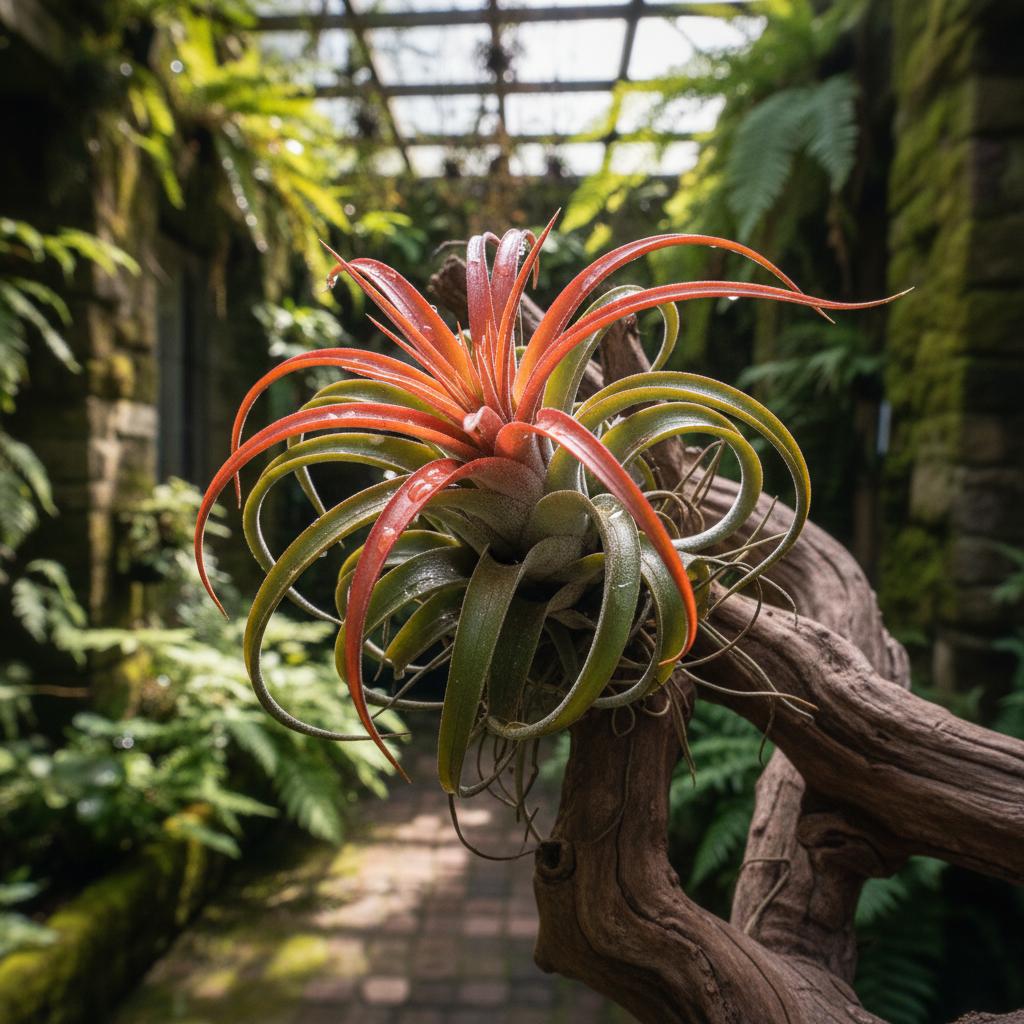
- Leaves: Soft, velvety, pale green leaves covered in trichomes, forming a dense rosette that blushes deep red or burgundy prior to blooming;
- Flowers: Tubular, violet-purple flowers emerging directly from the center of the rosette without a prominent floral bract;
- Roots: Wiry and minimal, functioning solely as holdfasts to anchor the plant to tree bark or rocks, not for nutrient absorption.
Care Guide
Watering
Soak weekly and mist between waterings if the air is dry.
Fertilization
Mist with diluted fertilizer once a month.. Use a specialized bromeliad fertilizer or highly diluted standard indoor plant food.
Aquarium Water Spray:Use water from a freshwater aquarium water change, dilute 1:1 with distilled water, and mist lightly. Avoid high salts or foul-smelling water.Pruning
- Gently pull away dried or brown basal leaves from the bottom of the rosette;
- Snip off spent flowers at their base once they wither to encourage pup production;
- Do not trim healthy leaf tips unless they are completely dead and crispy.
Toxicity
Warning: this plant may be toxic.
Pets & Humans
Pets: Non-toxic to cats per ASPCA guidelines for Tillandsia species.
Humans: Non-toxic to humans.
Garden Uses & Culture
Culture: Highly popular in modern Western interior design, often featured in minimalist, soil-free displays, geometric himmeli brass prisms, and vertical wall gardens.
Usage: - Indoor ornamental plant; - Terrarium and vivarium focal point; - Mounted on driftwood or cork bark for naturalistic displays.