 PlantFun
Plant Needs
Characteristics
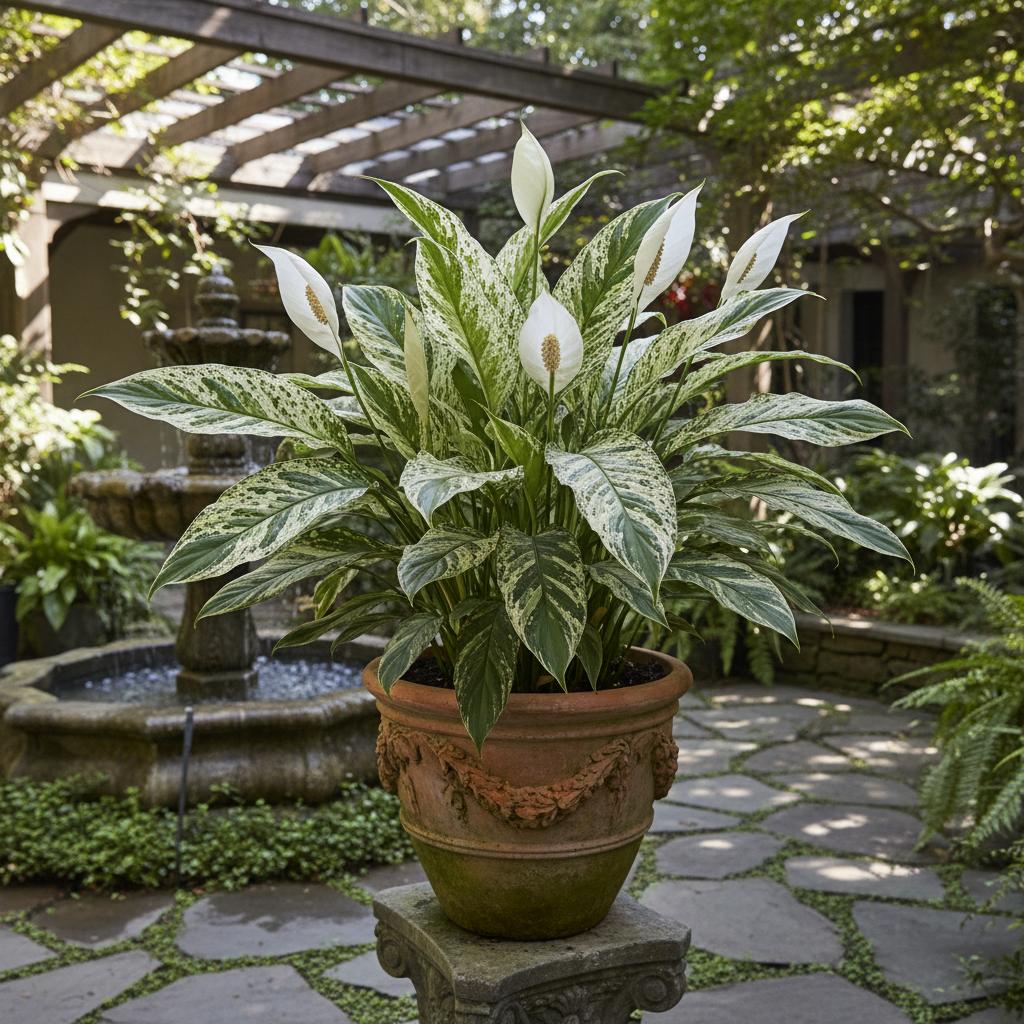
- Leaves: Dark green, glossy, heavily puckered or crinkled, with irregular white to cream variegation;
- Flowers: White spathe surrounding a pale yellow to white spadix, typical of aroids, rising above the foliage;
- Stems: Clumping habit, emerging from an underground rhizome.
Care Guide
Keep soil evenly moist, watering when the surface begins to dry.
Apply a balanced liquid fertilizer diluted to half strength.. Fertilize only during the active growing season; flush the soil occasionally to prevent salt buildup.
Banana Peel Tea:Steep chopped banana peels in water for 24 hours, strain, and dilute 1:1 with water. Use as a soil drench to encourage blooming. Discard the solid peels in the compost to avoid attracting fungus gnats indoors.- Remove dead, brown, or yellowing leaves at the base of the stem;
- Cut back spent flower stalks to the base to redirect energy to the foliage;
- Wipe leaves with a damp cloth occasionally to remove dust and support photosynthesis.
Toxicity
Warning: this plant may be toxic.
Pets: Toxic per ASPCA. Symptoms include oral irritation, intense burning of mouth, tongue and lips, excessive drooling, vomiting, and difficulty swallowing.
Humans: Contains calcium oxalate crystals; ingestion can cause oral irritation and mild stomach upset.
Garden Uses & Culture
Culture: In Western traditions, the white spathe of the peace lily is often seen as resembling a white flag of surrender, symbolizing peace, purity, and rebirth. It is a highly popular sympathy gift in North America and Europe to offer comfort during times of loss.
Usage: Popular indoor ornamental plant, valued for its textured foliage and air-purifying qualities.