 PlantFun
Plant Needs
Sunlight
Requires at least 6 hours of direct sunlight daily for vigorous growth and red trap coloration.
Watering
Requires constant moisture using the tray method; strictly use distilled, reverse osmosis, or rainwater only.
Temperature
Thrives in warm summers but requires a cold winter dormancy period (0-10°C) for 3-4 months to survive long-term.
Characteristics
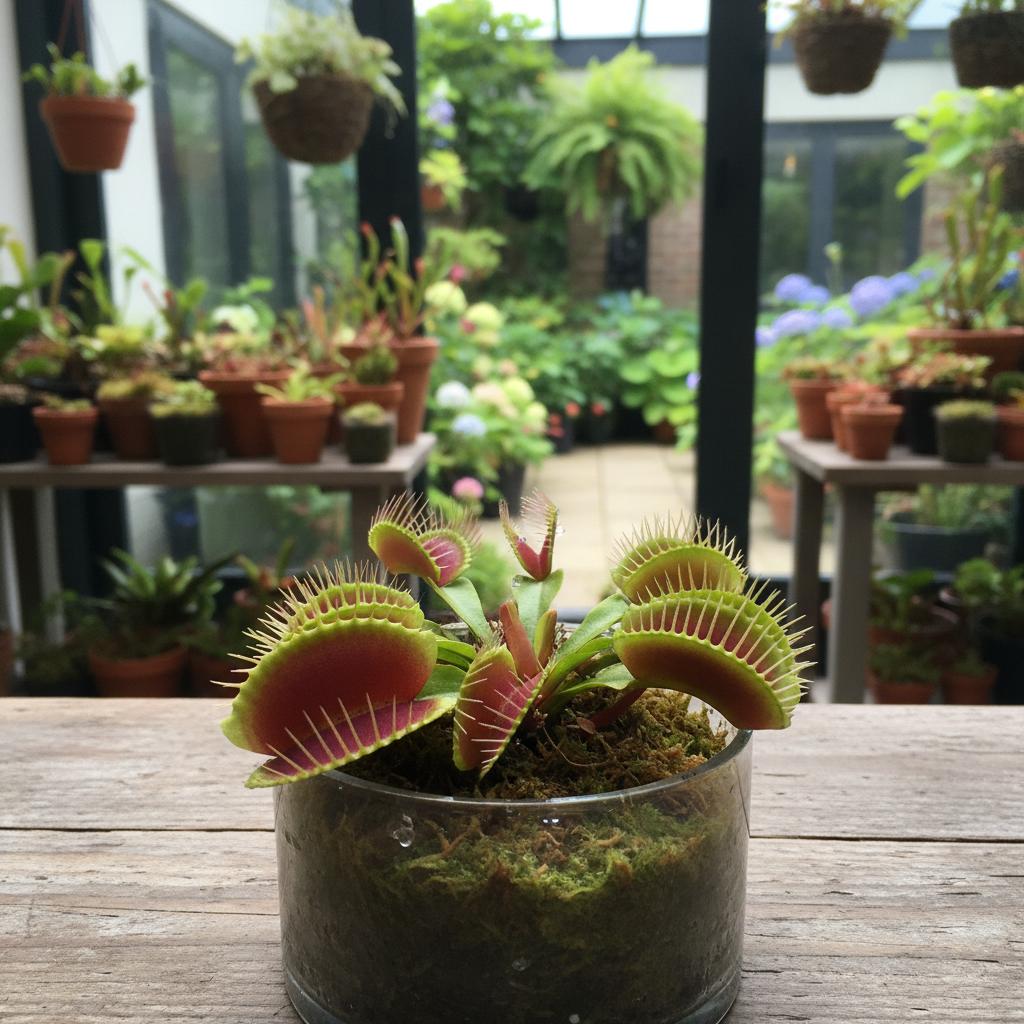
- Leaves: Rosette-forming, modified into a trapping structure with two lobes hinged at the midrib; the 'Dente' cultivar features shorter, triangular, tooth-like marginal cilia (bristles) compared to the typical long, needle-like cilia of the standard species;
- Flowers: Small, white, 5-petaled flowers borne on a tall scape (15-30 cm) well above the traps to prevent trapping essential pollinators;
- Roots: Short, unbranched rhizome adapted to constantly wet, nutrient-poor peat soils.
Care Guide
Watering
Keep the pot sitting in 1-2 inches of distilled or rainwater at all times.
Fertilization
Do not apply soil fertilizers.. Carnivorous plants derive their nutrients from catching insects; soil fertilizers will burn their roots and kill them.
Household Insects:Do not use any traditional soil fertilizers, compost, or food scraps. Instead, feed one trap a live or freshly swatted household fly or small spider. Gently massage the outside of the trap after it closes to simulate struggling prey and trigger digestion. Never feed them raw meat or cheese, which will rot the trap.Pruning
- Dead leaves: Trim off traps and leaves once they turn completely black to prevent mold and fungal infections;
- Flower stalks: Cut off flower stalks in early spring as soon as they appear, unless seeds are desired, to redirect the plant's energy into growing larger traps.
Toxicity
Warning: this plant may be toxic.
Pets & Humans
Pets: Non-toxic to cats per ASPCA.
Humans: Non-toxic to humans; traps may cause a very slight pinch but cannot break the skin.
Garden Uses & Culture
Culture: Fascinated early botanists and was famously described by Charles Darwin. It has heavily influenced Western pop culture, most notably inspiring the alien plant "Audrey II" in the musical "Little Shop of Horrors".
Usage: Cultivated widely as an educational botanical specimen and a novelty ornamental carnivorous plant.