 PlantFun
Plant Needs
Sunlight
Prefers bright, indirect light to full sun. Can tolerate partial shade but grows slower.
Watering
Highly drought-tolerant. Water only when the top half of the soil is completely dry.
Temperature
Thrives in warm temperatures; protect from frost and freezing conditions.
Characteristics
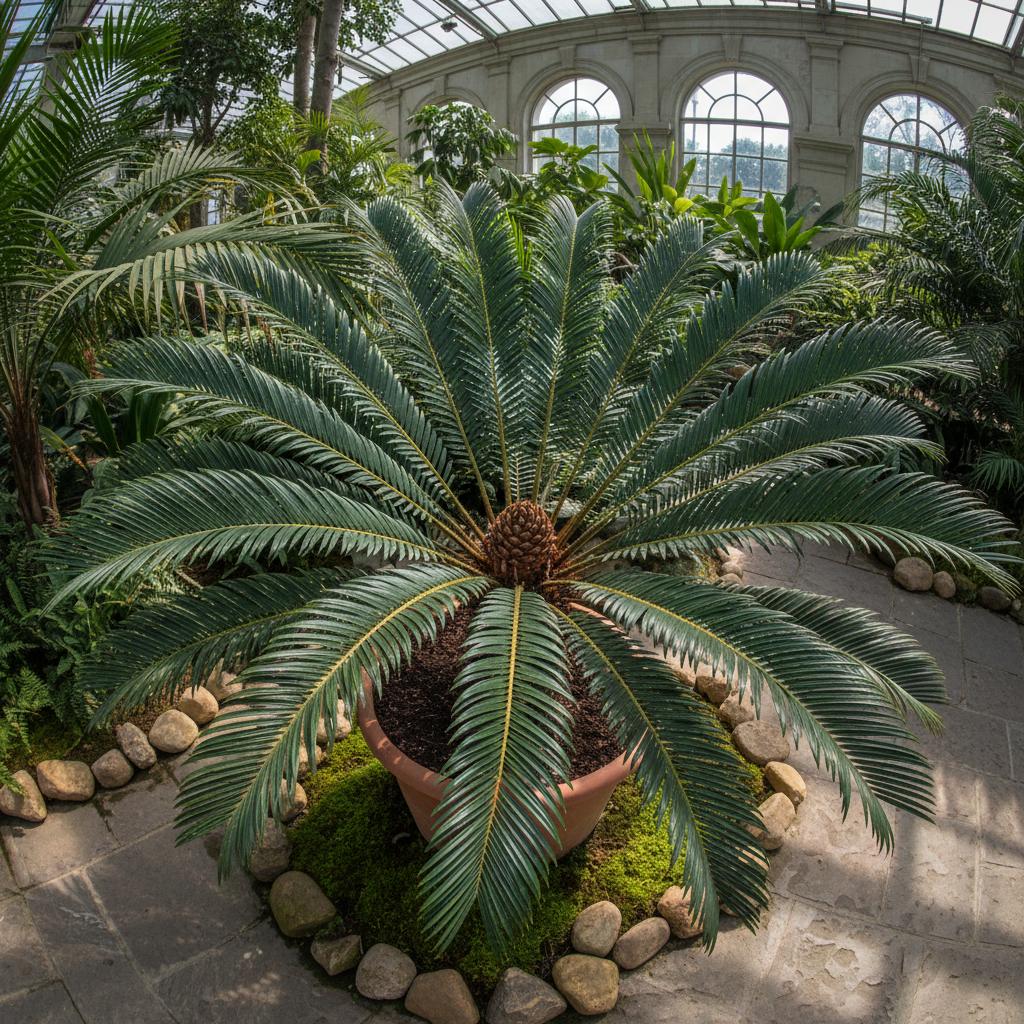
- Leaves: Pinnately compound, up to 1 meter long; leaflets are thick, leathery, oval to obovate, covered with fine rust-colored fuzz (furfuraceous), feeling like stiff cardboard.
- Stem: Short, thick, partially subterranean, fleshy trunk that serves as a water reservoir.
- Cones: Dioecious; male cones are elongated and cylindrical, while female cones are shorter, barrel-shaped, and produce fleshy, bright red seeds when mature.
- Roots: Fleshy, tuberous root system with specialized coralloid roots that host nitrogen-fixing cyanobacteria.
Care Guide
Watering
Water thoroughly when the soil dries out completely.
Fertilization
Apply a balanced, slow-release fertilizer.. Requires minimal feeding; avoid over-fertilizing which can burn the roots.
Banana Peel Tea:Steep chopped banana peels in water for 24 hours, strain, and use the liquid to water the plant. Avoid leaving raw peels on the soil surface to prevent pests and mold.Pruning
- Remove only completely dead, brown leaves at the base of the plant.
- Never cut the central growing point (apex), as this will halt growth or kill the plant.
- Wear gloves when pruning to avoid irritation from the stiff, fuzzy foliage.
Toxicity
Warning: this plant may be toxic.
Pets & Humans
Pets: Highly toxic per ASPCA. Ingestion of any part, especially seeds, causes severe liver damage and gastrointestinal issues.
Humans: Highly toxic if ingested. Contains cycasin, which can cause severe gastrointestinal distress and liver failure.
Garden Uses & Culture
Culture: Frequently utilized in modern xeriscaping and architectural garden designs across the Americas, valued for its striking, symmetrical rosette and prehistoric aesthetic.
Usage: Popular as a landscape specimen in warm climates, a patio container plant, and a robust indoor houseplant.