 PlantFun
Plant Needs
Characteristics
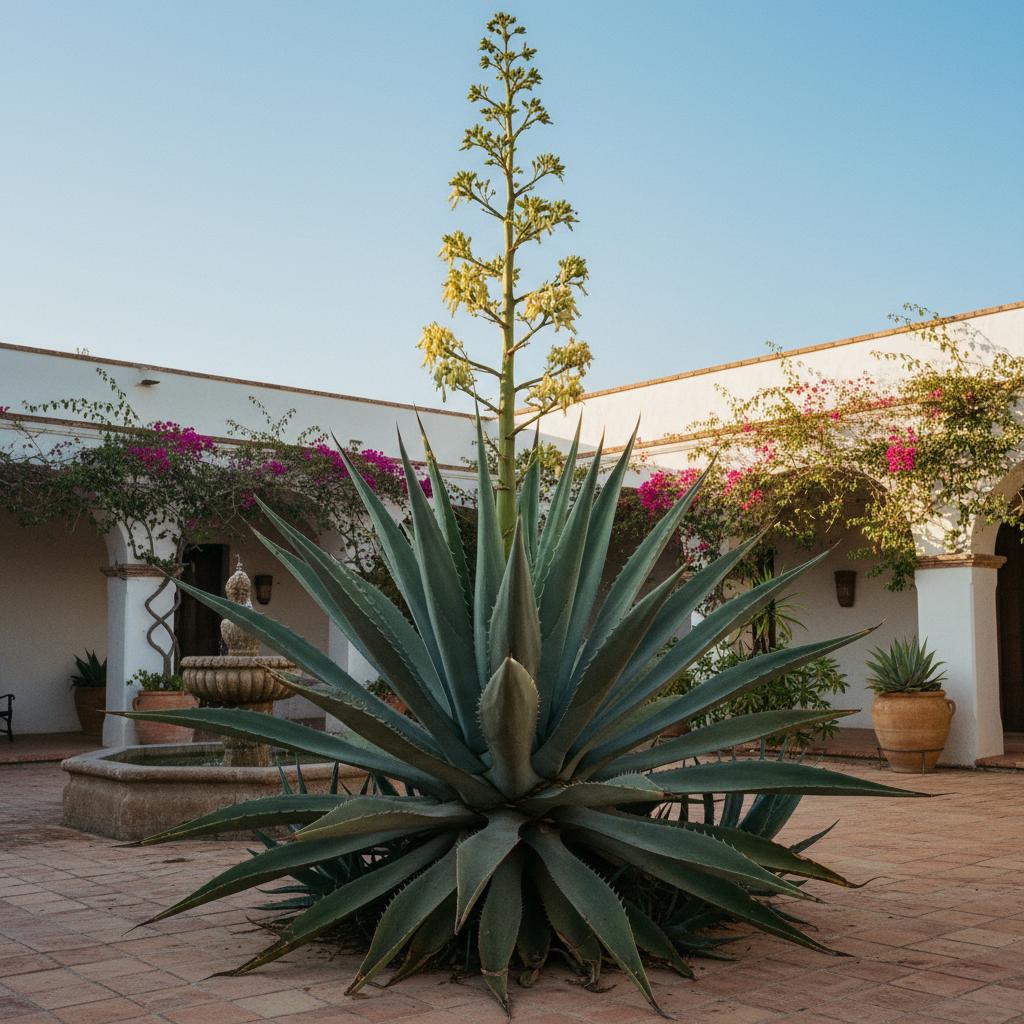
- Leaves: Sword-shaped, fleshy, stiff, dark green to glaucous, up to 2 meters long, ending in a sharp dark terminal spine, margins generally smooth without teeth;
- Flowers: Tall panicle inflorescence up to 6 meters, bearing greenish-yellow flowers 5-6 cm long, often producing bulbils after blooming;
- Stem: Short, thick central stem up to 1 meter tall in mature specimens.
Care Guide
Water deeply but infrequently, allowing soil to dry out completely.
Apply a light, balanced fertilizer once.. Fertilize once every 2 months during the growing season.
Banana Peel Tea:Steep chopped banana peels in water for 24 hours. Dilute 1:1 with water and apply to the soil to support root and structural strength. Avoid applying directly to the rosette crown to prevent rot.- Remove dead, dying, or damaged lower leaves by cutting close to the stem;
- Clip off the sharp terminal spines if planted near walkways to prevent injury;
- After the plant flowers and dies, remove the entire main rosette to allow pups to grow.
Toxicity
Warning: this plant may be toxic.
Pets: Mild oral and gastrointestinal irritation if ingested (per ASPCA).
Humans: Sap contains calcium oxalate crystals and saponins that can cause contact dermatitis.
Garden Uses & Culture
Culture: Historically vital in the maritime and agricultural industries of the Americas and Europe for manufacturing durable rope, twine, and netting before the advent of synthetic fibers.
Usage: - **Commercial**: Cultivated extensively for sisal fiber used in ropes, twine, dartboards, and scratching posts; - **Landscaping**: Used as a striking architectural specimen in xeriscaping and desert gardens.