 PlantFun
Plant Needs
Sunlight
Prefers partial to full sun; thrives with morning sunlight and some afternoon shade in hotter climates.
Watering
Moderate water requirements; drought-tolerant once established due to its tuberous roots.
Temperature
Highly adaptable and cold hardy, surviving freezing winter temperatures while tolerating summer heat.
Characteristics
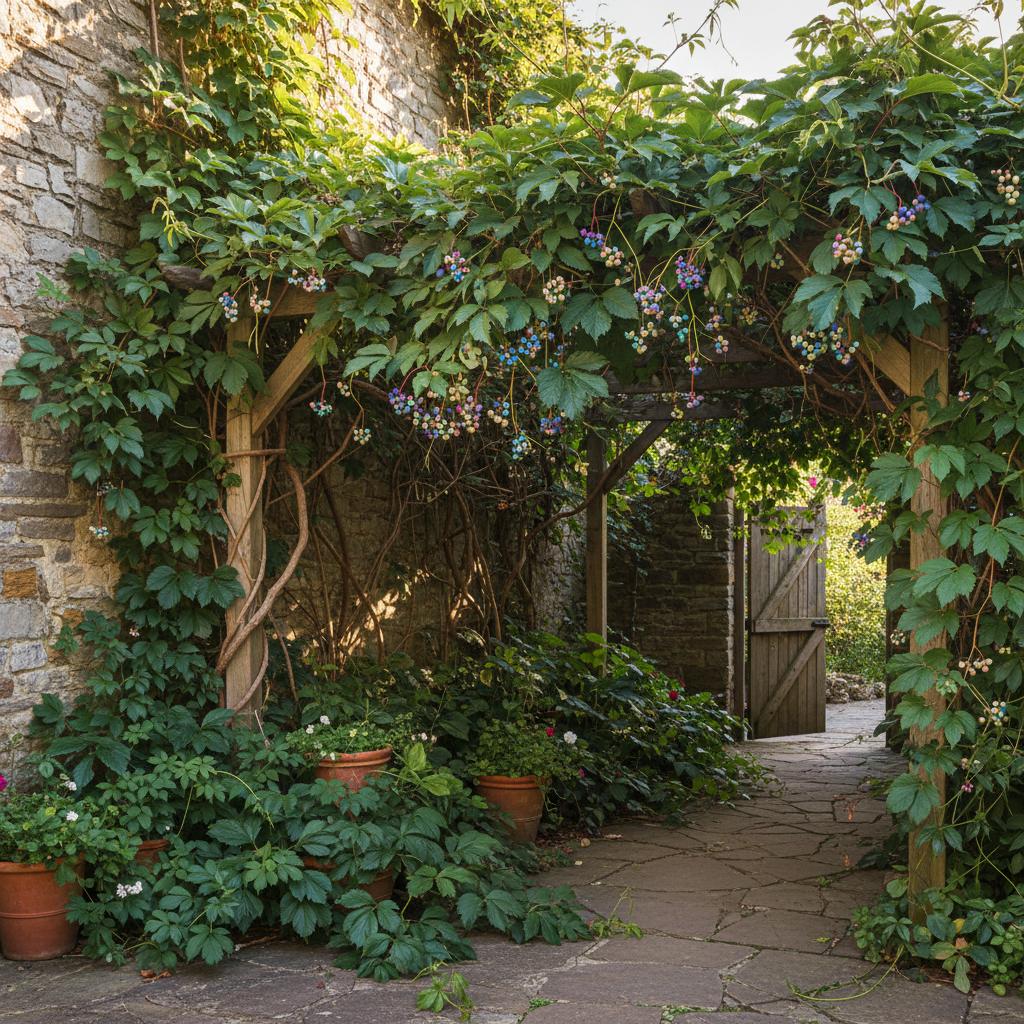
- Leaves: Alternate, palmately compound or deeply 3-5 lobed, margins serrate, glossy green above and paler beneath;
- Flowers: Small, greenish-yellow, arranged in leaf-opposed cymose inflorescences;
- Fruit: Small spherical berries that mature to a bluish or purplish-black color;
- Roots: Distinctive thick, fleshy, and tuberous root system.
Care Guide
Watering
Water deeply when the top inch of soil dries out to support active vine growth.
Fertilization
Apply a balanced slow-release fertilizer as new growth appears in early spring.. Avoid over-fertilizing, which can lead to excessive foliage at the expense of root health.
Banana Peel Tea:Soak chopped banana peels in water for 24-48 hours. Strain and use the liquid to water the base of the vine to support robust root and stem growth. Discard solids in compost to avoid attracting pests.Pruning
- Prune in late winter or early spring before new growth begins;
- Remove dead, damaged, or crossing vines to maintain good air circulation;
- Cut back aggressively if the vine outgrows its designated trellis or support space.
Toxicity
Warning: this plant may be toxic.
Pets & Humans
Pets: Non-toxic to cats per general guidelines for the Ampelopsis genus.
Humans: Generally considered safe for ornamental handling; no significant toxicity reported for daily contact.
Garden Uses & Culture
Culture: N/A
Usage: Excellent ornamental vine for covering trellises, arbors, fences, and unsightly walls in temperate gardens.