 PlantFun
Plant Needs
Characteristics
- Leaves: Alternate, simple, deeply 3-5 lobed, margins coarsely toothed, green above and slightly hairy beneath;
- Flowers: Small, greenish-white, borne in cymes opposite the leaves;
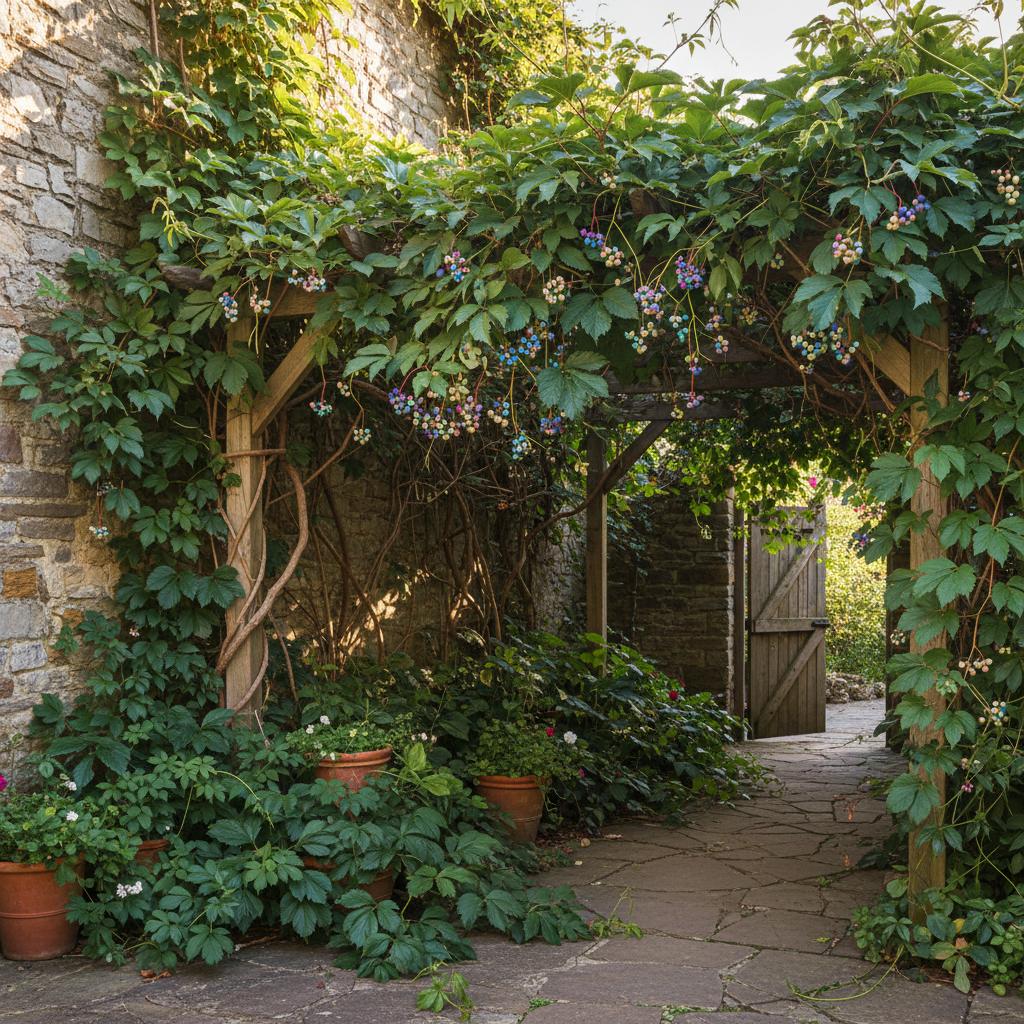
- Fruit: Spherical berries that ripen through shades of green, pink, purple, and bright porcelain blue, often speckled;
- Stem: Woody vine with non-adhesive tendrils occurring opposite the leaves, bark features lenticels.
Care Guide
Water deeply when the top 2 inches of soil become dry.
Apply a light layer of compost or balanced organic matter.. Requires minimal feeding; over-fertilizing reduces fruit yield.
Banana Peel Tea:Steep chopped banana peels in water for 24-48 hours. Dilute 1:1 with water and apply to the base to support root health and vibrant berry development. Discard peels in compost to avoid attracting pests.- Aggressive Control: Prune heavily in late winter or early spring to control its size and invasive spread;
- Runner Removal: Continuously remove unwanted runners and ground shoots during the growing season;
- Deadheading: Remove berry clusters before they are eaten by birds if you wish to prevent seed dispersal in non-native regions.
Toxicity
Warning: this plant may be toxic.
Pets: Non-toxic to cats per ASPCA guidelines for this genus (unlike Vitis).
Humans: Berries are generally considered non-toxic but are unpalatable; sap may cause very mild skin irritation in highly sensitive individuals.
Garden Uses & Culture
Culture: In Western floral design, the fruiting vines are highly prized in autumn for wreath-making and rustic arrangements due to their unique, metallic-blue and purple speckled berries.
Usage: - **Ornamental**: Grown on trellises, fences, and arbors for autumn interest; - **Crafts**: Vines are used in basketry and seasonal wreaths.