 PlantFun
Plant Needs
Sunlight
Requires bright indirect light or dappled shade; direct sunlight will scorch the delicate foliage.
Watering
Requires high humidity and evenly moist substrate; do not allow to dry out completely or become waterlogged.
Temperature
Prefers warm, stable temperatures and suffers in cold drafts.
Characteristics
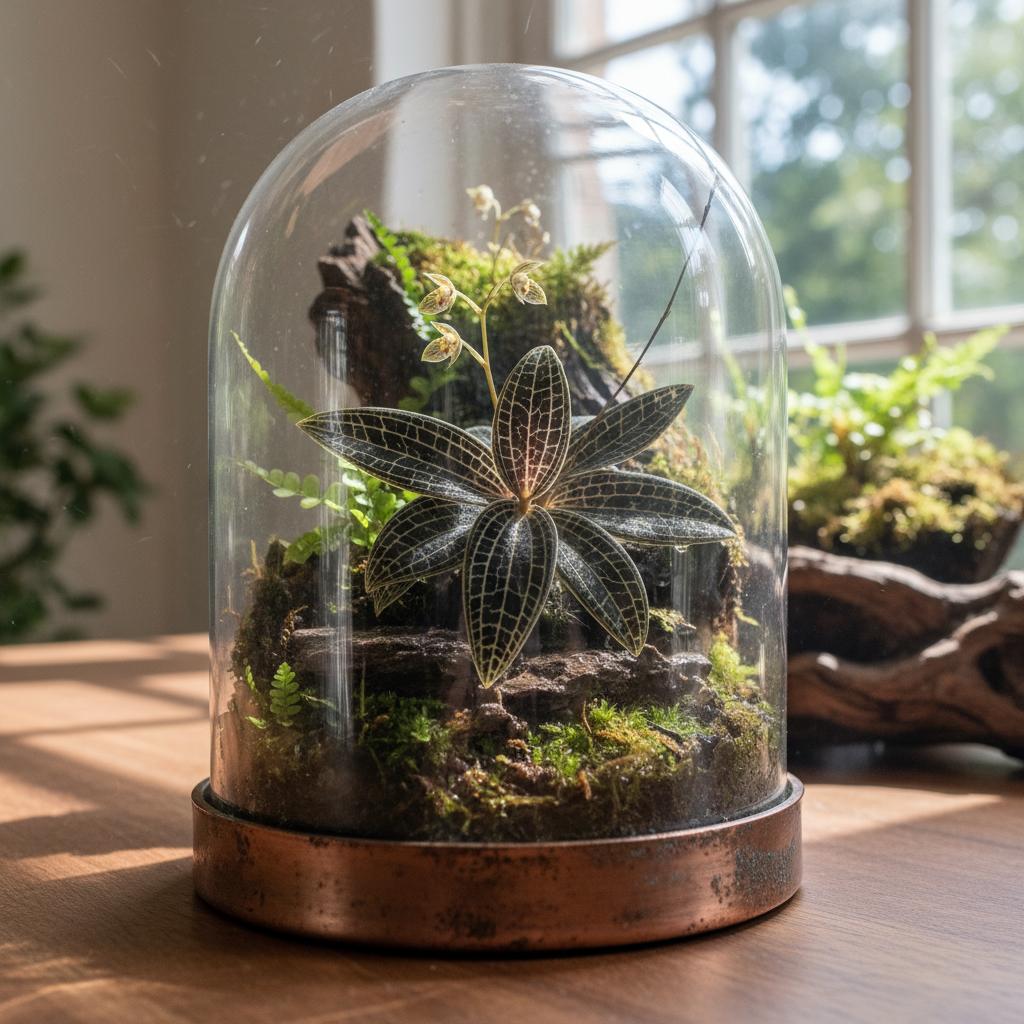
- Leaves: Ovate to elliptic, velvety dark green to purplish-black, featuring a striking network of golden, coppery, or silvery reticulate veins;
- Flowers: Terminal raceme, small, tubular, usually white with a distinctive fringed lip (epichile);
- Stem: Creeping fleshy rhizome that roots at the nodes, cylindrical and often reddish.
Care Guide
Watering
Keep evenly moist, watering when the top layer of sphagnum or soil just begins to feel slightly dry.
Fertilization
Apply a weak, balanced orchid fertilizer diluted to 1/4 strength.. Fertilize sparingly; flush the pot with pure water occasionally to prevent salt buildup.
Banana Peel Tea:Steep chopped banana peels in water for 24 hours, dilute 1:4 with water. Use sparingly to avoid salt buildup and fungal issues in the humid environment.Pruning
- Remove spent flower spikes at the base to redirect energy to foliage growth;
- Trim away any yellowing or rotting leaves immediately to prevent fungal spread;
- Sterilize cutting tools before use to prevent viral or bacterial infections.
Toxicity
Warning: this plant may be toxic.
Pets & Humans
Pets: Non-toxic to cats per ASPCA guidelines for most Orchidaceae.
Humans: Generally considered non-toxic to humans.
Garden Uses & Culture
Culture: In Western orchid-growing communities, jewel orchids are highly prized for terrarium culture and indoor foliage displays, contrasting with traditional epiphytic orchids grown solely for their blooms.
Usage: - Ornamental foliage plant; - Terrarium and vivarium centerpiece.