 PlantFun
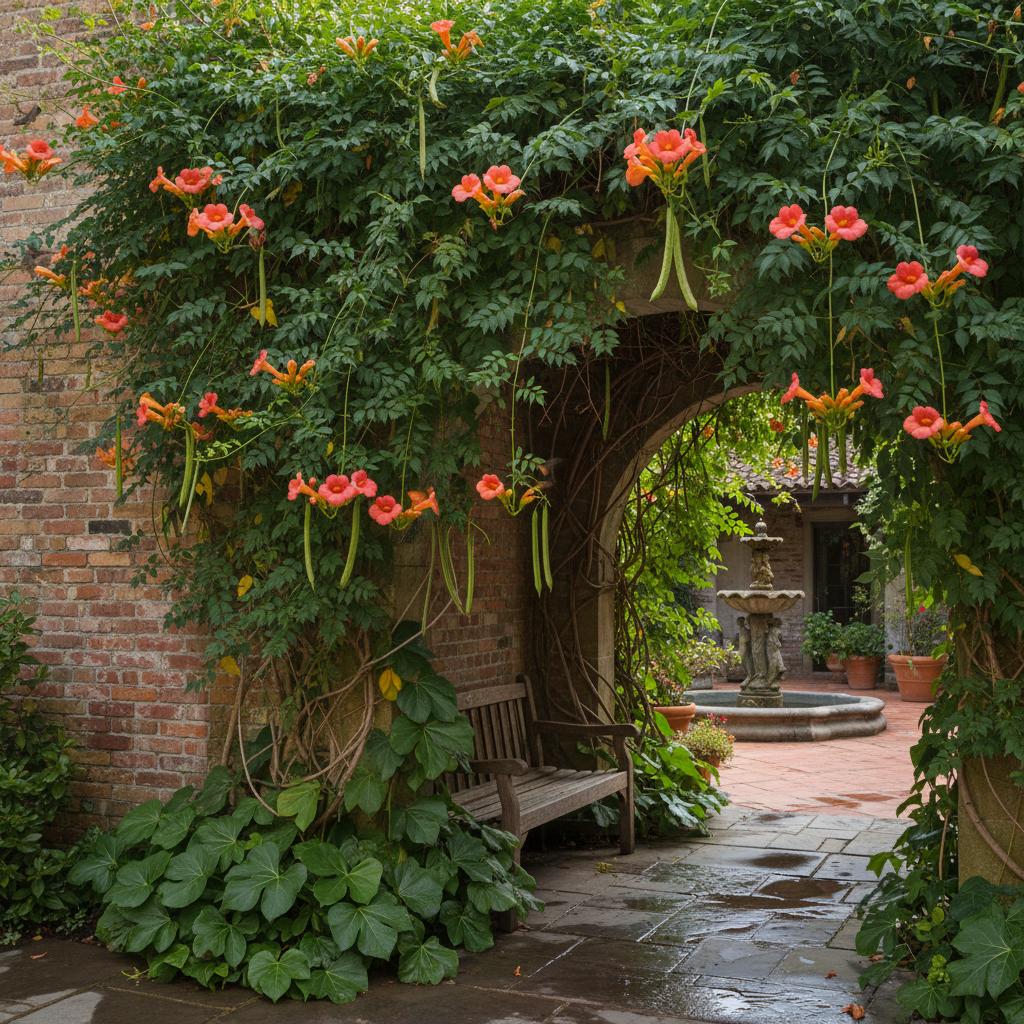
Plant Needs
Sunlight
Full sun to partial shade; best flower production occurs in full sun.
Watering
Moderate water requirements; highly drought-tolerant once established.
Temperature
Hardy in USDA zones 6-9; tolerates both summer heat and moderate winter freezing.
Characteristics
- Leaves: Opposite, compound with two oblong-lanceolate leaflets and a branched tendril between them; dark green in summer, turning reddish-purple in winter.
- Flowers: Tubular, trumpet-shaped, about 5 cm long, reddish-orange on the outside and yellow on the inside, borne in axillary clusters of 2 to 5.
- Stems: Woody and climbing, utilizing branched tendrils equipped with adhesive disks; a transverse cross-section of the stem reveals a distinct cross shape.
- Fruit: Long, flattened, pod-like capsules, 12 to 17 cm long, containing numerous flat, winged seeds.
Care Guide
Watering
Water deeply when the top inch of soil feels dry to encourage deep root establishment.
Fertilization
Apply a layer of compost or a mild organic tea as new growth emerges.. Fertilize lightly in early spring to support the vigorous blooming period.
Banana Peel Tea:Steep chopped banana peels in water for 24-48 hours. Use the strained liquid to water the base of the vine in early spring to encourage prolific trumpet-shaped blooms. Discard solids in compost to avoid attracting pests.Pruning
- Prune immediately after flowering finishes in late spring, as it blooms on old wood.
- Thin out crowded stems to improve air circulation and light penetration.
- Remove any dead, damaged, or diseased vines down to the base.
- Cut back aggressive shoots to maintain the desired shape and keep the vine within its designated space.
Toxicity
Warning: this plant may be toxic.
Pets & Humans
Pets: Non-toxic to cats per ASPCA guidelines.
Humans: Non-toxic to humans; no adverse effects expected from incidental contact or minor ingestion.
Garden Uses & Culture
Culture: A traditional favorite in Southern United States woodland and cottage gardens, valued for its ability to quickly cover unsightly fences and walls with vibrant spring color.
Usage: Excellent ornamental vine for trellises, arbors, chain-link fences, and masonry walls. Highly attractive to hummingbirds and butterflies.