 PlantFun
Plant Needs
Characteristics
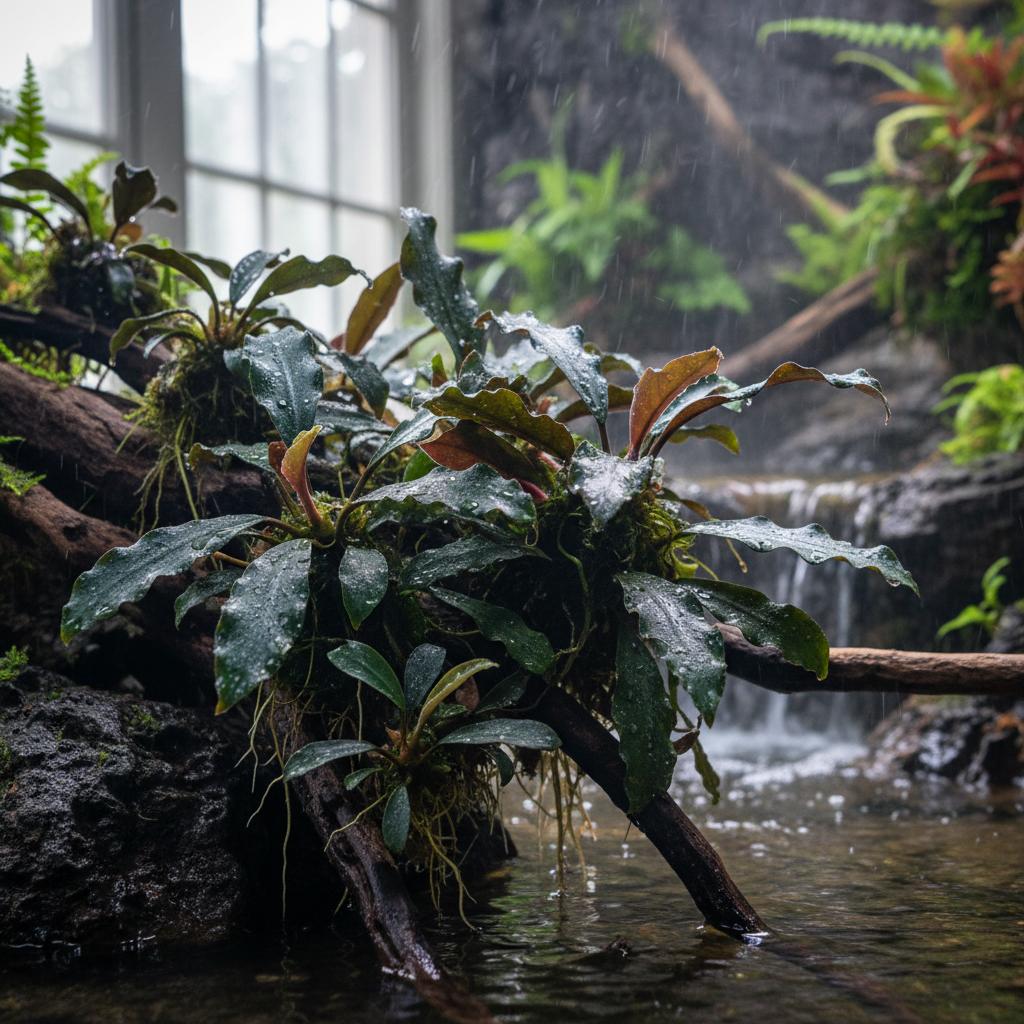
- Leaves: Oblong to elliptic, often with wavy margins, displaying iridescent colors ranging from green to blue, purple, or reddish-brown; covered in tiny white dots (stomata).
- Flowers: Small aroid inflorescence with a white or pinkish spathe and a tiny spadix, capable of blooming fully submerged underwater.
- Stem: Creeping rhizome that attaches firmly to rocks and driftwood using strong holdfast roots.
Care Guide
Continuous submersion or high humidity terrarium
Liquid aquarium fertilizer. Dose liquid water-column fertilizers in the aquarium, focusing on micro-nutrients and iron to enhance leaf iridescence.
Aquarium Change Water:If grown emersed in a terrarium, use water from fish tank changes to water the plant. This provides natural, diluted nutrients. Avoid using any chemical household fertilizers.- Remove dead, decaying, or heavily algae-covered leaves by cutting cleanly at the base of the petiole.
- Propagate by cutting the rhizome into smaller pieces, ensuring each section has at least 3-4 healthy leaves and intact roots.
- Never trim the roots too aggressively, as they are essential for anchoring to hardscape.
Toxicity
Warning: this plant may be toxic.
Pets: Per ASPCA (as with most Araceae), chewing can cause oral irritation, pain and swelling of mouth, tongue and lips, excessive drooling, vomiting, and difficulty swallowing.
Humans: Contains calcium oxalate crystals; ingestion can cause irritation of the mouth and digestive tract.
Garden Uses & Culture
Culture: Highly prized in the modern Western aquascaping hobby (popularized in Europe and the Americas) for creating intricate, miniature underwater landscapes and nature aquariums.
Usage: Aquarium midground or foreground plant, terrariums, paludariums, and vivariums.