 PlantFun
Plant Needs
Characteristics
- Leaves: Opposite, small, ovate to elliptic, leathery, dark glossy green above and paler yellowish-green beneath, 1.5 - 3 cm long;
- Flowers: Inconspicuous, pale yellow-green, apetalous, monoecious, borne in axillary clusters in early spring, highly fragrant;
- Stems: Young shoots are distinctly quadrangular (square-sectioned) and green, turning woody, rounded, and grayish-brown with age;
- Bark: Grayish to yellowish-brown, becoming finely fissured and slightly corky on older specimens.
Care Guide
Water deeply once a week, more frequently during extreme heat or if grown in containers.
Apply a balanced, slow-release granular fertilizer just as new growth begins.. Avoid over-fertilizing, which can cause weak, leggy growth susceptible to pests.
Used Tea Leaves and Eggshell Powder:Rinse used tea leaves and crush dried eggshells into a fine powder. Mix lightly into the top layer of soil around the drip line. This provides a gentle nitrogen boost and calcium for cell wall strength. Avoid applying thick layers of wet tea leaves to prevent mold.- Timing: Prune in late winter or early spring before new growth starts; avoid pruning in late summer or fall.
- Thinning: Annually thin out the interior branches to improve air circulation and light penetration, which is critical for preventing boxwood blight.
- Shaping: Use sharp shears for topiary or hedges; clean tools with alcohol between cuts to prevent disease transmission.
- Deadheading: Remove any dead, diseased, or broken branches immediately upon noticing them.
Toxicity
Warning: this plant may be toxic.
Pets: Toxic per ASPCA; ingestion can cause vomiting, diarrhea, lethargy, and in severe cases, respiratory failure.
Humans: Contains steroidal alkaloids (such as buxine) which can cause gastrointestinal irritation if ingested, and sap may cause minor skin irritation.
Garden Uses & Culture
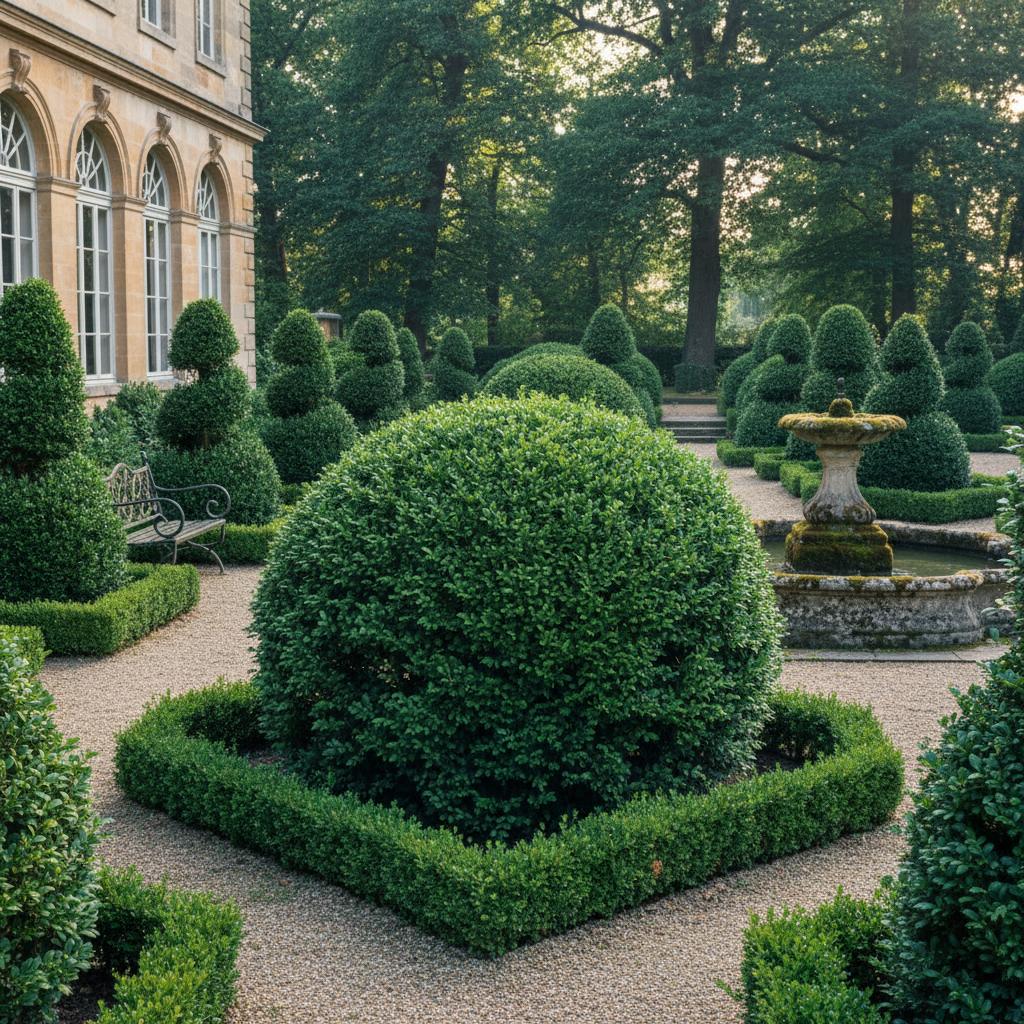
Culture: In Western culture, boxwood has long symbolized immortality, longevity, and steadfastness due to its evergreen nature. It has been a foundational element in formal European garden design, parterres, and mazes since the Renaissance.
Usage: Widely used for formal hedges, topiary, and borders. The wood is exceptionally dense, heavy, and fine-grained, making it historically prized for wood engraving, chess pieces, and musical instruments.