 PlantFun
Plant Needs
Characteristics
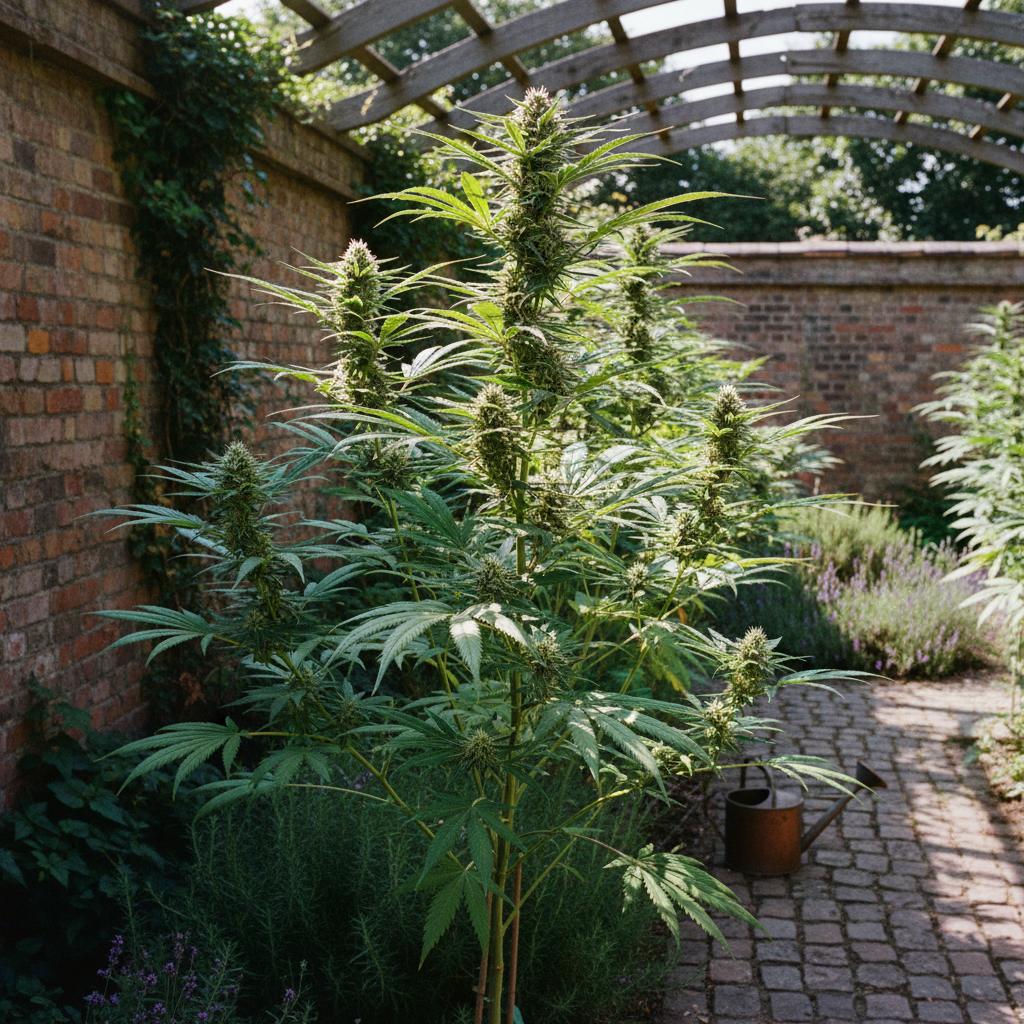
- Leaves: Palmately compound, typically with 5 to 9 lanceolate leaflets featuring coarsely serrated margins.
- Flowers: Dioecious; male flowers form loose panicles shedding pollen, while female flowers grow in dense, resinous racemes covered in glandular trichomes.
- Stem: Erect, grooved, and often hollow with a highly fibrous inner bark.
Care Guide
Water deeply every 2-3 days, allowing the top inch of soil to dry out.
Apply a nitrogen-rich fertilizer to support rapid vegetative leaf and stem growth.. Feed regularly but flush with plain water occasionally to prevent salt buildup.
Banana Peel Tea:Steep chopped banana peels in water for 24-48 hours. Dilute 1:1 with water and apply during the flowering stage to boost bud development. Avoid foul odors by not leaving it too long; discard solids in compost.- Topping: Cut off the main stem's growing tip to encourage lateral branching and a bushier canopy.
- Defoliation: Remove large, lower fan leaves that are shaded to improve airflow and direct energy to top flowers.
- Lollipopping: Strip the lower third of the plant of small growth to focus energy on the main colas.
Toxicity
Warning: this plant may be toxic.
Pets: Toxic per ASPCA. Can cause prolonged depression, vomiting, incoordination, sleepiness or excitation, hypersalivation, and dilated pupils.
Humans: Psychoactive effects due to cannabinoids (like THC); can cause dizziness, altered perception, and tachycardia if ingested or inhaled.
Garden Uses & Culture
Culture: Historically vital in Europe and the Americas for producing hemp fiber used in ropes, sails, and clothing, playing a crucial role in early maritime exploration and colonial agriculture.
Usage: - **Industrial**: Stems provide bast fiber for textiles, paper, and bioplastics. - **Nutritional**: Seeds are pressed for oil or eaten whole, rich in omega fatty acids. - **Medicinal/Recreational**: Female flower resin contains cannabinoids (THC, CBD) used for pain relief, anti-nausea, and recreational purposes.