 PlantFun
Plant Needs
Characteristics
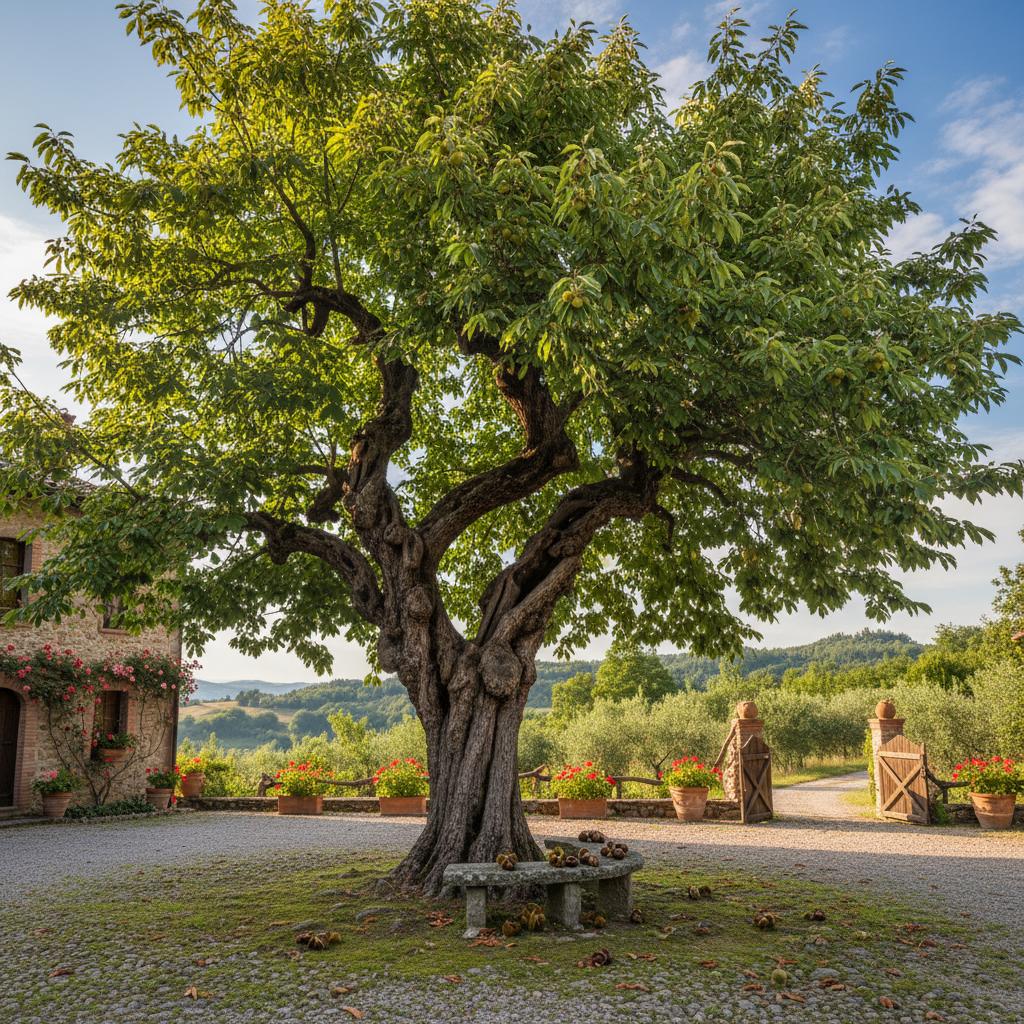
- Leaves: Oblong-lanceolate, 16-28 cm long, with prominent, sharply pointed, widely spaced teeth (serrate margins), glossy dark green above.
- Flowers: Monoecious; male flowers in long, upright yellow catkins (10-20 cm); female flowers small, clustered at the base of the male catkins.
- Fruit: A densely spiny cupule (bur) containing 1-3 glossy brown, edible nuts, ripening in autumn.
- Bark: Smooth and greyish-purple when young, becoming deeply fissured and spirally twisted with age.
Care Guide
Water deeply once a week for young trees; mature trees rely mostly on natural rainfall unless experiencing severe drought.
Apply a layer of compost or organic mulch around the base before bud break.. Chestnuts generally thrive in relatively poor soils and do not require heavy fertilization.
Coffee Grounds and Leaf Mold:Spread used coffee grounds and decomposed leaf litter around the drip line in early spring to maintain the slight soil acidity that chestnuts prefer. Avoid piling against the trunk.- Prune in late winter during dormancy to prevent sap bleeding.
- Remove dead, diseased, or crossing branches to maintain good air circulation.
- Train young trees to a central leader system for structural stability.
- Keep the base clear of root suckers.
Toxicity
Warning: this plant may be toxic.
Pets: Non-toxic to cats per ASPCA. (Note: Do not confuse with the toxic Horse Chestnut, Aesculus hippocastanum).
Humans: Nuts are edible and highly nutritious when cooked; raw nuts contain tannins that may cause mild stomach upset if consumed in large quantities.
Garden Uses & Culture
Culture: Historically known as "the bread tree" in mountainous regions of Southern Europe, chestnuts were a vital staple food milled into flour. They remain deeply woven into autumn harvest festivals (Castagnades) across France and Italy.
Usage: - **Culinary**: Nuts are roasted, boiled, or milled into gluten-free flour. - **Timber**: Wood is highly durable, tannin-rich, and used for fencing, barrels, and furniture. - **Ecological**: Provides crucial habitat and food for wildlife.