 PlantFun
Plant Needs
Sunlight
Requires bright, direct sunlight for optimal growth and flowering.
Watering
Water thoroughly when the soil is completely dry, typically every two weeks.
Temperature
Prefers warm temperatures and is not frost-tolerant.
Characteristics
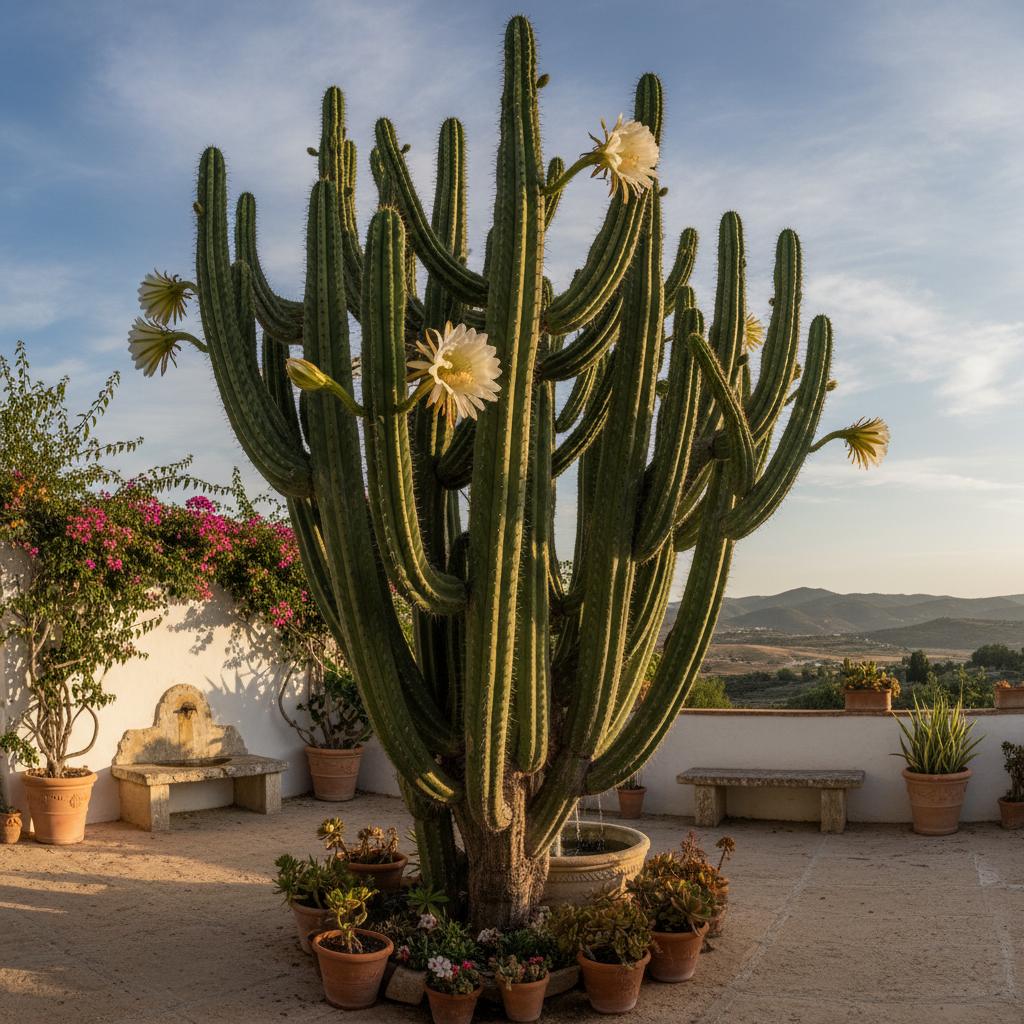
- Stems: Cylindrical, gray-green to blue-green, with 9-10 prominent ribs and areoles bearing small brown or gray spines;
- Flowers: Large, nocturnal, white to cream-colored, up to 15 cm long, blooming for a single night;
- Fruits: Globose to ovoid, spineless, red to purplish-red when ripe, containing white edible pulp and tiny black seeds.
Care Guide
Watering
Water deeply when the soil dries out completely.
Fertilization
Apply a low-nitrogen cactus fertilizer.. Do not fertilize during the winter dormancy period.
Banana Peel Tea:Soak chopped banana peels in water for 48 hours. Strain and dilute 1:1 with water. High potassium supports blooming. Avoid leaving raw peels on soil to prevent pests.Pruning
- Prune only to remove dead, damaged, or diseased sections;
- Use sterile, sharp tools to make clean cuts;
- Allow any cuttings to callous over for several days before replanting to propagate.
Toxicity
Warning: this plant may be toxic.
Pets & Humans
Pets: Non-toxic per ASPCA, but spines pose a mechanical hazard.
Humans: Fruits are edible; no chemical toxicity, but spines can cause mechanical injury.
Garden Uses & Culture
Culture: Often planted as living fences in South America; its night-blooming nature associates it with lunar cycles and desert resilience in the Americas.
Usage: Ornamental landscaping, edible fruits (similar to dragon fruit), living fences, and wattle and daub construction historically.