 PlantFun
Plant Needs
Characteristics
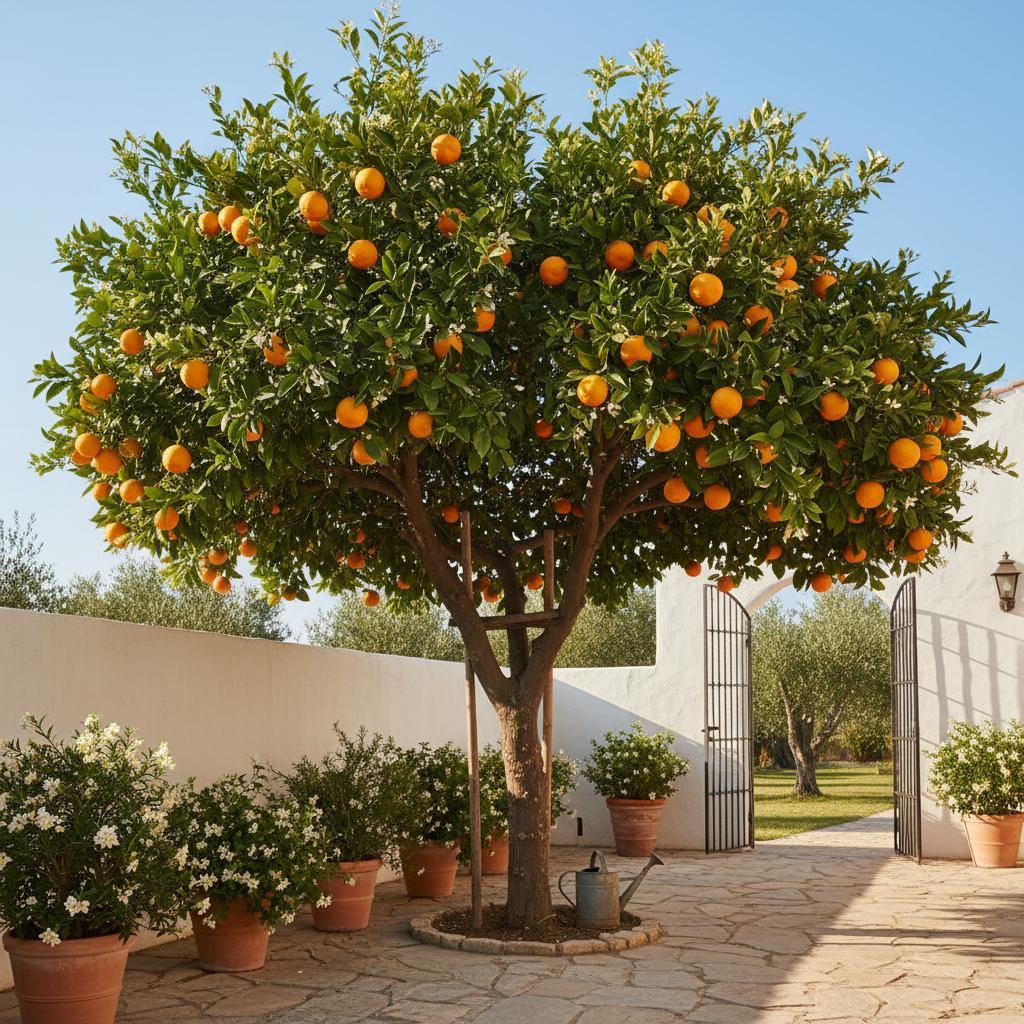
- Leaves: Evergreen, alternate, ovate to elliptical, 6-10 cm long, glossy dark green above, with narrowly winged petioles and distinct citrus scent when crushed;
- Flowers: Highly fragrant, pure white, solitary or in small corymbs, featuring 5 thick, fleshy petals and numerous prominent yellow stamens;
- Fruit: Hesperidium, globose to oval, featuring a bright orange, leathery rind dotted with numerous oil glands, enclosing sweet, juicy, segmented pulp;
- Bark: Grayish-brown and relatively smooth, with young branches occasionally bearing flexible green thorns.
Care Guide
Water deeply once a week, increasing frequency during extreme heat or fruit development.
Apply a nitrogen-rich or citrus-specific fertilizer as new growth appears.. Citrus trees are heavy feeders, particularly requiring nitrogen, iron, zinc, and manganese.
Coffee Ground and Banana Peel Mix:Mix used coffee grounds (for slight acidity and nitrogen) and finely chopped banana peels (for potassium) into the top layer of soil. Avoid applying directly against the trunk to prevent rot.- Timing: Prune in late winter or early spring before new growth begins;
- Canopy Management: Remove crossing, dead, or diseased branches to improve air circulation and light penetration;
- Suckers: Promptly remove any vigorous shoots (suckers) growing from below the graft union;
- Shaping: Lightly shape the canopy to maintain a manageable height for harvesting.
Toxicity
Warning: this plant may be toxic.
Pets: Toxic per ASPCA due to essential oils (d-limonene, linalool) and psoralens in peels, leaves, and stems.
Humans: Fruits are widely consumed and safe; large amounts of peel may cause minor gastrointestinal upset.
Garden Uses & Culture
Culture: In Western traditions, the orange blossom is a classic symbol of purity, chastity, and fertility, historically woven into bridal wreaths and bouquets. Orangeries became a symbol of wealth and prestige among European aristocracy in the 17th to 19th centuries.
Usage: Cultivated globally for fresh fruit consumption, juice production, and culinary zest. Essential oils extracted from the rind (sweet orange oil) and flowers (neroli) are highly valued in perfumery and aromatherapy.