 PlantFun
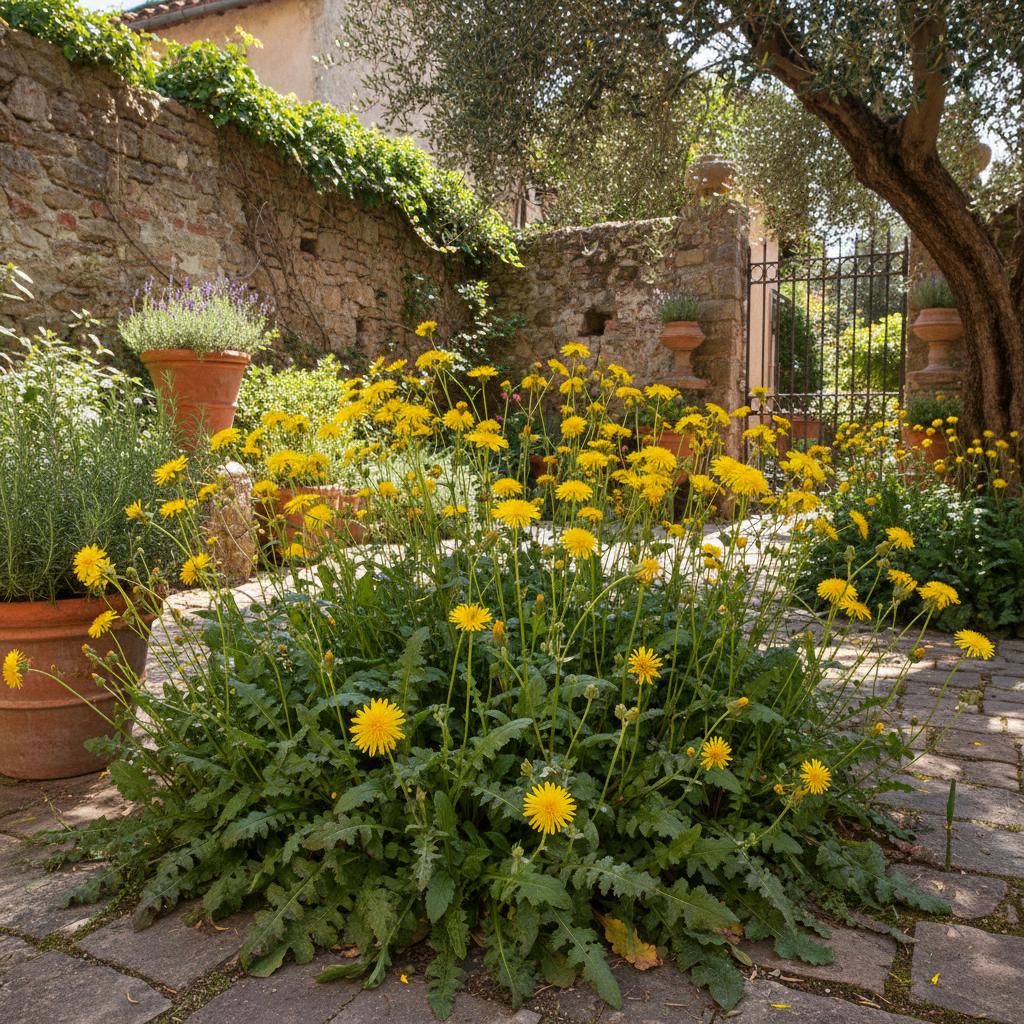
Plant Needs
Sunlight
Prefers full sun but can tolerate partial shade in meadow environments.
Watering
Moderate water needs; drought-tolerant once established due to its deep taproot.
Temperature
Highly adaptable to temperate climates, frost-hardy in its rosette stage.
Characteristics
- Leaves: Basal leaves are pinnatifid (deeply lobed) and rough-hairy; stem leaves are smaller, lanceolate, and clasp the stem with sagittate bases.
- Flowers: Inflorescence is a corymb-like cluster of capitula (flower heads); each head is 2 - 3.5 cm across, composed entirely of yellow ligulate (ray) florets.
- Stem: Erect, grooved, branched in the upper half, often purplish near the base, and covered with stiff, rough hairs.
- Fruit: Yellowish-brown achenes, 10-13 ribbed, narrowing at the apex but lacking a distinct beak, topped with a pure white, unbranched pappus.
Care Guide
Watering
Water moderately during active growth and blooming phases if rainfall is insufficient.
Fertilization
Rarely requires fertilization; a light top-dressing of compost can be applied.. As a wild meadow plant, it thrives in relatively low-nutrient soils.
Eggshell powder:Crush clean, dry eggshells into a fine powder and sprinkle around the base to support cellular growth without over-fertilizing.Pruning
- Deadhead spent flowers to prevent aggressive self-seeding if grown in a controlled garden setting.
- Cut back the entire stalk to the basal rosette after the flowering season ends.
- Remove damaged or diseased basal leaves to improve air circulation.
Toxicity
Warning: this plant may be toxic.
Pets & Humans
Pets: Non-toxic to cats; no known systemic toxicity.
Humans: Generally considered non-toxic to humans; no known severe hazards.
Garden Uses & Culture
Culture: A classic component of traditional European hay meadows, often seen as a symbol of rustic, untamed countryside landscapes.
Usage: - **Ecological**: Excellent nectar and pollen source for bees, hoverflies, and butterflies. - **Agricultural**: Historically grazed by livestock in unimproved pastures.