 PlantFun
Plant Needs
Sunlight
Prefers full sun but can tolerate partial shade.
Watering
Highly drought-tolerant once established; natural rainfall is usually sufficient.
Temperature
Adaptable to a wide range of temperatures; thrives in temperate climates.
Characteristics
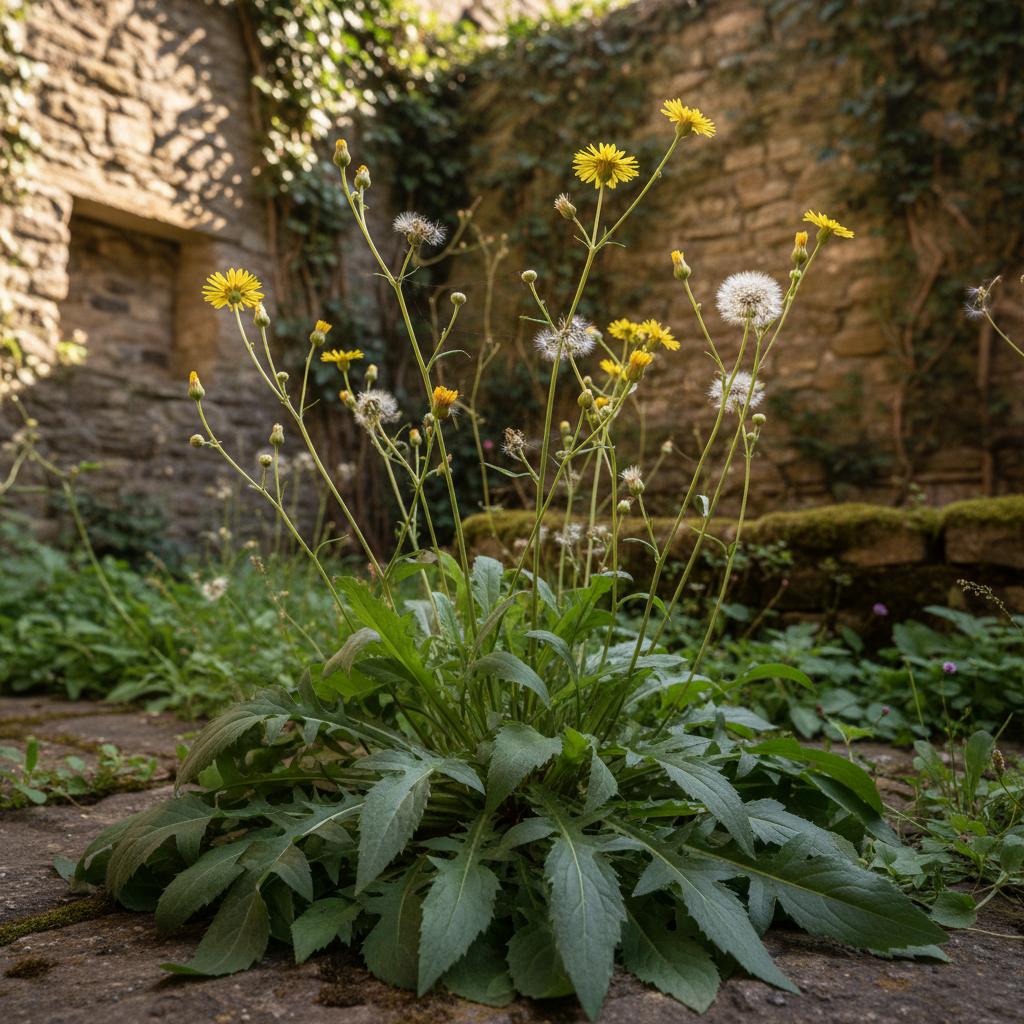
- Leaves: Basal rosette of lobed, dandelion-like leaves, glabrous (smooth) or nearly so; stem leaves are lanceolate and clasping the stem;
- Flowers: Yellow flower heads (capitula) 1-1.5 cm across, composed entirely of ray florets, arranged in loose, flat-topped clusters;
- Stem: Slender, branched, mostly hairless (smooth), containing a milky white sap;
- Fruit: Small, ribbed achenes topped with a pappus of soft, pure white bristles for wind dispersal.
Care Guide
Watering
Water only during prolonged dry spells if cultivated
Fertilization
None required. Fertilization is generally unnecessary as it thrives in nutrient-poor soils.
Coffee grounds compost:If cultivating intentionally, lightly sprinkle used coffee grounds around the base to improve soil structure, ensuring they are mixed with soil to prevent mold.Pruning
- Deadhead spent flowers promptly to prevent aggressive self-seeding and unwanted spread in gardens.
Toxicity
Warning: this plant may be toxic.
Pets & Humans
Pets: Non-toxic to cats (per ASPCA general guidelines for this genus).
Humans: Generally considered non-toxic; young leaves are occasionally foraged but can be bitter.
Garden Uses & Culture
Culture: Often viewed as a common lawn weed in Western landscaping, yet appreciated by wild-gardeners for its ability to attract pollinators to urban environments.
Usage: Ecological pioneer species; provides nectar and pollen for bees and hoverflies; occasionally used as forage for livestock.