 PlantFun
Plant Needs
Characteristics
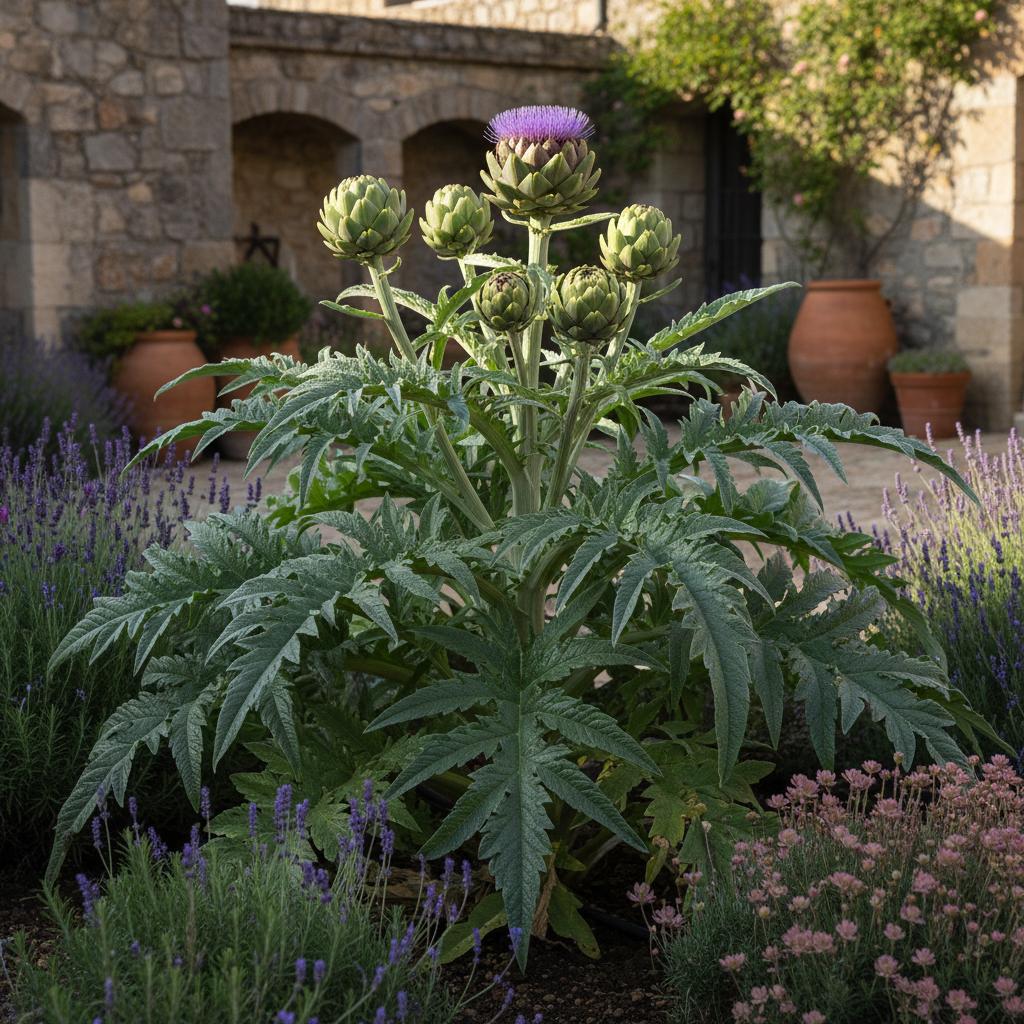
- Leaves: Deeply lobed, silvery-green, glaucous, up to 80 cm long, with a tomentose (fuzzy) underside; some varieties have small spines on the margins.
- Flowers: Large capitulum (flower head) up to 15 cm across, consisting of fleshy edible involucral bracts and a fleshy receptacle (the heart); if left to bloom, produces vibrant purple-blue tubular florets.
- Stem: Stout, thick, ridged, and branching, capable of supporting the heavy flower heads.
Care Guide
Water deeply and regularly to keep the soil consistently moist during active growth and bud development.
Apply a thick layer of compost and a balanced organic fertilizer as new growth emerges.. Heavy feeders that benefit from regular nutrient replenishment during the growing season.
Banana Peel and Coffee Ground Mix:Bury chopped banana peels and used coffee grounds in the soil around the base of the plant. The potassium aids in flower bud development, while the nitrogen supports the massive foliage. Avoid placing uncomposted materials directly against the stem to prevent rot.- Harvesting: Cut the central bud first when it is large and tightly closed, taking about 5-8 cm of the stem.
- Autumn Cutback: After the foliage dies back in late autumn or after the first hard frost, cut the stems down to just above ground level.
- Division: Divide the root crowns every 3 to 4 years in early spring to maintain vigor and propagate new plants.
Toxicity
Warning: this plant may be toxic.
Pets: Non-toxic to cats per ASPCA.
Humans: Non-toxic; the immature flower buds (bracts and receptacle) are widely consumed as a vegetable.
Garden Uses & Culture
Culture: In Greek mythology, Zeus fell in love with a beautiful mortal named Cynara. When she rejected him and returned to earth, the enraged god transformed her into the first artichoke. It was highly prized by ancient Romans and Greeks as a delicacy and aphrodisiac.
Usage: - **Culinary**: The fleshy lower portions of the bracts and the base (heart) are eaten boiled, steamed, or grilled. - **Ornamental**: Used in landscaping as a bold, architectural statement plant due to its striking silver foliage and massive purple blooms. - **Medicinal**: Leaves contain cynarin, which has been historically used to support liver function and stimulate bile production.