 PlantFun
Plant Needs
Characteristics
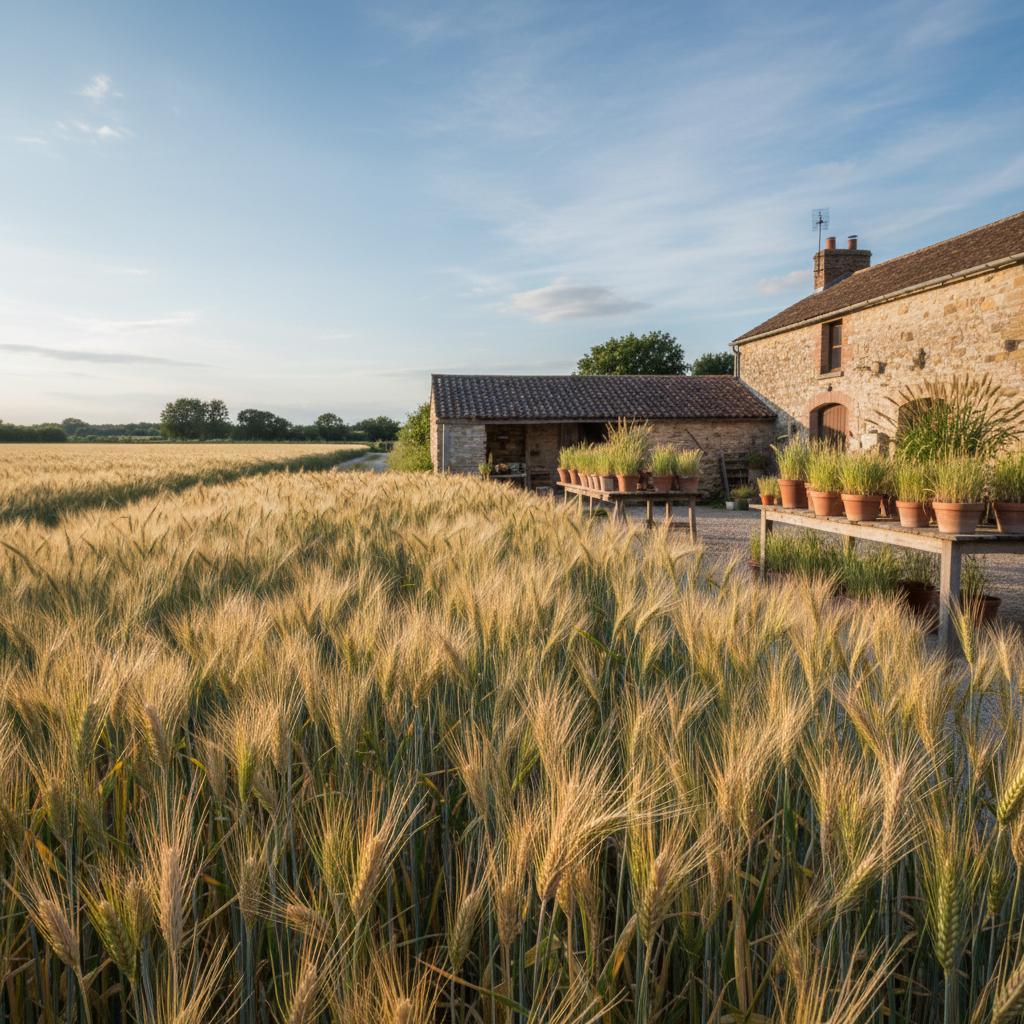
- Leaves: Linear, flat green blades, 5-15 mm wide, featuring prominent, hairless auricles that clasp the stem;
- Flowers: Dense, stout terminal spikes (ears) with long, bristly awns; spikelets are arranged in triplets at each node of the rachis;
- Stems: Erect, hollow, cylindrical culms that grow in tufts;
- Roots: Fibrous root system typical of grasses.
Care Guide
Water deeply once a week during active vegetative growth and grain filling; reduce as grains mature.
Apply a nitrogen-rich amendment early in the season to encourage strong foliar growth.. Avoid over-fertilizing with nitrogen late in the season, which can cause the stalks to fall over (lodging).
Coffee grounds top-dressing:Sprinkle used, cooled coffee grounds lightly around the base of the young grass to provide a gentle nitrogen boost for foliar growth. Avoid thick layers to prevent mold.- Pruning is generally not required for this annual crop;
- Remove competing weeds early in the growing season;
- Harvest the entire plant when the stalks turn golden brown and the grain is hard.
Toxicity
Warning: this plant may be toxic.
Pets: Non-toxic to cats per ASPCA.
Humans: Safe for human consumption; grains are a global dietary staple.
Garden Uses & Culture
Culture: A cornerstone of ancient European and Middle Eastern agriculture, barley was the primary grain for peasant bread and the essential ingredient in the earliest recorded beer brewing traditions.
Usage: - **Culinary**: Pearled barley for soups and stews, milled into flour, or malted for beer and whiskey production; - **Agricultural**: Widely used as animal fodder, straw for bedding, and as a winter cover crop to prevent soil erosion.