 PlantFun
Plant Needs
Characteristics
- Leaves: Predominantly scale-like, tightly appressed, and bluish-green to dark green; adult foliage is blunt, while sharp, needle-like juvenile leaves may appear on shaded inner branches.
- Cones: Dioecious; female plants produce small, berry-like, globose cones that ripen to a bluish-black with a glaucous whitish bloom, containing 2-3 seeds.
- Bark: Reddish-brown, exfoliating in thin, fibrous strips on mature stems.
- Form: A prostrate, spreading evergreen shrub with stout, rigid branches that form a dense mat.
Care Guide
Water deeply once a week during the first growing season; reduce to once every 2-3 weeks once established.
Apply a light layer of compost or a balanced, slow-release granular fertilizer before new growth begins.. Junipers generally require very little supplemental feeding.
Used Coffee Grounds:Sprinkle a very light layer of dried, used coffee grounds around the base in early spring to provide a gentle nitrogen boost and maintain slight soil acidity. Avoid thick layers that can trap moisture and cause fungal issues.- Prune in late winter or early spring before new growth starts.
- Selectively thin out overlapping branches to improve air circulation.
- Never prune back into old, leafless wood (the "dead zone"), as junipers will not generate new buds from bare branches.
- Use sharp, sterilized bypass pruners to maintain the natural, spreading shape rather than shearing.
Toxicity
Warning: this plant may be toxic.
Pets: Ingestion of needles or berry-like cones may cause mild gastrointestinal upset.
Humans: Foliage may cause minor skin irritation (contact dermatitis) in sensitive individuals; ingesting large amounts of berries can cause stomach upset.
Garden Uses & Culture
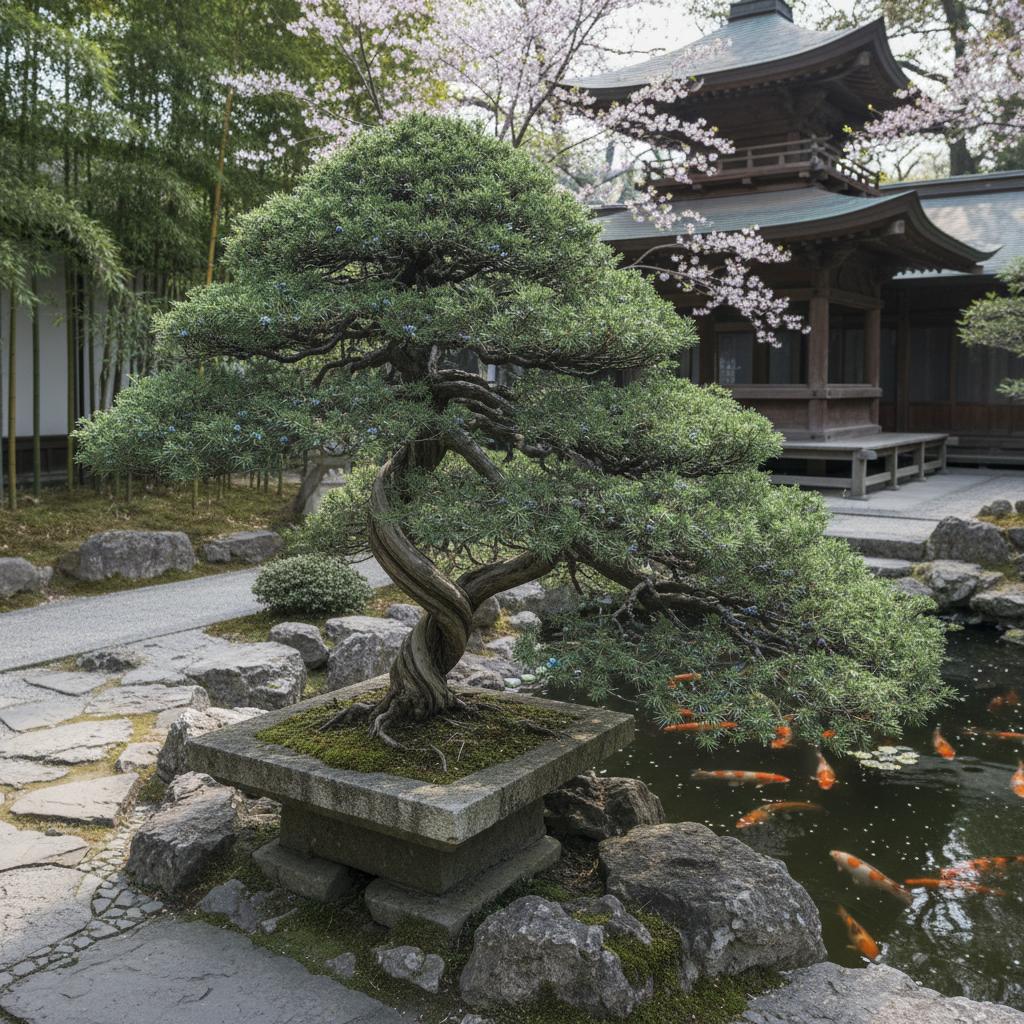
Culture: In Western landscaping, Sargent's juniper is highly prized as a rugged, low-maintenance groundcover. It is also a favored species in the Western bonsai community for its ability to develop thick, twisting trunks and deadwood features (jin and shari) that mimic ancient, weather-beaten alpine trees.
Usage: Excellent for erosion control on slopes, rock gardens, foundation plantings, cascading over retaining walls, and bonsai cultivation.