 PlantFun
Plant Needs
Characteristics
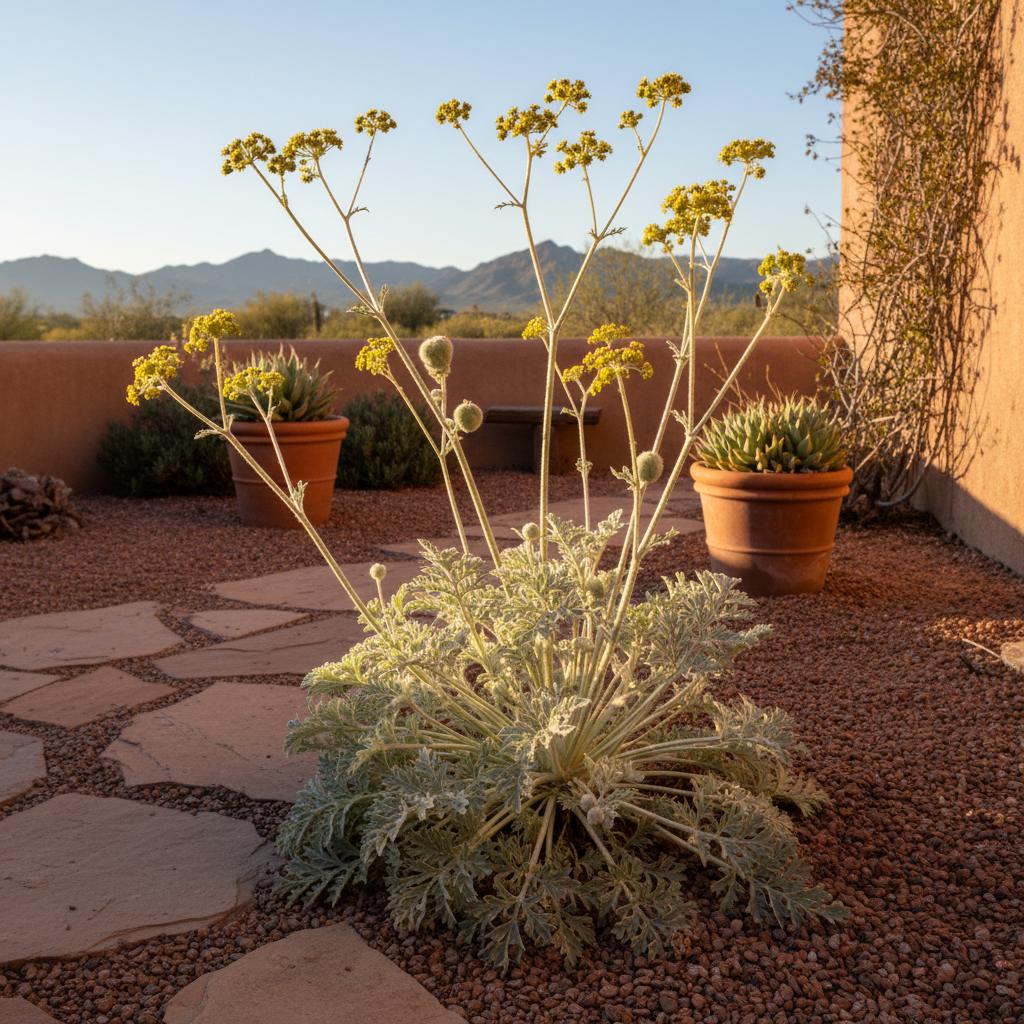
- Leaves: Basal, finely dissected and pinnately compound, with linear to lanceolate segments, glabrous to slightly pubescent;
- Flowers: Borne in compound umbels, small, typically yellowish to purplish, lacking prominent bracts;
- Fruit: Flattened schizocarps with distinct winged margins, aiding in wind dispersal;
- Root: Thickened, fleshy taproot adapted to survive prolonged dry seasons.
Care Guide
Water moderately in spring during active growth; withhold water in summer as the plant goes dormant.
Apply a very light, low-nitrogen organic topdressing if soil is extremely poor.. Native plants generally do not require supplemental fertilization.
Crushed Eggshells:Rinse, dry, and crush eggshells into a fine powder. Sprinkle sparingly around the base in early spring to support root health without over-fertilizing. Avoid high-nitrogen household scraps.- Remove spent flower stalks to tidy the plant's appearance if desired;
- Allow foliage to die back naturally in summer to return nutrients to the taproot;
- Clear away dead debris in late autumn to prevent fungal issues during winter rains.
Toxicity
Warning: this plant may be toxic.
Pets: No known toxicity to cats per general botanical data (ASPCA unlisted).
Humans: Generally considered non-toxic; many related species were historically used as food, but extreme caution is advised due to resemblance to highly toxic Apiaceae (e.g., poison hemlock).
Garden Uses & Culture
Culture: In Western botanical traditions, native Apiaceae like Lomatium are celebrated in ecological landscaping for their vital role in supporting early-season pollinators and beneficial insects.
Usage: - **Ecological**: Excellent for native pollinator gardens, attracting solitary bees and butterflies; - **Landscaping**: Useful in rock gardens and xeriscaping due to its drought tolerance.