 PlantFun
Plant Needs
Characteristics
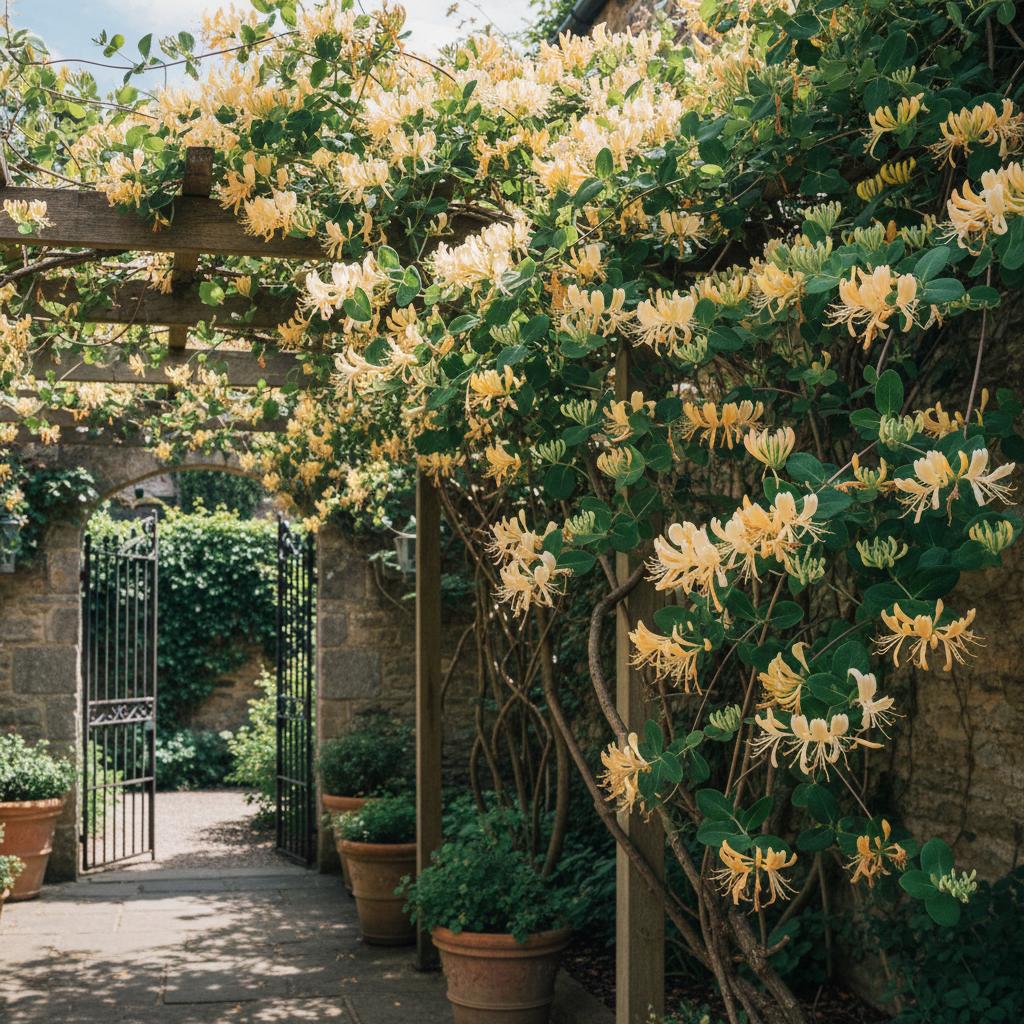
- Leaves: Opposite, oval to obovate, glaucous beneath; the uppermost pairs just below the flower clusters are fused at the base (perfoliate), forming a distinctive cup-like disc.
- Flowers: Whorled in terminal clusters, tubular, two-lipped, highly fragrant, initially creamy-white to pinkish, turning deep yellow after pollination.
- Fruit: Fleshy, orange-red berries appearing in late summer to autumn, clustered in the center of the perfoliate leaves.
- Stem: Twining, woody, climbing stems with peeling pale brown bark on older growth.
Care Guide
Water deeply and regularly to maintain even moisture during the active growing and blooming phase.
Apply a balanced, slow-release organic fertilizer as new growth appears.. Avoid excessive nitrogen, which promotes leafy growth at the expense of flowers.
Banana Peel Tea:Steep chopped banana peels in water for 24-48 hours. Strain and use the liquid to water the base of the plant to encourage robust blooming. Discard the peels in a compost bin to avoid attracting pests.- Prune immediately after flowering in mid-summer to control size and shape.
- Thin out up to one-third of the oldest woody stems down to the base to encourage vigorous new shoots.
- Remove any dead, diseased, or crossing branches to improve air circulation.
- Avoid hard pruning in late autumn or winter, as this removes the wood that will produce next year's flowers.
Toxicity
Warning: this plant may be toxic.
Pets: Mildly toxic per ASPCA guidelines; ingestion of berries or leaves can cause gastrointestinal irritation.
Humans: Ingestion of large quantities of berries may cause mild gastrointestinal upset.
Garden Uses & Culture
Culture: In European folklore and Victorian floriography, the honeysuckle symbolizes devoted affection, fidelity, and the unbreakable bonds of love, mirroring the way its vines tightly twine around their supports.
Usage: Widely used as an ornamental climber for covering walls, fences, and pergolas. Its intense evening fragrance makes it a favorite for planting near patios and windows. It is also highly attractive to nocturnal pollinators like sphinx moths.