 PlantFun
Plant Needs
Characteristics
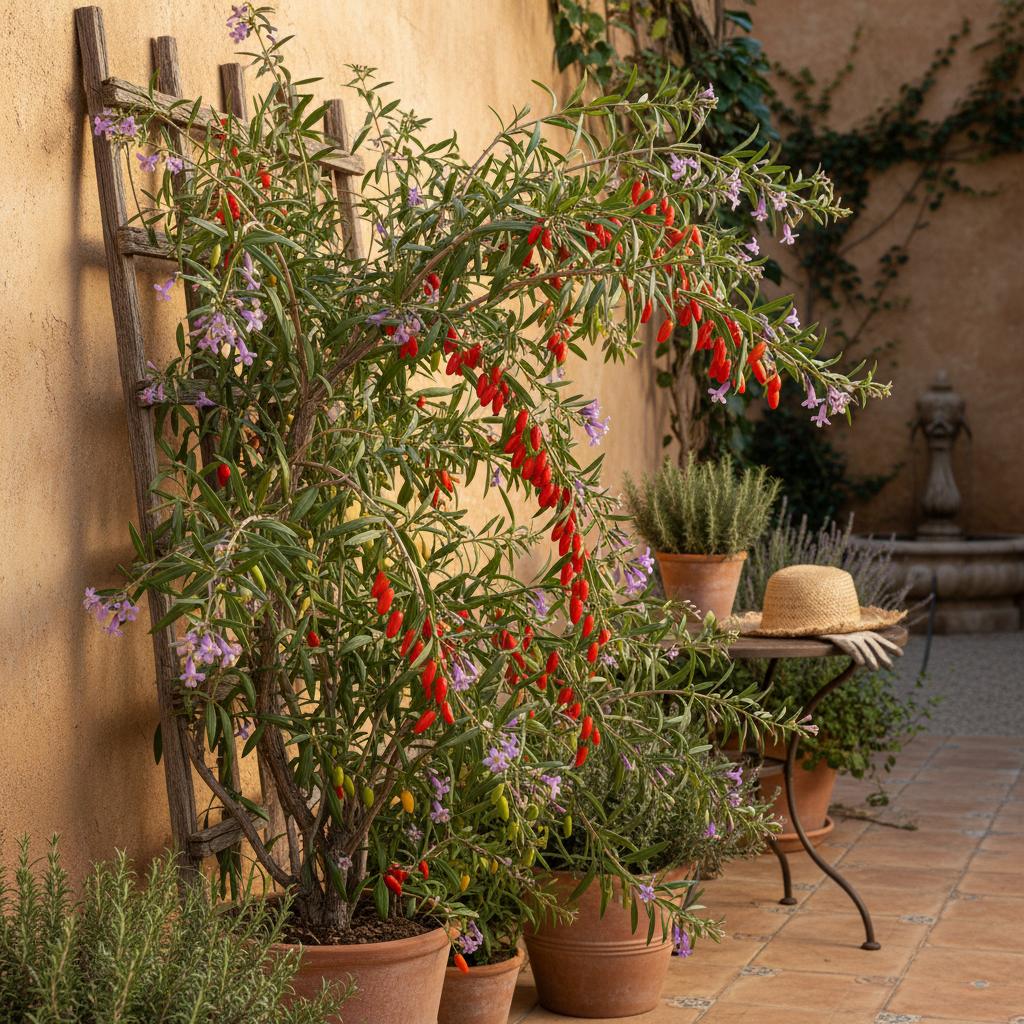
- Leaves: Lanceolate to ovate, alternate or clustered in fascicles, grayish-green with entire margins;
- Flowers: Funnel-shaped, light purple to violet, 5-lobed, solitary or in small clusters along the stems;
- Fruit: Bright orange-red, ellipsoid fleshy berries containing numerous small seeds;
- Stems: Long, arching, light gray branches, often bearing small thorns at the nodes.
Care Guide
Water deeply once a week during active growth and fruiting.
Apply a balanced organic fertilizer as new growth appears.. Avoid high-nitrogen fertilizers, which promote leafy growth at the expense of flowers and berries.
Banana Peel Tea:Soak chopped banana peels in water for 24-48 hours. Strain and use the liquid to water the base of the plant to boost flower and berry production. Discard peels in compost to avoid attracting pests.- Prune in late winter or early spring before new growth begins;
- Remove dead, damaged, or crossing branches to improve air circulation;
- Cut back older wood to encourage the growth of vigorous new lateral shoots, which bear the most fruit;
- Keep the center of the shrub open to allow sunlight penetration.
Toxicity
Warning: this plant may be toxic.
Pets: Non-toxic to cats; berries are safe, though ingesting large amounts of leaves may cause mild, self-limiting stomach upset.
Humans: Berries are edible and widely consumed as a health food; foliage is generally considered safe but not typically eaten.
Garden Uses & Culture
Culture: In Western wellness culture, the berries have surged in popularity as a "superfood" over the last two decades, frequently featured in health food stores, smoothies, and nutritional supplements across Europe and the Americas.
Usage: - **Culinary**: Ripe berries are dried and eaten as snacks, baked into goods, or steeped in teas; - **Ornamental**: Used as an informal hedge or barrier plant due to its arching, thorny habit; - **Ecological**: Attracts pollinators like bees and provides food for birds.