 PlantFun
Plant Needs
Characteristics
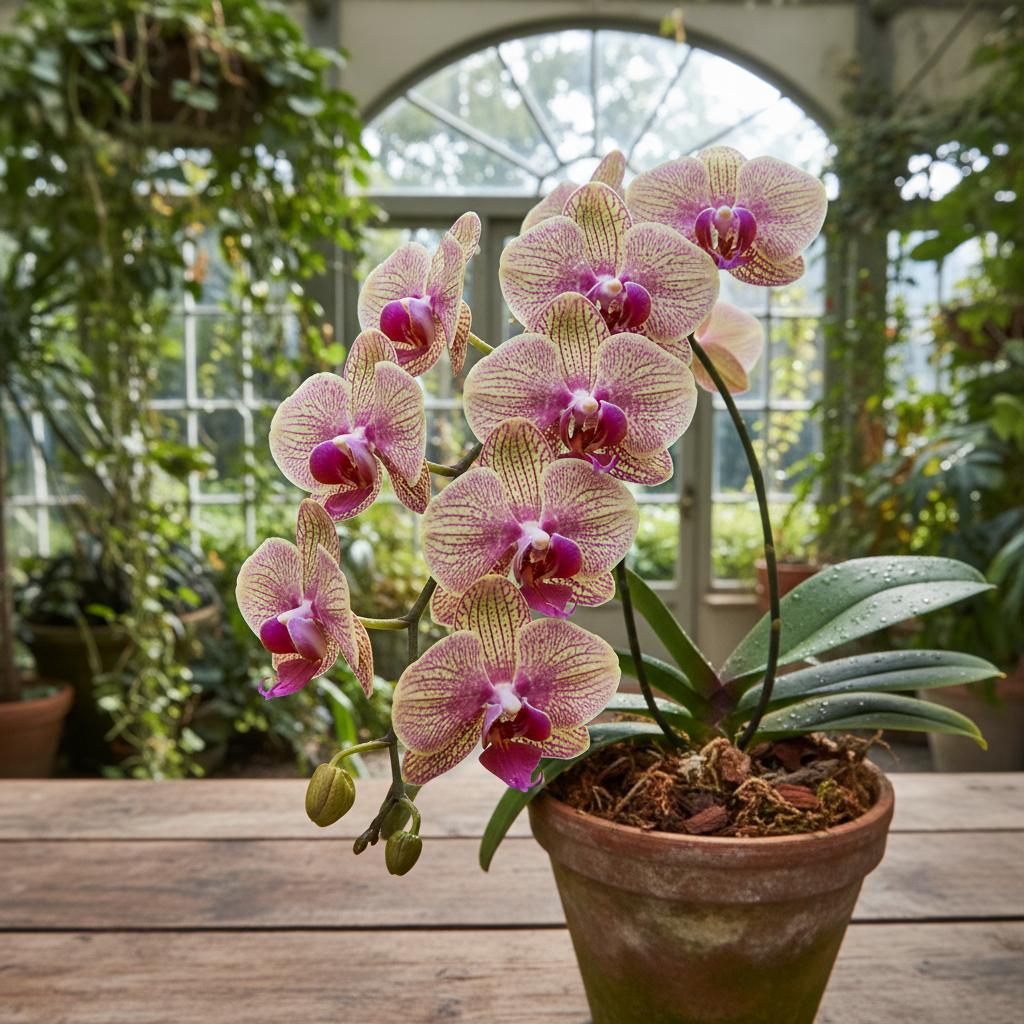
- Leaves: Simple, entire, often fleshy or leathery, with parallel venation, arranged alternately or distichously;
- Flowers: Bilaterally symmetrical, highly modified with three sepals and three petals, one of which forms a distinct lip (labellum) to attract pollinators;
- Roots: Epiphytic species feature thick, silvery roots covered in a spongy velamen layer to absorb atmospheric moisture; terrestrial species often have tuberous roots.
Care Guide
Water thoroughly, allowing water to flush through the drainage holes, then let the medium dry out.
Apply a weak, balanced fertilizer to support new leaf and root growth.. Use a highly diluted fertilizer ("weakly, weekly") and flush the pot with plain water once a month to prevent salt buildup.
Banana Peel Tea:Steep chopped banana peels in water for 24 hours, strain, and dilute 1:1 with water. Use as a liquid feed to encourage blooming. Do not place raw peels directly in the orchid bark, as they will rot, attract fungus gnats, and suffocate the roots.- Flower Spikes: Once all flowers have dropped, cut the spike down to the base (or above a node if attempting to trigger a secondary branch in Phalaenopsis);
- Roots: During repotting, use sterilized shears to trim away any brown, mushy, or hollow roots, leaving only the firm, plump ones;
- Leaves: Allow old, yellowing bottom leaves to dry and fall off naturally, as the plant is reabsorbing their nutrients.
Toxicity
Warning: this plant may be toxic.
Pets: Non-toxic to cats per ASPCA (applies to most common genera like Phalaenopsis, Cymbidium, and Dendrobium).
Humans: Generally non-toxic to humans; some species (like Vanilla) are cultivated for edible flavoring.
Garden Uses & Culture
Culture: In Victorian England, the obsession with collecting rare orchids became known as "Orchidelirium," symbolizing wealth, luxury, and refined taste among the elite.
Usage: Widely cultivated as ornamental houseplants and greenhouse specimens; the genus Vanilla is commercially farmed for its seed pods to produce vanilla extract.