 PlantFun
Plant Needs
Characteristics
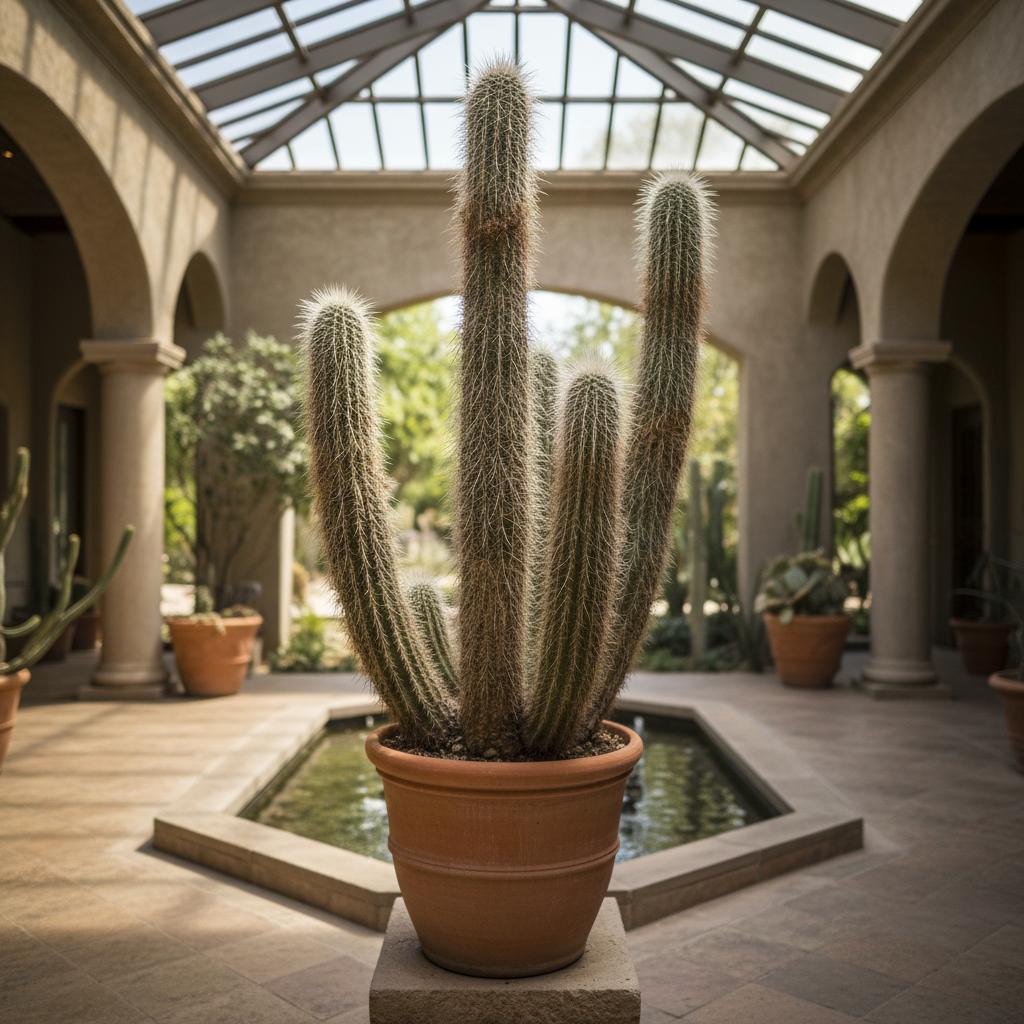
- Stems: Columnar, branching from the base to form large thickets, pale green to yellowish-green, typically with 5 to 7 prominent ribs;
- Areoles and Spines: Lower stems feature short, stout, gray spines; upper mature stems develop a dense, bristly pseudocephalium consisting of long, flexible, gray, hair-like spines;
- Flowers: Nocturnal, pale pink to white, 3 to 4 cm long, emerging directly from the bristly pseudocephalium at the stem tips;
- Fruit: Red, fleshy, spherical, mostly spineless, and edible when ripe.
Care Guide
Water deeply but infrequently, allowing the soil to dry out entirely between waterings.
Apply a diluted, low-nitrogen fertilizer once.. Requires minimal feeding; over-fertilizing can cause weak, unnatural growth.
Banana Peel Tea:Steep chopped banana peels in water for 24-48 hours, strain, and dilute 1:1 with water. Use during the active growing season to support root health and flowering. Avoid leaving solid peels on the soil to prevent pests.- Pruning is rarely necessary for this species;
- Remove any dead, rotting, or severely damaged stems at the base using a sterilized saw;
- Always wear heavy leather gloves and use tongs when handling cut stems to avoid spine injuries.
Toxicity
Warning: this plant may be toxic.
Pets: Non-toxic per ASPCA guidelines for typical Cactaceae, though spines can cause physical injury.
Humans: Non-toxic; fruits are edible, but spines pose a mechanical puncture hazard.
Garden Uses & Culture
Culture: An iconic symbol of the Sonoran Desert, representing endurance and survival in harsh, arid landscapes of the American Southwest and Mexico.
Usage: Widely used in xeriscaping and desert botanical gardens; historically, the sweet, red fruits were harvested as a food source by indigenous peoples of the Sonoran Desert.