 PlantFun
Plant Needs
Sunlight
Bright, indirect or filtered light; avoid direct midday sun which can scorch the leaves.
Watering
Keep the potting medium evenly moist but never soggy; do not allow it to dry out completely between waterings.
Temperature
Prefers intermediate to warm temperatures, avoiding cold drafts or sudden temperature drops.
Characteristics
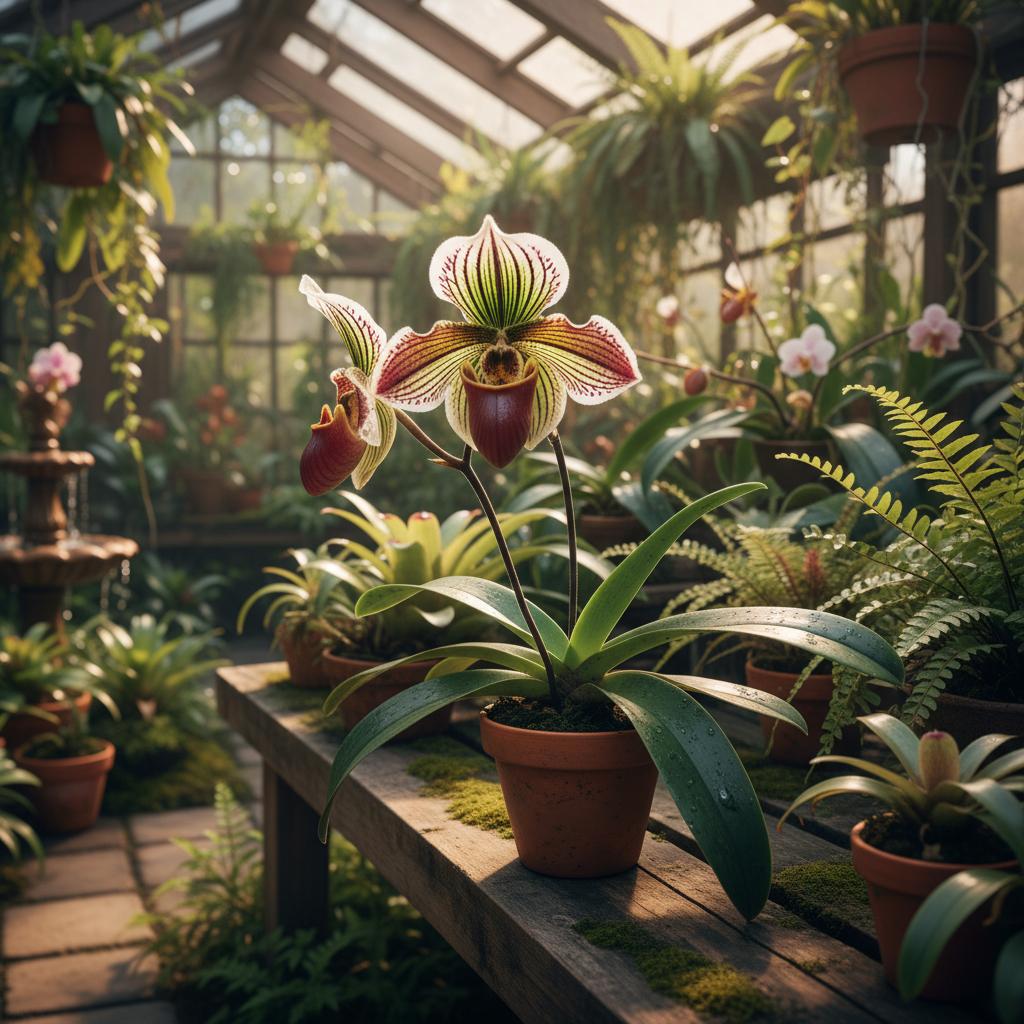
- Leaves: Leathery, strap-shaped to elliptic, often mottled with light and dark green or solid green, arranged in a fan-like basal rosette; lacks pseudobulbs.
- Flowers: Striking solitary flower on an upright pubescent inflorescence; features a prominent pouch (labellum) for trapping pollinators, a large dorsal sepal often striped or spotted, and spreading lateral petals.
- Roots: Thick, fleshy, brown to greyish hairy roots adapted to terrestrial or lithophytic environments, lacking the thick velamen of epiphytic orchids.
Care Guide
Watering
Water thoroughly once a week, keeping the medium slightly moist.
Fertilization
Apply a balanced orchid fertilizer at 1/4 strength weekly.. Flush the pot with plain water once a month to prevent fertilizer salt buildup, which can burn sensitive roots.
Banana Peel Tea:Steep chopped banana peels in water for 24 hours, strain, and dilute 1:1 with water. Use sparingly to avoid salt buildup and fungal issues in the bark medium; avoid leaving raw organic matter in the pot.Pruning
- Flower Spikes: Remove spent flower spikes by cutting them near the base with sterilized tools.
- Foliage: Trim away any dead, brown, or mushy lower leaves to prevent rot and maintain hygiene.
- Roots: During repotting, trim only dead, hollow, or mushy roots; leave firm roots intact.
Toxicity
Warning: this plant may be toxic.
Pets & Humans
Pets: Non-toxic to cats per ASPCA guidelines.
Humans: Non-toxic to humans; safe to handle and cultivate indoors.
Garden Uses & Culture
Culture: Lady Slipper orchids have been highly prized in European and American orchid collections since the Victorian era "orchidelirium," symbolizing rare beauty, refinement, and exotic luxury.
Usage: Highly valued as an ornamental indoor potted plant and for exhibition in competitive orchid shows.