 PlantFun
Plant Needs
Characteristics
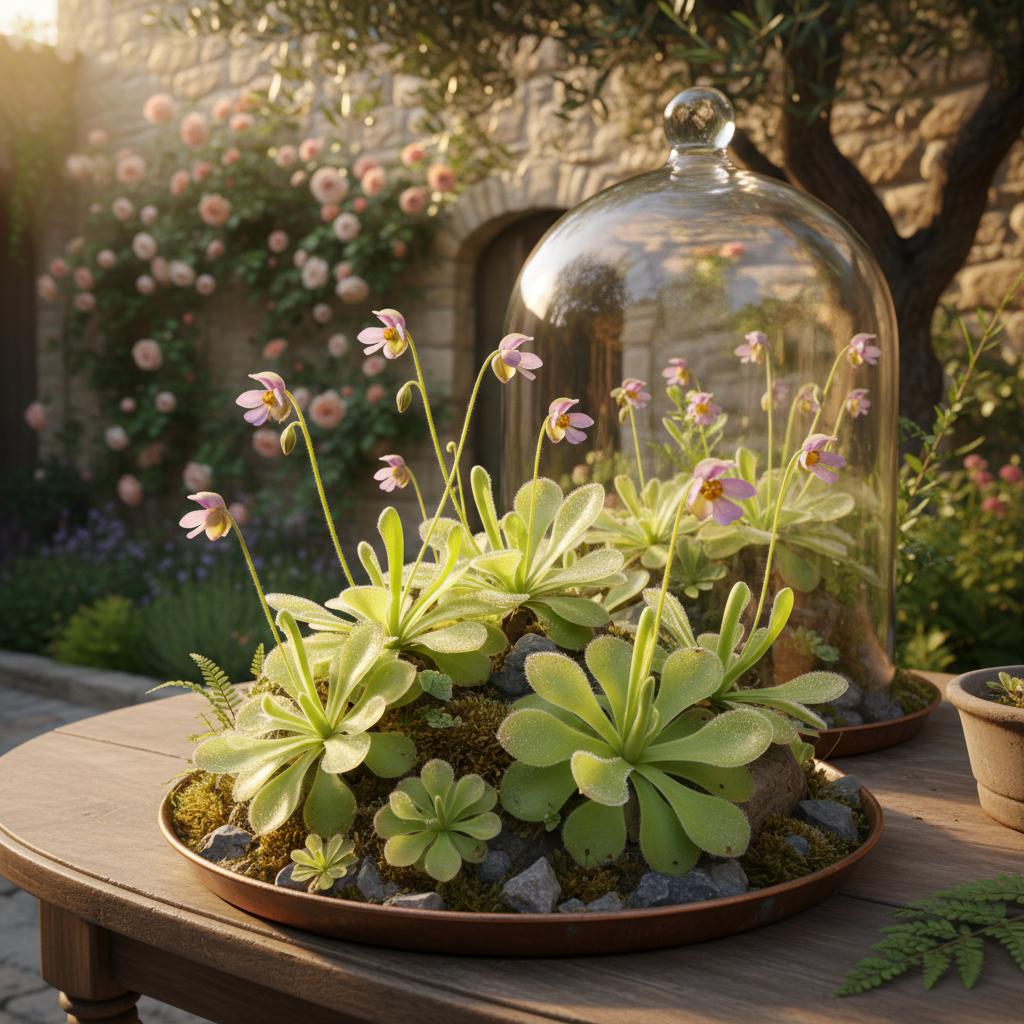
- Leaves: Basal rosette of fleshy, pale green to pinkish leaves covered in microscopic sticky glandular hairs that secrete mucilage.
- Flowers: Zygomorphic, solitary on long scapes, typically pink, purple, or magenta with a distinct spur at the back.
- Roots: Shallow, fine, and relatively sparse, primarily serving for anchorage and water absorption rather than nutrient uptake.
Care Guide
Keep the substrate consistently wet, ideally using the tray method with distilled or reverse osmosis water.
Do not use traditional soil fertilizers; allow the plant to catch ambient fungus gnats.. Carnivorous plants derive nutrients from trapped insects. Soil fertilizers will burn their sensitive roots.
- Remove dead or decaying leaves at the base of the rosette to prevent fungal issues.
- Snip off spent flower stalks near the base to conserve the plant's energy.
- Do not trim healthy leaves, even if they are covered in digested insects, as they still photosynthesize.
Toxicity
Warning: this plant may be toxic.
Pets: Non-toxic to cats; safe to keep around feline pets.
Humans: Non-toxic to humans; no adverse effects expected from incidental contact or micro-ingestion.
Garden Uses & Culture
Culture: In European folklore, the leaves of native butterwort species were historically used to curdle milk and were believed to protect livestock from harm.
Usage: Cultivated as an ornamental carnivorous plant and serves as a highly effective natural biological control for fungus gnats in indoor plant collections.