 PlantFun
Plant Needs
Characteristics
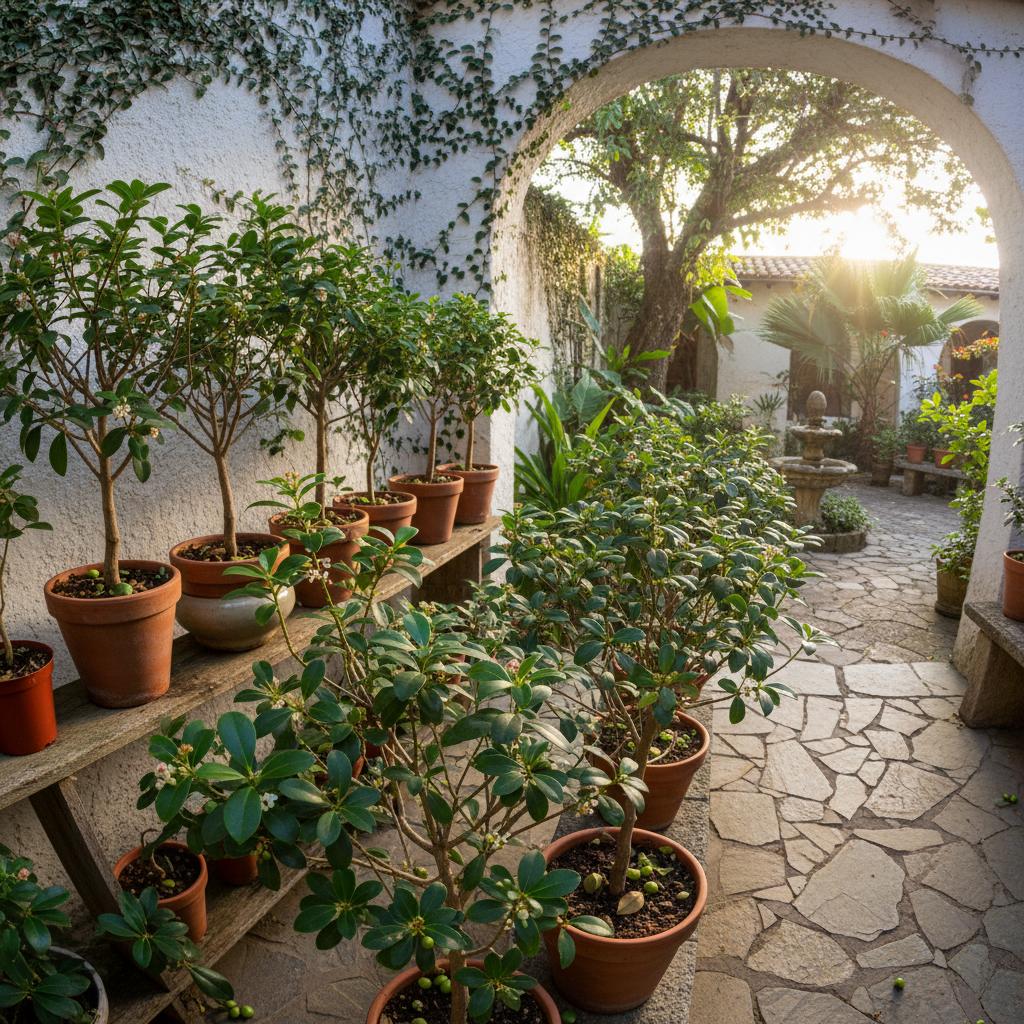
- Leaves: Opposite, lanceolate to elliptic, 3 - 8 cm long, glossy dark green, with new flushes emerging in striking coppery or reddish tones;
- Flowers: Small, white, fluffy with numerous prominent stamens, borne in clusters directly on the main trunk and thick branches (cauliflory);
- Fruits: Globose berries, 2 - 3 cm in diameter, transitioning from green to dark red or purple-black when ripe, containing a sweet, translucent, gelatinous pulp and 1-4 seeds;
- Bark: Smooth, peeling off in irregular patches, revealing a mottled pattern of light brown, grey, and greenish hues beneath.
Care Guide
Water deeply and frequently to maintain even soil moisture, never allowing the root zone to dry out completely.
Apply a balanced, acid-loving organic fertilizer to support new foliage and initial blooms.. Frequent, light applications of fertilizer are preferred over heavy, infrequent doses due to their shallow root systems.
Banana Peel and Coffee Ground Tea:Steep chopped banana peels in water for 48 hours, then mix in a small amount of used coffee grounds. Strain and dilute 1:1 with water. Pour around the root zone to provide potassium for fruiting and help maintain the slight soil acidity Jaboticabas love. Avoid piling thick layers of uncomposted grounds directly against the trunk.- Thin out the interior canopy to allow sunlight and air circulation to reach the inner trunk, which stimulates cauliflorous blooming;
- Remove dead, diseased, or crossing branches during the cooler months;
- Keep the tree at a manageable height for easy harvesting if grown in a container;
- Avoid heavy pruning, as fruits develop on older, mature wood.
Toxicity
Warning: this plant may be toxic.
Pets: Non-toxic to cats per ASPCA guidelines for general Myrtaceae edible fruits.
Humans: Fruits are highly prized and edible, posing no toxic threat to humans.
Garden Uses & Culture
Culture: In Brazilian culture, the Jaboticaba is a symbol of local pride and uniqueness. It is a beloved backyard tree, often passed down through generations, and its fruiting season is a time of communal gathering and celebration.
Usage: Fruits are eaten fresh out of hand by squeezing the pulp from the skin. They are also widely processed into high-quality jellies, jams, syrups, wines, and liqueurs due to their short shelf life post-harvest.