 PlantFun
Plant Needs
Sunlight
Prefers bright, indirect light; avoid harsh direct afternoon sun which can scorch the delicate leaves.
Watering
Water when the top inch of soil feels dry; highly susceptible to root rot if overwatered.
Temperature
Thrives in warm environments; extremely sensitive to cold drafts and temperatures below 15°C.
Characteristics
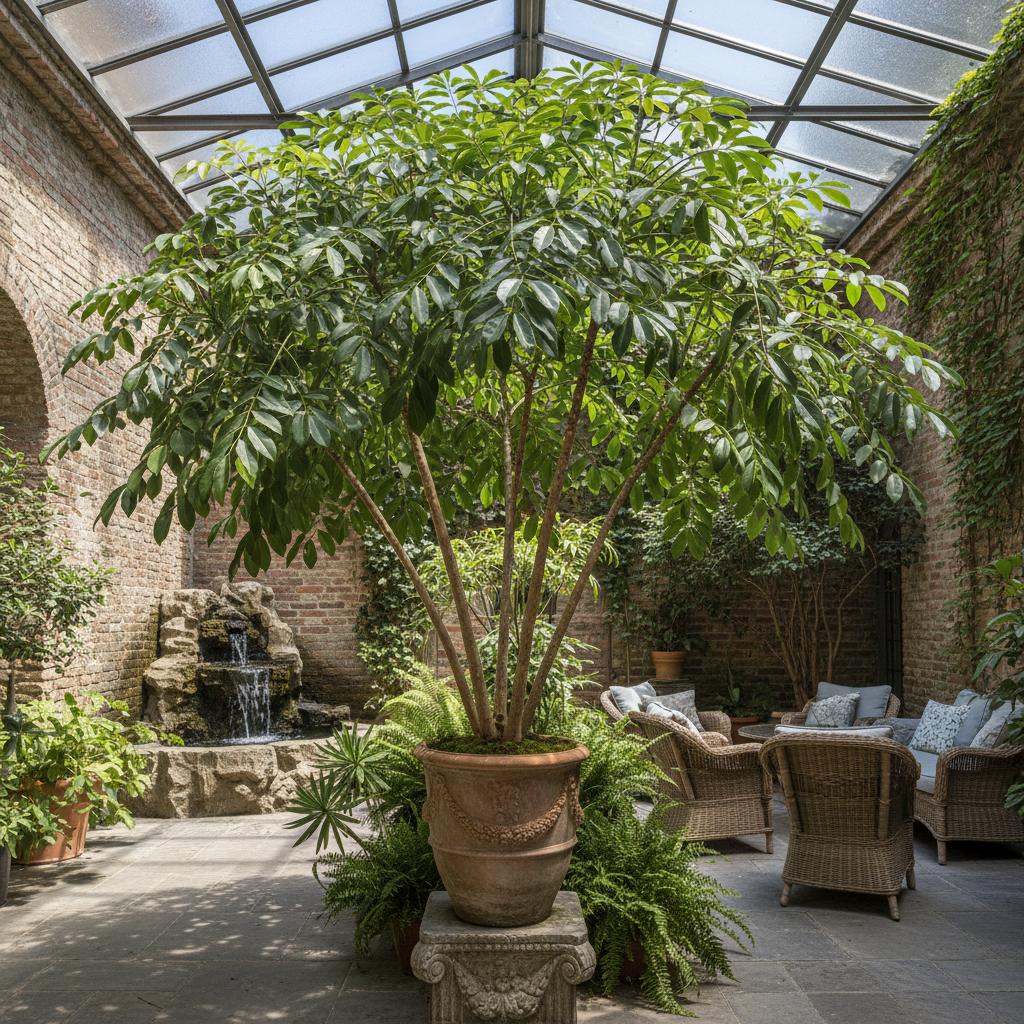
- Leaves: Pinnately compound, finely divided, fern-like, dark green and glossy, creating a feathery texture;
- Stems: Woody, twisting, pale gray to brown branches that become highly textured with age;
- Flowers: Small, inconspicuous, greenish-white to pale yellow, arranged in umbels (rarely seen in indoor cultivation).
Care Guide
Watering
Water thoroughly when the top inch of soil is dry, allowing excess to drain.
Fertilization
Apply a balanced, diluted fertilizer to support active foliage growth.. Do not fertilize during the winter dormancy period.
Banana Peel Tea:Steep chopped banana peels in water for 24-48 hours, strain, and use the liquid to water the plant. This provides gentle potassium for stem strength. Avoid leaving raw peels on the soil surface to prevent fungus gnats.Pruning
- Shaping: Prune branch tips regularly to encourage denser, bushier growth;
- Maintenance: Remove any yellowing or dead leaves at the base to maintain a clean appearance;
- Bonsai styling: Can be selectively pruned to expose the twisting, woody trunks for a miniature tree effect.
Toxicity
Warning: this plant may be toxic.
Pets & Humans
Pets: Toxic per ASPCA; ingestion can cause vomiting, diarrhea, and anorexia, while sap may cause dermatitis.
Humans: Sap may cause minor skin irritation; ingestion can cause mild gastrointestinal upset.
Garden Uses & Culture
Culture: In Western interior design, the Ming Aralia became highly popular in the 1970s and 1980s as a statement architectural plant, valued for bringing a serene, sculptural element to modern homes and offices.
Usage: Ornamental houseplant, indoor bonsai specimen, tropical patio container plant.