 PlantFun
Plant Needs
Characteristics
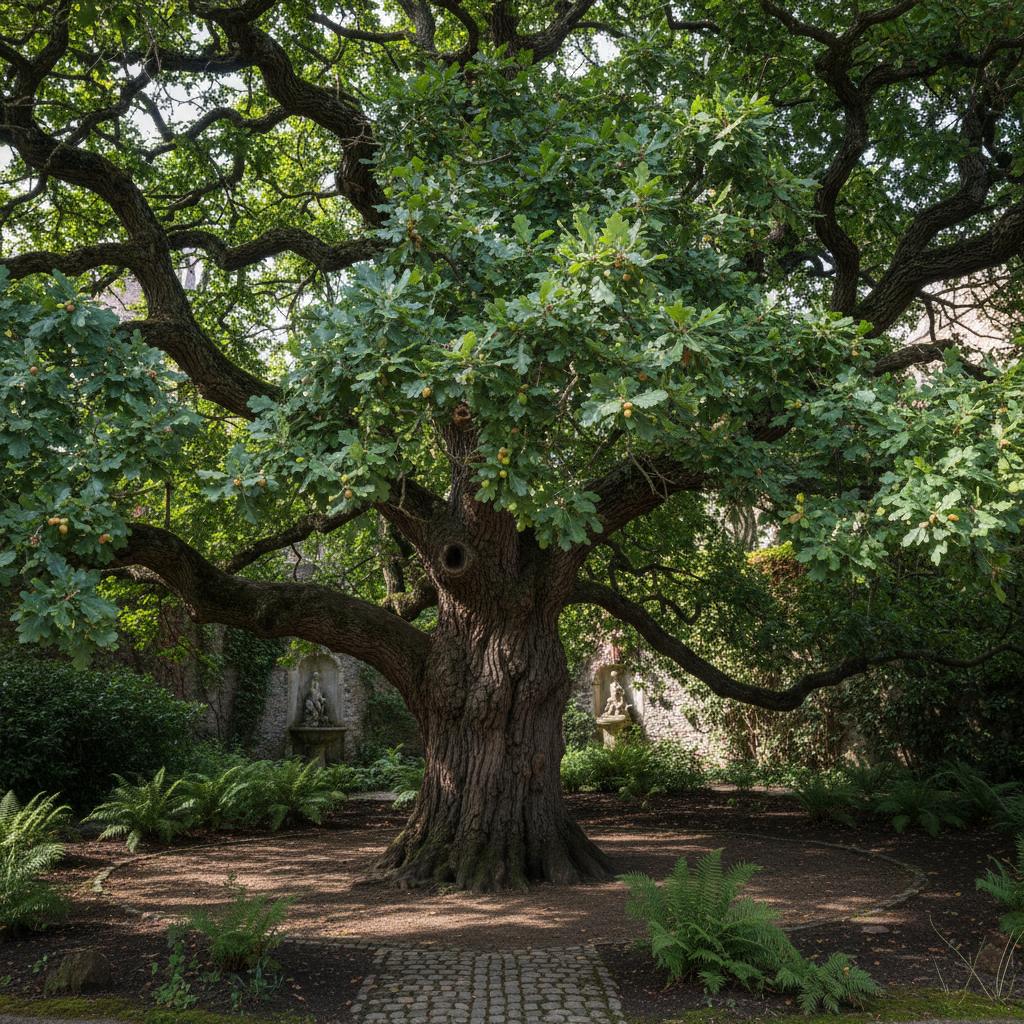
- Leaves: Alternate, obovate to oblong, 7 - 14 cm long, with 4 - 7 pairs of rounded lobes and a very short petiole (auricled base);
- Flowers: Monoecious; male flowers in drooping yellow-green catkins, female flowers small, inconspicuous, borne on long peduncles;
- Fruit: Acorns, 2 - 2.5 cm long, borne on long peduncles (pedunculate), with a cupule covered in overlapping scales;
- Bark: Grayish-brown, deeply fissured into small, rugged, blocky plates in mature trees.
Care Guide
Water deeply once a week for young trees; mature trees rely on rainfall.
Apply a balanced organic mulch or slow-release fertilizer at the drip line for young trees.. Mature oaks generally do not require supplemental fertilization if grown in healthy soil.
Leaf Mold and Coffee Grounds:Mix used coffee grounds with shredded autumn leaves and apply as a mulch ring around the base (keeping it away from the trunk) in early spring to mimic natural forest floor nutrient cycling and slightly acidify the soil.- Prune during dormancy (late winter) to remove dead, diseased, or crossing branches;
- Maintain a strong central leader in young trees to ensure structural stability;
- Strictly avoid pruning in spring and summer to prevent the spread of oak wilt disease by sap-feeding beetles.
Toxicity
Warning: this plant may be toxic.
Pets: Toxic (per ASPCA); ingestion of acorns or young leaves can cause gastrointestinal upset and, rarely, kidney damage.
Humans: Raw acorns contain tannins which can cause stomach upset if ingested in large quantities.
Garden Uses & Culture
Culture: The oak is a powerful symbol in Celtic and Norse mythology, representing strength, wisdom, and endurance, and was historically associated with thunder gods such as Thor and Zeus.
Usage: Highly valued for its durable timber used in furniture making, flooring, and traditional wine and whiskey barrels; also serves as a critical ecological keystone species.