 PlantFun
Plant Needs
Characteristics
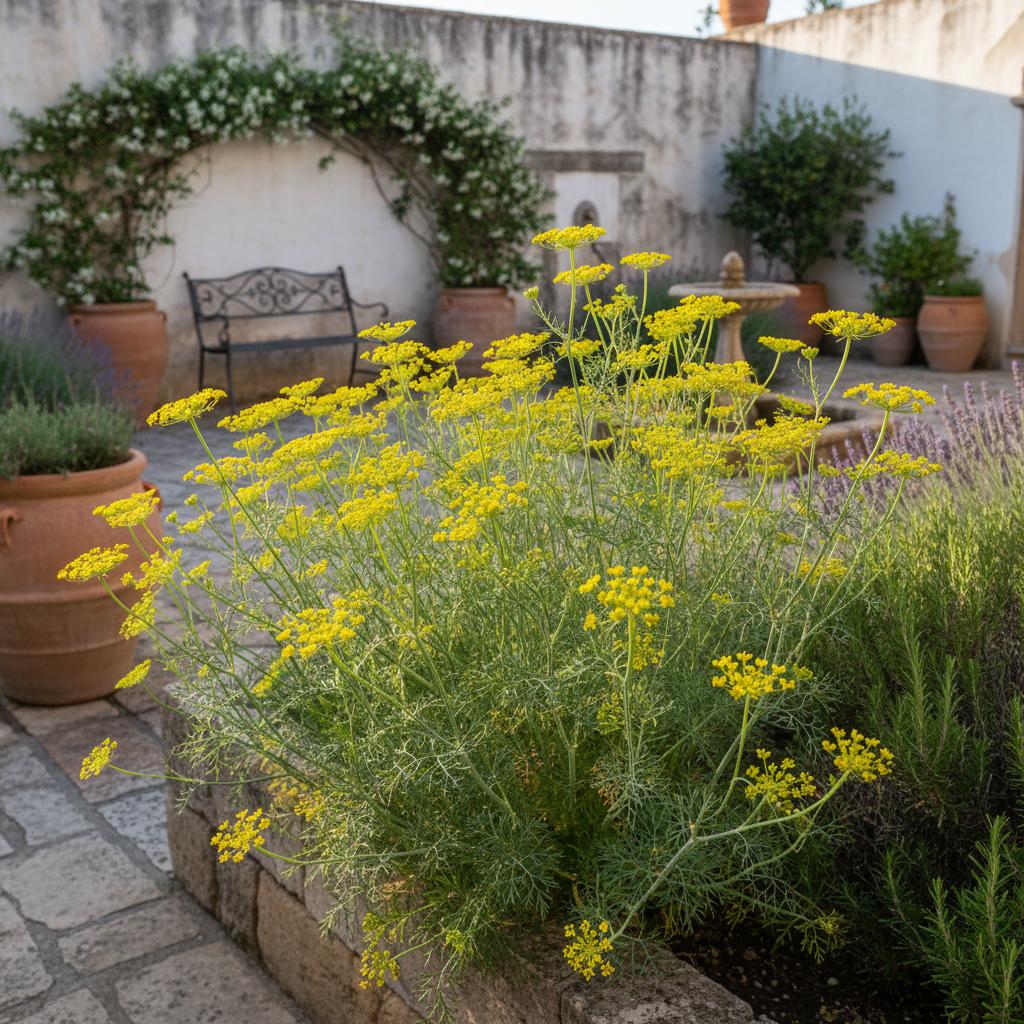
- Leaves: Finely divided, pinnatisect with thread-like (filiform) segments, strongly aromatic when crushed, resembling dill or fennel;
- Flowers: Compound umbels lacking bracts and bracteoles, featuring numerous tiny, bright yellow petals;
- Stem: Erect, striate (grooved), highly branched, and completely glabrous (hairless);
- Fruit: Small, oblong schizocarp with distinct longitudinal ribs, splitting into two mericarps when ripe.
Care Guide
Water deeply but infrequently, allowing the soil to dry out completely between waterings.
Apply a light, balanced organic amendment at planting time.. Avoid high nitrogen, which promotes weak, floppy foliage at the expense of flowers.
Banana Peel Tea:Soak chopped banana peels in water for 24-48 hours. Strain and use the liquid to water the base of the plant to support vibrant yellow blooms. Discard the peels in compost to avoid attracting pests.- Deadheading: Remove spent flower umbels to prevent aggressive self-seeding if growing in a managed garden;
- Harvesting: Cut stems for floral arrangements when umbels are fully open;
- Clearance: Pull up and compost the entire plant at the end of the season after it dies back.
Toxicity
Warning: this plant may be toxic.
Pets: Non-toxic per general botanical safety guidelines, though ingestion of large amounts of essential oil-rich foliage may cause mild stomach upset.
Humans: Generally considered non-toxic; however, as with many Apiaceae, sap exposure combined with sunlight might cause mild phytophotodermatitis in highly sensitive individuals.
Garden Uses & Culture
Culture: Historically recognized as a common agricultural weed in Mediterranean grain fields (hence "segetum," meaning "of the cornfields"). It has recently gained popularity in European floristry as a vibrant, airy filler flower.
Usage: - **Floristry**: Excellent cut flower providing volume and a bright yellow-green hue to bouquets; - **Culinary**: Occasionally used locally as a flavoring herb similar to dill, though less common; - **Ecological**: Highly attractive to beneficial insects, including hoverflies and parasitic wasps.